

From Tiny Seeds to Papery Summer Flowers That Last All Winter
A friendly guide to sowing, growing, cutting and drying helipterum in Hungary.
Come Into the Garden With Me…
Today, we're growing helipterum - one of those flowers that gives us two seasons for the price of one.
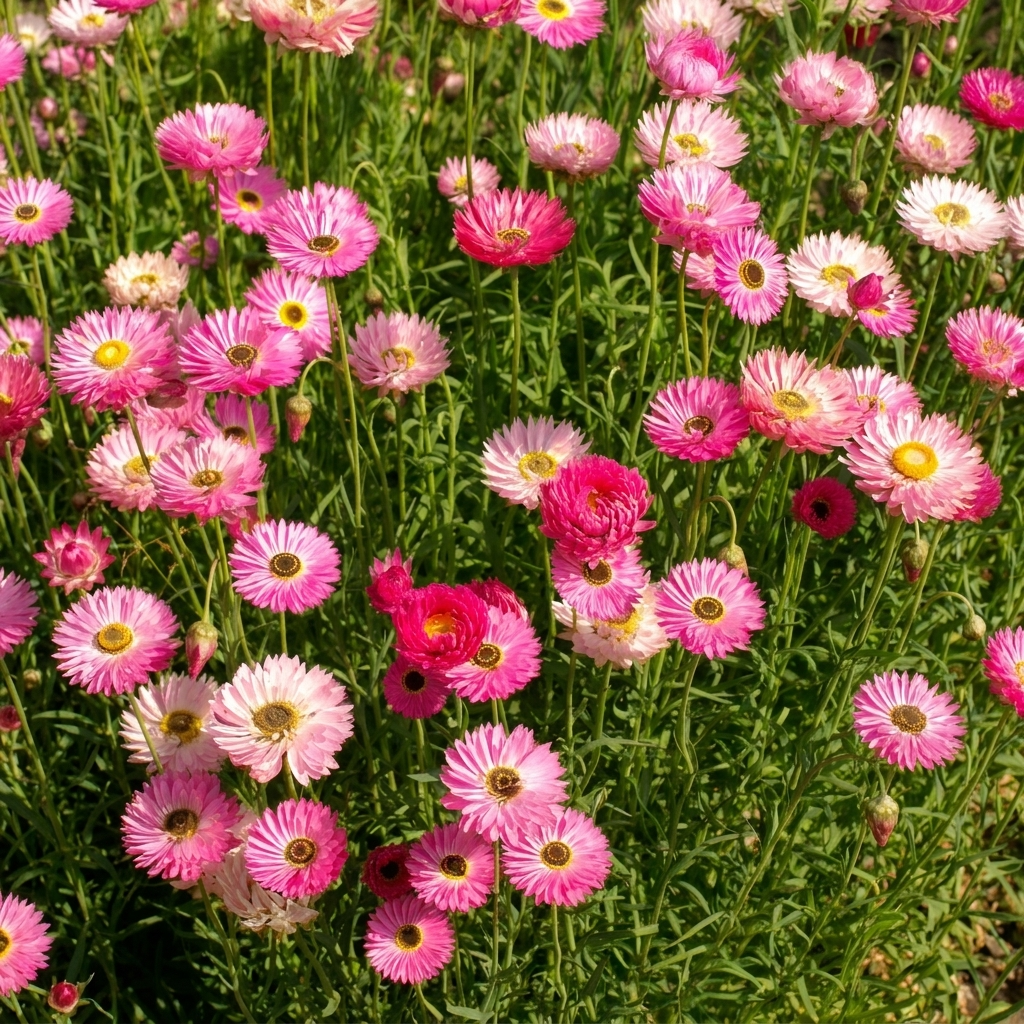
First it flowers in the garden, with cheerful papery blooms in pink, white and yellow. Then, if we cut the stems at the right moment and dry them, the flowers can stay with us long after summer has disappeared.
At Holland Kertészet, our packet is Helipterum - Double Flowered. It is sown from March to May, flowers from June to September, prefers full sun and well-drained soil, and is especially useful for both fresh cutting and dried bouquets.
And that makes this a very satisfying plant for a beginner. We sow it once, enjoy it outside, then bring some of the summer indoors for autumn and winter.
1. Meet Helipterum
Helipterum is an old-fashioned everlasting flower. You may also see it under older botanical or trade names such as Acroclinium, and modern references often place these plants in the Rhodanthe group. Don't let the names frighten you. The gardening is much simpler than the botany.
The plant forms slender stems topped by neat daisy-like flower heads. The coloured parts feel dry and papery even while the flower is still alive, which is exactly why they hold their shape so well when dried.
Our Double Flowered mixture gives us shades of pink, white and yellow, so one packet can create a soft, romantic cutting patch rather than a single block of colour.
|
GOOD TO KNOW |
2. Finding the Right Place
Helipterum is happiest when we give it the conditions of a sunny, open summer border rather than a rich, wet flower bed.
Sunshine
Choose full sun. The Holland Kertészet listing specifically recommends it, and that fits the plant perfectly. Good light keeps growth compact, stems stronger and flowers plentiful.
In Hungary, spring sunshine is ideal. By midsummer, the plants usually cope well with heat once established, especially if the roots are in reasonably moisture-retentive but free-draining soil.
Drainage
This is not a plant for a low, soggy corner. Heavy soil that stays wet after rain can cause weak growth and root trouble. If you garden on clay, improve the structure or use a raised bed or container.
Rich soil? Not necessary
Helipterum does not need luxurious soil or constant feeding. Too much fertility can give us lots of leafy growth when what we actually want are strong flowering stems.
Containers
You can grow it in a sunny container, but remember that pots dry faster than garden soil. Use a free-draining potting mix and a container with proper drainage holes.
|
A COMMON MISTAKE |
3. The Helipterum We Grow With You
Our Holland Kertészet Helipterum - Double Flowered mixture is exactly the kind of seed packet I like for this series: simple to sow, generous in colour and useful beyond the flower bed.
The colours
Expect a mixture of pink, white and yellow flowers. Some blooms may be softer and paler, others stronger in colour. Because this is a mixture, part of the pleasure is waiting to see what opens first.
The shape
The blooms have that classic everlasting look: rounded centres surrounded by crisp, papery bracts. Double forms appear fuller than simple daisy-like flowers and are especially attractive when dried.
How tall?
Double-flowered Helipterum roseum strains are commonly around 50 cm tall. That makes them tall enough for cutting but still easy to fit into a mixed border without needing the back row of the garden.
Where I would use it
Give it a little cutting patch beside cosmos, cornflowers, strawflowers or baby's breath. Or mix it into a cottage-style border where the stems can weave naturally among other annuals.
|
GROW WITH US |
4. Let's Sow
When to sow
The Holland Kertészet packet gives a sowing window from March to May. In Hungary, that allows two good approaches: start a little earlier under protection, or direct sow outdoors once the soil has begun to warm and harsh frost is no longer the main concern.
Starting under protection
Use a clean tray or small pots filled with fine seed compost. Moisten the compost first, sow thinly, then cover the seed only lightly. Keep the tray bright and moderately warm.
Once seedlings appear, give them plenty of light. Weak, stretched seedlings usually mean they are too warm and not bright enough.
Direct sowing
Helipterum can also be sown straight into prepared soil. Rake the surface fine, sow thinly and cover lightly. Water gently so you do not wash the seed into one corner.
Thin early
Crowded seedlings become thin and weak. Once they are large enough to handle, thin them so the remaining plants have room for air and branching. Around 20-30 cm between mature plants is a useful general guide.
|
DON'T PANIC |
5. From Seedling to Summer Plant
Hardening off
Seedlings started indoors need a gradual introduction to outdoor life. Over a week or two, give them increasing time outside in a sheltered place before planting permanently.
A sunny May afternoon in Hungary can feel warm, but a cold night can still surprise us. Harden off according to the weather, not according to optimism.
Watering
Water newly planted seedlings regularly until they establish. After that, Helipterum becomes much more tolerant of dry spells. The Holland Kertészet listing describes the variety as drought tolerant, but prolonged drought during bud formation can still reduce stem length and flower quality.
Feeding
In ordinary garden soil, you probably need very little feeding. In containers, a light flowering feed from time to time can help, but avoid pushing soft leafy growth with too much nitrogen.
Do I need to stake it?
Usually not in a sheltered position, but plants grown too lushly or in strong wind may lean. If you know your garden is exposed, a few twiggy supports placed early are much prettier than emergency string after a storm.
|
WHAT I WOULD DO |
6. Flowers!
By summer, the plants begin producing those neat papery flower heads. This is the moment when Helipterum starts earning its place twice over.
For the garden
Leave plenty of flowers outside. The mix of pink, white and yellow works beautifully with blue cornflowers, purple verbena, white baby's breath or soft grasses.
For fresh cutting
Cut stems when the flowers are opening but still look fresh and firm. Use clean snips and place stems into clean water promptly. Helipterum can be used in mixed summer bouquets where the papery texture contrasts nicely with softer flowers.
For drying
For dried arrangements, harvest before the flowers become overmature. A coloured bud or a flower just opening is often ideal because the bloom continues opening slightly as it dries.
Strip away lower leaves, gather stems into small loose bunches and hang them upside down in a dry, airy, shaded place. Darkness helps preserve colour better than strong sunlight.
Why small bunches?
Large bundles trap moisture and dry unevenly. Small bunches allow air to circulate and reduce the risk of mould.
|
TRY THIS |
7. When Something Goes Wrong
The plants are tall and floppy
Too much shade or rich feeding can create weak stems. Give more light if possible and avoid high-nitrogen fertiliser.
Very few flowers
Again, check sunlight first. Also ask whether the plants are overcrowded or receiving too much nitrogen. Helipterum wants sun and room more than constant feeding.
Leaves are yellowing
Look at the soil before reaching for fertiliser. Persistently wet roots can cause yellowing. So can extreme drought. The solution depends on what the soil actually feels like.
Mould while drying
This usually means the stems were bundled too thickly, the drying space was humid, or the flowers were harvested wet. Dry on a rain-free day, remove excess foliage and improve airflow.
Flowers faded after drying
Strong sunlight is often the culprit. Dry and store everlasting flowers away from direct sun if you want the colours to last.
Pests
Helipterum is usually fairly trouble-free, but aphids can still appear on tender growth. Check the growing tips while colonies are small and easy to deal with.
|
GOOD TO KNOW |
8. Let the Garden Make Seed
Not every flower needs to be cut. Leave some of the healthiest blooms on the plants and allow them to mature naturally if you want seed for next year.
When is seed ready?
Wait until the flower heads are dry and mature. Collect on a dry day before seed is scattered by weather. Place the heads in a paper bag and let them finish drying indoors.
Cleaning and storing
Rub or shake the dried heads gently to release seed and remove obvious chaff. Store fully dry seed in a labelled paper envelope somewhere cool and dry.
Will it come true?
A mixed double-flowered strain may give some variation from saved seed, and that is part of the fun. If exact uniformity matters, start again with a fresh packet. If surprise is welcome, save some.
9. When Autumn Arrives
Helipterum is an annual, so the first hard frosts eventually finish the plants. By then, however, you may already have armfuls of dried flowers indoors and seed stored for spring.
Remove finished plants, compost healthy material, and leave the bed ready for next season. If you allowed some heads to shed seed naturally, you may even find volunteer seedlings next year.
|
A LOVELY LITTLE TRADITION |
Your Helipterum Cheat Sheet
• Holland Kertészet offers Helipterum - Double Flowered
• Expect double flowers in shades of pink, white and yellow.
• Sow from March to May.
• Flowering is expected from June to September.
• Choose full sun and well-drained soil.
• Start under protection or direct sow once outdoor conditions are suitable.
• Thin seedlings so plants have air and room to branch.
• Water regularly while young; established plants tolerate dry conditions better.
• Avoid rich feeding that creates soft, floppy growth.
• Cut fresh stems while flowers are still firm and young.
• For drying, harvest at coloured bud to early-open stage.
• Hang in small bunches somewhere dry, shaded and well ventilated.
• Leave some flowers for seed if you want to grow them again next year.
If You Remember Only Five Things…
1. Helipterum wants sunshine and drainage more than rich soil.
2. Sow from March to May, and consider two sowings for a longer harvest.
3. Young plants need water; established plants are much more drought tolerant.
4. Cut drying flowers before they become old and fully mature.
5. Dry them in shade with plenty of air - then enjoy them long after summer.
One Last Walk Around the Garden
We began with a one-gram packet of seed and ended with flowers that can outlast the season that grew them.
We sowed in spring, thinned the seedlings, gave them sunshine, watched the first pink, white and yellow flowers open, and learned that the papery texture is not a flaw but the plant's greatest gift.
Some stems went into a summer vase. Some stayed outside. Some were cut young and hung upside down in a quiet, shaded corner until they became winter flowers.
And now, when the garden is bare and the days are short, you can still have a little piece of July sitting on the table.
That's why everlasting flowers deserve a place in a garden.
When you're ready for the next plant…


