

From Autumn Bulbs to Ribbons of Spring Blue
A friendly guide to planting, growing, naturalising and enjoying Muscari in Hungary.
Come Into the Garden With Me…
Today, we're growing Muscari - the little spring bulb most of us know as grape hyacinth, even though it is not a true hyacinth at all.
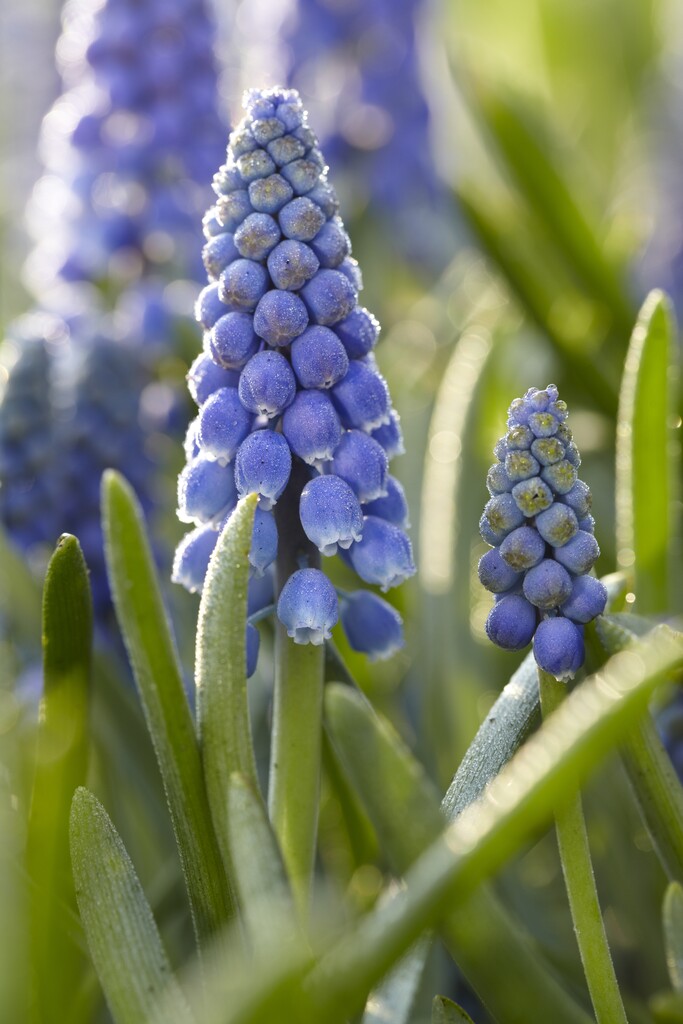
Each flower is tiny and bell-shaped, but dozens packed together on one short stem create a dense little spike that looks almost like a miniature bunch of grapes. Plant many bulbs together and the effect becomes a river of blue across the spring garden.
For Hungarian gardens, Muscari is wonderfully dependable. It tolerates winter cold, flowers early, grows in sun or partial shade, and is happy to remain in the ground for years when the soil drains well.
Our main Holland Kertészet reference is Muscari armeniacum in bulb size 8/9 - the classic Armenian grape hyacinth with deep violet-blue flowers, narrow green leaves and an easy naturalising habit.
We'll begin with the bulb itself, choose the right place, plant in autumn, follow the roots through winter, enjoy the spring flowers, then learn how to keep the leaves long enough for the bulbs to recharge before summer dormancy.
We will also look at what happens when Muscari becomes very happy, because this is one of those bulbs that can multiply into generous colonies. That is usually a pleasure, but it is useful to know when to divide, thin or contain a clump.
Ready? Let's plant a handful of little bulbs and turn them into a spring ribbon of blue.
1. Meet Muscari
Muscari is a genus of small bulbous perennials in the asparagus family, Asparagaceae. Gardeners usually call them grape hyacinths because the tightly packed flowers resemble tiny clusters of grapes.
What do the flowers look like?
The flowers are small, rounded bells or urns carried closely together on a short upright stem. Muscari armeniacum is usually rich violet-blue, often with a paler or white edge around each tiny flower.
The plants stay compact, generally around 15-20 cm high. That makes them perfect for the front of borders, beneath shrubs, along paths, in rock gardens and in containers where the flowers can be seen close up.
A hardy perennial bulb
Muscari is not a one-season bedding plant. The bulbs survive winter underground, flower in spring, feed themselves through their leaves, then rest through summer. In a suitable place they can return and multiply for many years.
|
GOOD TO KNOW Muscari are hardy perennial bulbs. In Hungary, winter cold is part of their normal cycle; poor drainage is usually a greater danger than frost. |
2. Give Them Sun, Spring Moisture and Drainage
Muscari grows well in full sun and partial shade. Under deciduous shrubs and trees it receives plenty of spring light before the canopy fills, then rests underground when summer shade becomes heavier.
Well-drained soil matters most
These bulbs like moisture while they are actively growing in spring, but they dislike sitting in stagnant water. Ordinary garden soil is suitable if excess rain and melting snow can drain away freely.
In heavy Hungarian clay, loosen the planting area and improve the structure before planting. A raised edge, slope, rock garden or container is often easier than trying to force small bulbs into a permanently wet hollow.
A natural partner for other spring bulbs
Muscari sits beautifully beneath tulips and daffodils because its low blue spikes fill the ground level while taller flowers rise above. It also combines well with crocuses, Chionodoxa, primulas and early perennials.
Think in generous groups
One or two Muscari bulbs can disappear visually. Twenty-five or more planted together create the strong blue-river effect these bulbs are famous for.
If you plant in grass, choose a place where mowing can wait until the leaves have yellowed. Cutting green foliage too early weakens next year’s flowers.
|
A COMMON MISTAKE Planting too few bulbs too far apart. Muscari creates its best effect in generous groups, with bulbs close enough to become a spring ribbon rather than isolated dots. |
3. The Muscari We Grow With You
For this book, we are following Muscari armeniacum in bulb size 8/9 from the Holland Kertészet spring-flowering bulb range.
What to expect
Muscari armeniacum is compact, hardy and strongly clump-forming. In spring it sends up narrow leaves and short stems topped with dense violet-blue flower spikes.
Blue is the classic look
That clear spring blue works almost anywhere. It brightens yellow daffodils, cools orange tulips and looks especially elegant with white flowers and fresh green foliage.
Small bulbs, big impact
Because each bulb is modest in size, Muscari is at its best when planted generously. A close group gives a much stronger display than evenly spacing a few bulbs across a large bed.
Why beginners like them
They are hardy, forgiving, generally pest-free and happy in many soils as long as drainage is reasonable. Once established, they often need less attention each year rather than more.
The real reward comes later
A young planting may look neat in its first spring. Over time, offsets and occasional seedlings can knit the group into a fuller colony that looks increasingly natural.
4. Let’s Plant the Bulbs
|
GROW WITH US The Holland Kertészet spring-bulb range includes Muscari armeniacum in bulb size 8/9. Plant a generous group and let the colony become fuller each spring. |
Muscari bulbs are planted while dormant in autumn, months before the flowers appear.
When to plant in Hungary
September through November is a practical planting window. The bulbs can begin rooting in cool soil before winter, and later planting is still possible while the ground remains unfrozen and workable.
How deep?
Plant Muscari around 7-10 cm deep. In light soil, the deeper end of that range works well; in heavy soil, good drainage matters more than squeezing in extra depth.
Set the pointed end upward. If a small bulb is difficult to read, place it on its side and the shoot will find its own way upward.
Spacing
About 5-8 cm apart gives a full display. For a natural look, scatter the bulbs loosely and plant them where they fall rather than measuring a rigid grid.
Planting in pots
Use a container with drainage holes and free-draining compost. Plant several bulbs together for impact, water after planting, and leave the pot outdoors so the bulbs experience normal winter cold.
|
DON'T PANIC Muscari leaves can appear surprisingly early, sometimes during mild winter weather. Leave them alone; established bulbs usually cope well with normal Hungarian cold. |
5. Winter Below Ground, Blue Spikes Above It
After planting, the bulbs begin making roots in cool autumn soil. Through winter they remain largely hidden while the garden above them rests.
Cold is part of the cycle
Muscari is hardy enough for normal Hungarian winters. Frost and snow are usually less dangerous than waterlogged soil, especially where winter rain collects around dormant bulbs.
When spring begins
Leaves may appear early, sometimes even before the worst of winter seems completely finished. The flower stems follow as temperatures and light increase.
The spring display
Each stem develops into a tight cone or cylinder of tiny flowers. A mass planting can quickly become one of the clearest patches of blue in the early garden.
If spring is unusually dry, water deeply once or twice. In average soil, natural spring moisture is usually enough while the bulbs are actively growing.
|
WHAT I WOULD DO Plant Muscari beneath tulips and daffodils. The low blue flowers fill the ground level while the taller bulbs rise above, giving one small area much more spring colour. |
6. Spring Care: Enjoy the Flowers, Respect the Leaves
Once Muscari is flowering, there is very little to do. The important work comes after the colour begins to fade.
Feeding
In ordinary garden soil, heavy feeding is unnecessary. A light top-dressing of compost or a modest bulb feed in spring is enough if the soil is poor.
Water only when spring is genuinely dry, especially in containers or beneath shrubs where established roots compete strongly for moisture.
After flowering
You can remove faded flower stems if you want a tidier look or if you are trying to slow self-seeding. Leave some stems if you enjoy a more natural, spreading colony.
Leave the foliage
This is the rule that matters most: do not cut green Muscari leaves. They are collecting energy and returning it to the bulbs. Wait until they yellow and collapse naturally.
For naturalising
Leave healthy clumps undisturbed. Offsets form beside the original bulbs, and some Muscari also self-seeds, so the planting can gradually widen without annual replanting.
|
GOOD TO KNOW Muscari naturalises readily in a suitable place. If a clump becomes crowded, lift and divide it during summer dormancy to restore space and vigour. |
7. When Something Goes Wrong
Muscari is usually straightforward. Most disappointments come from poor drainage, deep shade, severe overcrowding or removing the leaves too early.
Leaves appear but flowering is weak
The clump may be congested, shaded too deeply, unusually dry during spring growth, or weakened because its foliage was cut before it finished feeding the bulbs the previous year.
Bulbs rot
Wet soil is the first thing to investigate. Remove soft bulbs, improve drainage and avoid replanting in a low place where winter water regularly stands.
The colony is spreading farther than you want
Lift unwanted bulbs during dormancy and remove flower heads before seed forms. Muscari can naturalise enthusiastically in a place it likes, so decide where you want the blue river to stop.
Leaves look spotted or distorted
Remove badly affected material after it has finished feeding the bulb, and avoid moving obviously unhealthy bulbs into new areas. Good airflow and drainage reduce many disease problems.
The flowers finish quickly
That is normal in warm spring weather. Muscari is an early-season bulb. The aim is a strong spring display followed by healthy leaves that prepare the bulbs for next year.
|
DON'T PANIC A crowded clump that flowers less strongly is not necessarily failing. Divide the bulbs during dormancy, replant them with fresh space and let them rebuild. |
8. Flowers for the Garden - and Small Spring Vases
Muscari is most valuable in the garden, where its low blue spikes can weave between larger bulbs and early perennials.
In the garden
Use it along paths, beneath deciduous shrubs, at the front of borders, in rock gardens, around daffodils and tulips, or through short grass where mowing can be delayed.
For the vase
The stems are short, but a little bunch can be charming in a tiny vase. Cut only from a generous clump so plenty of flowers remain outdoors for you and for early pollinating insects.
Keep the leaves on the plant whenever possible. A small spring posy needs flower stems, not handfuls of green foliage that the bulbs still need for energy.
Think like a ribbon
Instead of one rigid block, let Muscari travel through the planting in repeated drifts. A blue patch disappearing behind a shrub and reappearing farther along looks wonderfully natural.
|
TRY THIS Pair pale tulips or yellow daffodils with blue Muscari. Repeating the combination in two or three places makes the spring garden feel connected. |
9. After Flowering, Division and Summer Rest
Once flowering is finished and the foliage begins to yellow, Muscari is moving toward summer dormancy.
Let the leaves finish the job
Wait until the leaves have yellowed and come away easily before removing them. In grass, delay mowing until this stage.
After the foliage disappears, the bulbs rest underground through summer and normally need no special watering while dormant.
When should you divide?
If a clump becomes congested or flowering starts to decline, lift it during summer dormancy. Separate the offsets and replant them at the normal depth, giving each bulb fresh space.
Naturalising from seed
If flower stems are left to mature, seedlings may appear nearby. They take longer to reach flowering size than bulb offsets, but they can help create a softer, wider colony over time.
Mark the place
Because the bulbs disappear completely above ground in summer, a small label or garden note can stop you accidentally digging through the colony while planting later-season flowers.
|
A COMMON MISTAKE Cutting Muscari leaves as soon as the flowers fade. The green foliage is rebuilding the bulbs; wait until it yellows naturally before removing it. |
10. Your Muscari Cheat Sheet
We've gone from small autumn bulbs to a ribbon of spring blue. Here's the whole journey in one place.
1. Muscari is commonly called grape hyacinth.
2. Muscari armeniacum is the classic Armenian grape hyacinth.
3. It is a hardy perennial bulb.
4. Plant in autumn for spring flowers.
5. September-November is a practical planting window in Hungary.
6. Choose firm, healthy bulbs.
7. Grow in full sun or partial shade.
8. Use well-drained soil.
9. Plant bulbs roughly 7-10 cm deep.
10. Space bulbs about 5-8 cm apart.
11. Plant in generous groups for the best effect.
12. Let winter cold be part of the natural cycle.
13. Expect flowering in early to mid-spring.
14. Water only during genuinely dry spring weather.
15. Feed lightly, if at all.
16. Never cut green foliage early.
17. Let leaves yellow before removing them.
18. Divide crowded clumps during summer dormancy.
19. Remove seed heads if you want to limit spreading.
20. Remember that ornamental bulbs are not for eating.
If You Remember Only Five Things…
1. Plant generously
Muscari looks best in groups. A handful of isolated bulbs cannot create the same spring river as a generous drift.
2. Autumn is planting time
Plant in September, October or November while the soil is cool, workable and able to drain.
3. Drainage matters
The bulbs tolerate winter cold well. Sitting in stagnant water is much more dangerous.
4. Leave the leaves
Green foliage is recharging the bulbs. Remove it only after it has yellowed naturally.
5. Expect the colony to grow
Offsets and seedlings can turn a small planting into a broad blue patch, so enjoy the naturalising habit or divide and contain it when necessary.
One Last Walk Around the Garden
Do you remember where we started?
With a bag of small brown bulbs in autumn and a promise that, months later, they would turn a quiet piece of soil into something unmistakably blue.
We planted them in loose groups, watered them in and then left winter to do the hidden work. Roots formed underground while frost, rain and perhaps snow passed over the garden.
Then spring arrived. Narrow green leaves appeared, followed by little flower spikes packed with violet-blue bells. One spike was pretty. A whole drift looked like a ribbon laid across the border.
Muscari teaches us one of the nicest lessons in bulb gardening: repetition creates magic. The bulbs are small, the flowers are small and the plants are low, yet together they can completely change the feeling of a spring garden.
By the second or third year, you may notice the colony widening. You will know where the soil drains best, which patch receives enough spring light, and whether you want the blue to spread farther or stay exactly where it is.
And perhaps, several springs from now, you will look at a broad blue river beneath the tulips and daffodils and remember that it began with one small autumn planting.
And when you're ready for the next plant…
Come into the garden with me.


