


If you have ever planted a border with great enthusiasm in spring, only to find yourself exhausted by mid-July and staring at a patch that looks worse for wear, you are far from alone. Europe is facing more and stronger climate hazards, including heatwaves and prolonged droughts, and 2024 saw drier-than-average conditions in eastern and south-eastern Europe, which means the pressure on garden plants has never been higher. The good news is that choosing the right flowers from the start removes most of that pressure entirely.
Low maintenance garden flowers are experiencing a genuine moment. Gardens are increasingly adopting a wilder, less structured aesthetic, moving away from rigid geometric designs, embracing naturalistic planting schemes featuring diverse colours, textures, and heights, a trend that enhances biodiversity and makes gardening more achievable for those with busy lifestyles. Choosing the right plants means your garden works for you every season, rather than the other way around.
Key Takeaways
-
Match the plant to your climate first: Hungary's climate is predominantly continental, with Mediterranean influences in the south, spanning planting zones 6b, 7a, and 7b, a range that makes it critical to choose varieties proven in Central European conditions. If a plant struggles with the climate, no amount of care will compensate.
-
Drought resilience is now a baseline requirement: In 2024 alone, severe droughts exposed over 601,000 km² across Europe, with vegetation productivity failing to recover to the baseline level in more than 156,000 km². Therefore, prioritise plants with deep root systems that access moisture from below.
-
Perennials are the economical backbone: Perennials are the backbone of the border, offering many possibilities suitable for a range of soil and light conditions, as well as unlimited choices of colour, shape, and texture. Plant once and enjoy the return every year.
-
Pollinators come free with the right choices: The RHS 2025 expanded Plants for Pollinators list now includes over 10,000 plants, with evidence-based plant choices to benefit all kinds of pollinators, from bees and butterflies to moths and hoverflies. Many of the lowest-maintenance flowers also happen to be the most pollinator-friendly.
-
Lean soil often produces the best results: Most perennials perform well with a single application of balanced granular fertiliser or a layer of compost in early spring, but over-feeding with nitrogen produces lush foliage at the expense of flowers; lavender, sedum, and catmint actively prefer lean soil and should not be fertilised at all.
Quick-Start Prioritisation Framework
| Flower | Best For | Effort Level | Time to First Colour |
|---|---|---|---|
| Lavender | Sunny, well-drained borders | Low | Spring, year one |
| Nepeta (Catmint) | Edging, pathways, dry spots | Very Low | Late spring, year one |
| Echinacea | Mixed borders, wildlife gardens | Low-Medium | Summer, year one or two |
| Rudbeckia | Beginner gardeners, cottage style | Low | Summer, year one |
| Salvia | Hot, exposed beds; dry soil | Low | Summer, year one |
| Achillea (Yarrow) | Gravel gardens, poor soil | Very Low | Summer, year one |
Start here if you are:
-
A complete beginner: Choose rudbeckia and catmint. Both tolerate a range of soils, require very little deadheading, and reward you with weeks of reliable colour.
-
Working with a dry or sunny plot: Lavender, salvia, and achillea are your trio. Together they cover spring through late summer with almost zero supplemental watering once established.
-
Building a wildlife-friendly garden: Echinacea combined with catmint and a late-flowering aster gives bees and butterflies a banquet from June right through to October.
-
Short on time: Plant lavender, salvia, and sedum, these are the least demanding once established and reward you with months of colour.
Why Tough Flowers Deserve More Credit
There is a persistent idea in gardening circles that beautiful means demanding. The flowers most likely to stop visitors in their tracks at a garden open day are often assumed to require specialist knowledge or hours of care per week. In my experience, the opposite tends to be true. The plants that perform consistently across a full season are almost always the ones that evolved to cope with poor soil, dry summers, and benign neglect.
Native and regionally adapted plants are gaining recognition for their ecological benefits and low-maintenance appeal; perfectly adapted to local conditions, they thrive with minimal intervention while supporting pollinators and biodiversity, making them a practical and environmentally friendly choice for sustainable landscapes.
The European Commission's Biodiversity Strategy for 2030 emphasises the importance of diverse plant genetics, encouraging the cultivation of native and resilient species, and climate change adaptation has influenced plant selection, with growers seeking drought-resistant and heat-tolerant varieties. This creates a rare situation where the easiest gardening choice is also the most responsible one.
The Real Cost of High-Maintenance Plants
I've found that gardeners who give up on their plots mid-season almost always started with the wrong plants. The issue is simple: when a flower's natural requirements conflict with your local conditions, you spend your time compensating rather than enjoying. Choose a plant that suits your soil and climate and suddenly the whole equation changes.
Amid ongoing urbanisation, gardens are expected to play an increasing role in enhancing urban biodiversity by supplementing green areas and improving landscape connectivity, and that role only becomes possible if gardeners can sustain their plots over the long term with a realistic time commitment.
The Six Low Maintenance Flowers Worth Planting This Year

Lavender, The Mediterranean Workhorse
Lavender is highly tolerant of drought conditions, making it an ideal aromatic plant for a dry garden; native to the Mediterranean and Middle East, it grows in very free-draining soil, often gravelly, rocky, and chalky, and receives little rainfall during summer. That origin story is the key to using it well. Give it those conditions and it genuinely asks very little in return.
As long as lavender has sufficient moisture to get established as a young plant, it only requires occasional rainfall during periods of dry weather and can survive cold temperatures in winter. In Central European gardens, established lavender sails through the kind of dry July and August spells that reduce other plants to crispy silhouettes.
Lavender demands excellent drainage, full sun, and alkaline-to-neutral soil, get those right and it is one of the most rewarding plants in the garden: fragrant, bee-friendly, and virtually pest-free. The one annual task it does need is a post-flowering trim. The critical maintenance task is an annual trim after flowering, cut back by one third but never into old wood; skip this and the plant becomes leggy and woody within two seasons.
Pro Tip: If your lavender looks straggly after two seasons without trimming, it cannot be rescued by cutting hard into old bare wood. Start fresh with a new plant and trim every year from the start. One third off, right after the main flush fades.
Nepeta (Catmint), The Unsung Champion
A reliable long-lived perennial catmint (Nepeta) is a member of the mint family that produces aromatic grey-green foliage and upright flower spikes in shades of lavender-blue, pink, or white, with bloom occurring from late spring into autumn, attracting bees, butterflies, and other insect pollinators.
Thriving in harsh settings, dry and poor soil locations, catmint plants are salt-tolerant and very low maintenance, shining despite neglect and difficult planting sites. That is not gardening hyperbole; it genuinely describes a plant that will flower in a gravel drive border just as enthusiastically as it does in a prepared bed. Catmints are some of the best garden perennials: long-lived, very easy to grow, resistant to browsing animals such as deer and rabbits, and featuring a profusion of colour in various shades of blue.
Nepeta plants are native to regions of Europe, Asia, and Africa and are known for their attractive flowers and fragrant foliage, typically growing in clumps or mounds and producing spikes of lavender, blue, or white flowers in the spring and summer months. After the first flush in late spring, cut the plant back by half for a second wave of flowers in late summer. That is the sum total of care required.
Echinacea (Coneflower), The Long-Season Star
Echinacea (Echinacea purpurea) produces bold, daisy-like flowers with their distinctive raised central cones and drooping petals in shades of purple, pink, and white, keeping on coming from midsummer right through to early autumn. When you leave the seed heads standing into winter, birds, particularly goldfinches, treat them as a larder.
Gardeners cherish echinacea for its minimal care requirements, long blooming period, and the way it brings life to the garden by attracting pollinators. The one vulnerability to know: echinacea will not tolerate wet clay in winter, which rots the crown, if your soil is heavy, amend the planting hole with grit. Do that once at planting and you should not need to think about it again.
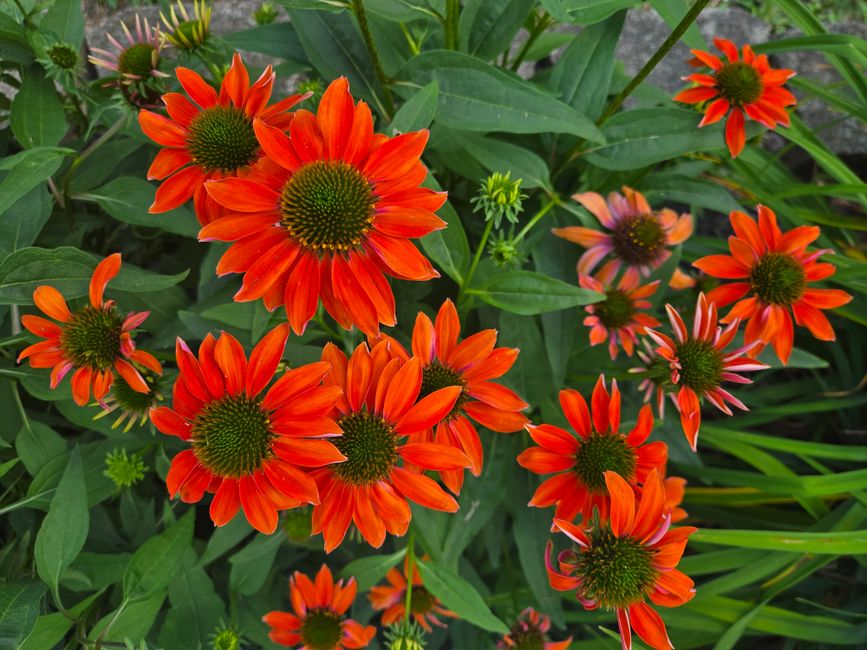
Echinacea rewards minimal care with long-lasting colour and ecological value, whether you are planting an entire prairie garden or slipping a few into your border. Modern cultivars come in a much wider palette than the classic purple: modern cultivars expand far beyond the traditional purple form, offering rich oranges, vibrant reds, sunny yellows, and even green or multicolour blooms.
Rudbeckia (Black-Eyed Susan), The Foolproof Bloomer
Black-eyed Susan is a favourite flowering perennial for cottage-style gardens and for good reason: it blooms prolifically, tolerates a range of conditions, and self-seeds gently enough to fill a border without becoming a nuisance. Short-lived perennials such as columbine tend to die out after a couple of seasons but the plants do self-seed very easily given the right conditions, creating a sustainable population; generally a hardy, low-maintenance plant, rudbeckia grows relatively well in both damp and drier soil conditions but prefers consistent and moderate moisture as well as full sun.
Rudbeckia is a valued late-season source of pollen to bees, which makes it particularly useful planted alongside echinacea and salvia to bridge the flowering gap from August through October. The golden yellow flowers light up a border even on grey autumn days, and they require nothing more than deadheading to extend the season.
Salvia, Colour on a Shoestring
Salvia is one of the most reliable drought-tolerant perennials, thriving in poor, dry soil and extreme heat while producing vibrant spikes of purple, pink, red, or blue flowers. For Hungarian and Central European gardens where July and August can be fierce, this is a significant advantage over plants that demand regular irrigation.
This garden combination is a dream for those who want vibrant colours, drought tolerance, and pollinator appeal with minimal effort. Cut back spent flower spikes mid-season for a second flush of colour. That single action, taking five minutes with a pair of shears in early July, typically doubles the flowering season. May Night and Caradonna are the two salvias that belong in every sunny border, and both are widely available across Europe.
Achillea (Yarrow), The Problem-Solver
Achillea is the flower you reach for when nothing else will work. Poor soil? Fine. Dry spell? No problem. Exposed, windy site? It stands up better than most. Yarrow and catmint are excellent must-haves for a low-maintenance garden, offering a long season of interest with the flat-topped clusters of yarrow in shades of yellow, pink, or red standing out against the soft, spiky blooms of catmint.
The flat flower heads serve as landing platforms for a wide range of insects, and the feathery foliage stays attractive even between flushes. Divide clumps every three or four years in autumn to keep the plants vigorous, that is genuinely the most demanding task they will ask of you.
How to Build a Season-Long Display
The secret to a garden that looks good from April through to October without demanding constant attention is sequencing. Think of it like having relay runners: one group is finishing as another starts.
Spring Into Summer
Start with catmint, which begins flowering as early as late April in sheltered spots, and lavender, which picks up in May and peaks in June. These two alone create a soft, fragrant foundation. Add echinacea and rudbeckia as the middle-distance runners: they take over from July and carry the baton through to September.
Late Summer Into Autumn
Start with hellebores and bleeding heart for spring, transition to echinacea, rudbeckia, and lavender for summer, and finish with asters, sedums, and ornamental grasses for autumn. Asters are the final flourish. Asters are wonderful late-season flowers that add bold colour to the garden from late summer through autumn, just as most perennials are starting to wind down, and are easy to grow with little maintenance beyond a bit of deadheading to keep blooms coming.
Pro Tip: Do not deadhead echinacea and rudbeckia in autumn. Leave the seed heads standing. They feed birds over winter and add structural interest to a frost-covered border, which is one of the most beautiful sights in a garden and costs you absolutely nothing.
Combining Plants for Resilience
Pairing echinacea with plants like rudbeckia, salvia, coreopsis, ornamental grasses, or sedum creates a dynamic and low-maintenance planting that supports pollinators and looks good from summer into autumn. This approach also creates a mutually supportive community of plants that shade each other's root zones, retain moisture, and reduce the space available for weeds.
I
Common Mistakes to Avoid
Over-watering and Over-feeding
This is the most common error I see, particularly with plants like lavender and salvia. Over-amending or overwatering can shorten their lifespan, the focus should be on drainage first, and the urge to feed lavender, rosemary, and other Mediterranean plants should be resisted, as rich soil produces weak, floppy growth that suffers in heat and drought.
Planting in the Wrong Spot
Workhorse perennials should not be considered indestructible or suitable for any placement scenario, while rugged and tough, all of these plants still have preferred cultural needs, and the distinction between mere survival and robust ornamental contribution matters. A lavender in shade or an echinacea in waterlogged clay will survive in the short term but never thrive. Take five minutes before you dig to assess the spot properly.
Ignoring the First Year
During the first year after planting, young plants need regular watering to establish a strong root system. This is the one period where low-maintenance flowers do need your attention. Once roots are established, usually by the second season, you can step back significantly.
Pro Tip: Water newly planted perennials deeply once a week for the first summer rather than shallowly every day. Deep, infrequent watering encourages roots to grow downward in search of moisture, which is exactly the behaviour that produces drought tolerance in subsequent seasons.
Skipping the Annual Cut-Back
Most perennial flowers require a bare minimum of care, including regular watering during establishment, some deadheading at least once per season, and dividing every two or three years. Skipping the annual cut-back entirely leads to woody, congested plants with progressively fewer flowers. Fifteen minutes per plant per year is a worthwhile investment.
Frequently Asked Questions
What are the best low maintenance garden flowers for a sunny plot in Hungary?
Lavender, salvia, achillea, and catmint are the four strongest performers for sunny, dry conditions. In central Hungary, outdoor planting typically begins in mid-April and ends in late October, giving you a good six-month growing window to enjoy them. All four thrive in the continental summers typical of the region without needing supplemental irrigation once established.
How many times per year do I need to tend to low maintenance perennials?
In my experience, most of the flowers on this list need attention on three occasions per year: a light trim or cut-back in spring as growth begins, a mid-season deadhead or Chelsea chop in June or July, and a light autumn tidy. That amounts to roughly two to three hours of work per border per season, genuinely achievable for a busy household.
Do these flowers attract bees and butterflies?
The RHS Plants for Pollinators list now includes over 10,000 plants, with evidence-based plant choices to benefit all pollinators, from bees and butterflies to moths and hoverflies. Nearly all the flowers covered in this article appear on or align with those criteria. Pollinating insects are in decline, but there are plenty of flowering plants to help them, and increasing flowering plants in our gardens can also improve fruit and vegetables, with more pollinating insects producing bigger and better harvests.
Can I grow these flowers in pots or on a balcony?
Yes, several work well in containers. Catmint, salvia, lavender, and smaller echinacea cultivars can all be grown successfully in pots at least 30-40 cm deep and wide. The key is using a well-draining compost mix and watering more regularly than you would with ground-planted specimens, as pots dry out faster. Place pots in full sun and avoid saucers that allow water to collect at the base.
Where can I find varieties suited to Central European conditions?
A good starting point is a specialist nursery with regional knowledge. Holland Kertészet offers a range of drought-adapted perennials selected with Central European conditions in mind, their range of drought-adapted perennials is specifically selected with Central European summer conditions in mind, which removes much of the guesswork when choosing cultivars.
A Final Thought
The most liberating thing about low maintenance garden flowers is not that they require less effort; it is that the effort they do require actually makes a visible difference. You are not spending energy compensating for poor plant choices. You are spending it on things that matter: planting combinations you love, watching pollinators work the border on a warm afternoon, or simply sitting outside with a coffee and enjoying the result of a garden that has learned to look after itself.
Amid ongoing urbanisation, gardens and Eastern European gardens needs regionally scaled strategies, and reducing pesticide use while increasing public awareness are key steps, and choosing the right, naturally resilient plants is the simplest and most immediate contribution any gardener can make.
Sources
-
Drought Impact on Ecosystems in Europe, European Environment Agency (EEA). Indicator on drought conditions in EU-27 including 2024 data. https://www.eea.europa.eu/en/analysis/indicators/drought-impact-on-ecosystems-in-europe
-
Hungary Planting Zones, Planta Greenhouses OÜ. Overview of Hungary's continental climate and planting zones 6b, 7a, 7b. https://plantagreenhouses.eu/blogs/planting-zones/hungary
-
RHS Plants for Pollinators, List Update 2025, Royal Horticultural Society. Evidence-based review of over 10,000 pollinator-friendly plants. https://www.rhs.org.uk/science/research/plants-for-pollinators
-
RHS Plants for Pollinators, Main Page, Royal Horticultural Society. Year-round flowering plants to support pollinators. https://www.rhs.org.uk/science/research/plants-for-pollinators
-
Is Lavender Drought Tolerant?, Homes and Gardens. Expert advice on lavender varieties and drought resilience. https://www.homesandgardens.com/gardens/is-lavender-drought-tolerant
-
25 Low-Maintenance Perennials That Come Back Stronger Every Year, Blooming Expert. Care guidance for lavender, echinacea, salvia, and rudbeckia. https://www.bloomingexpert.com/garden/best-perennials/
-
Echinacea: Your UK Guide to Growing This Stunning, Bee-Friendly Perennial, The Culinary Herb Co. Growing guide for echinacea in European conditions. https://www.culinaryherbco.co.uk/blogs/news/echinacea-uk-growing-guide
-
Catmint Plant Care: Easy Perennial Growing Guide, Proven Winners. Care and planting advice for Nepeta varieties. https://www.provenwinners.com/learn/how-to/catmint
-
Create A Low-Maintenance Flower Garden With 15 Perennials You'll Love, House Digest. Perennial recommendations including asters and phlox. https://www.housedigest.com/2011712/low-maintenance-perennials-plant-fall-easy-flower-garden/
-
A Captivating Perennial Planting with Rudbeckia, Salvia, Verbena and Antirrhinum, Gardenia.net. Plant combination guide including drought-tolerant perennials. https://www.gardenia.net/guide/drought-tolerant-perennials-for-color-that-last
-
Drought Tolerant Garden Plants: 2026 Guide, Holland Kertészet. Regional plant recommendations for drought-adapted perennials in Central Europe. https://www.hollandkerteszet.hu/en/blogs/my-garden-blog/drought-tolerant-garden-plants
-
Improving Biodiversity in Central and Eastern European Gardens, ScienceDirect / Urban Forestry and Urban Greening. Peer-reviewed study on gardening practices across nine CEE countries. Amid ongoing urbanisation, gardens
-
Garden Design Trends for 2025, Gardens Illustrated. Overview of naturalistic planting trends and low-maintenance approaches. https://www.gardensillustrated.com/garden-design/gardening-design-trends-2025
-
Worsening Drought and Record Heat Grip Europe, European Commission Joint Research Centre. August 2026 drought report covering Hungary and Central Europe. https://joint-research-centre.ec.europa.eu/jrc-news-and-updates/worsening-drought-and-record-heat-grip-europe-fuelling-extraordinary-wildfires-and-extremely-low-2026-08-12_en


