

From Tiny Seeds to Frosted Summer Foliage
A friendly guide to sowing, growing, cutting and enjoying Snow-on-the-Mountain in Hungary.
Come Into the Garden With Me…
Today, we're growing a plant with one of the most wonderfully misleading names in the seed box: Snow-on-the-Mountain.
It does not need snow. It does not grow on a mountain. And the part that looks like a white flower is mostly not a flower at all.
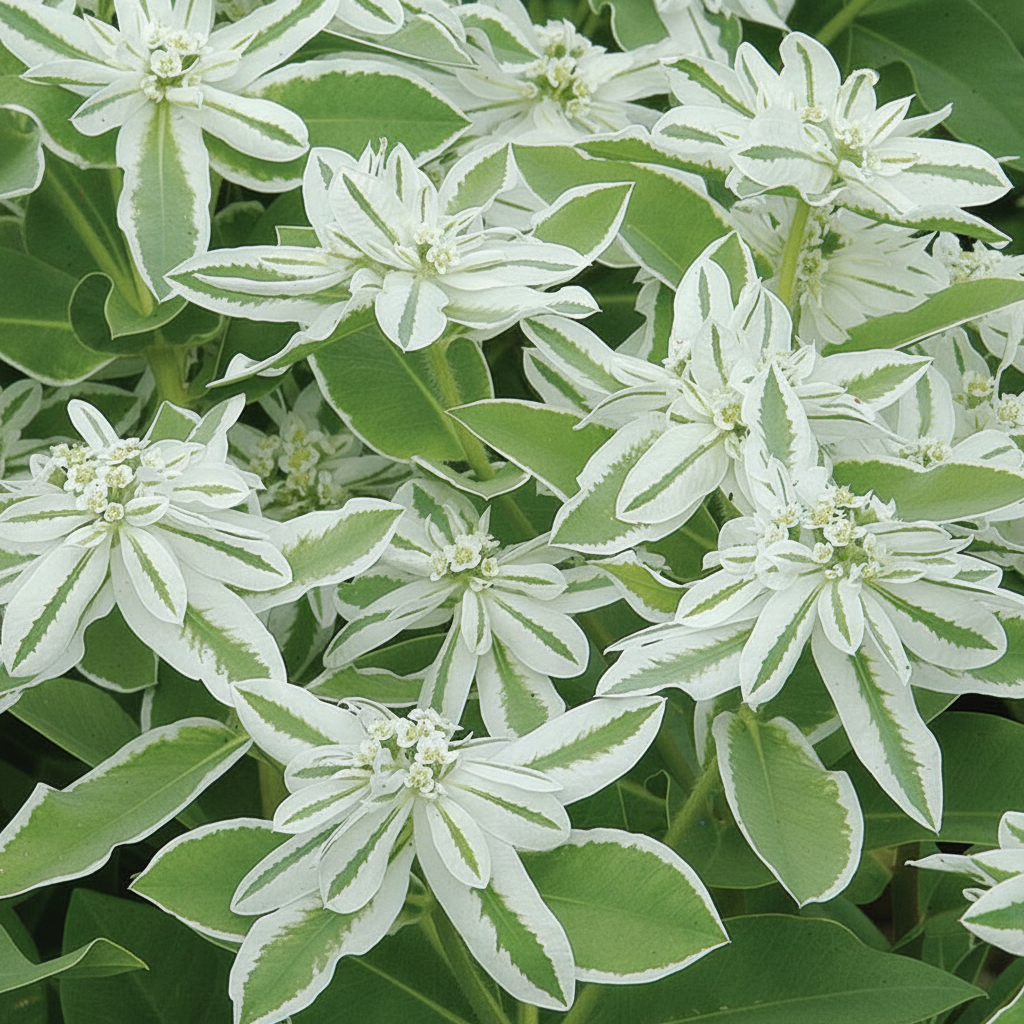
Our plant is Euphorbia marginata, an annual from the spurge family. It begins the season quietly green, then the upper leaves and bracts develop crisp white margins that look almost frosted.
For us in Hungary, this is a very useful summer annual. It enjoys sunshine and warmth, copes well with ordinary well-drained soil, and brings a cool white-and-green contrast to borders in the hottest part of summer.
We'll begin with seed, learn when to sow, how to avoid disturbing young roots, where to plant, how to keep the stems sturdy, when the white margins appear, how to cut it safely, and how to save seed for another year.
There is one important point we will repeat throughout this little book: Snow-on-the-Mountain contains a milky Euphorbia sap that can irritate skin and eyes. Gloves are sensible whenever you cut or clear mature plants.
Ready? Let's grow something that looks cool even on the hottest day.
1. Meet Snow-on-the-Mountain
Snow-on-the-Mountain is the common name for Euphorbia marginata, an upright, branching annual in the spurge family. Its real flowers are small; the striking summer display comes from the white-edged upper leaves and bracts.
Why does it look white?
As the plant matures, the upper foliage develops broad white margins. Against the green centres of the leaves, those pale edges create the frosted appearance that gives the plant its common name.
Most plants reach around 60–80 cm in good conditions. One well-branched plant can make a surprisingly substantial presence in a mixed border or cutting garden.
Annual means one season
In Hungary, treat Euphorbia marginata as a one-season plant. It germinates in spring, grows and colours through summer, sets seed, and is finished by autumn frost rather than returning from the same roots next year.
|
GOOD TO KNOW Snow-on-the-Mountain is a warm-season annual. The striking white parts are mainly modified leaves and bracts, not large white petals. It loves Hungarian summer but does not survive frost. |
2. Give It Sun and Good Drainage
If Snow-on-the-Mountain could choose its own address, it would ask for a bright, open position and soil that never stays waterlogged.
Full sun is best
Strong light encourages compact growth and the clearest white edging. A sunny bed around Győr, a warm border near Pécs or an open garden on the Great Hungarian Plain can suit it very well.
Too much shade can produce taller, softer plants and less impressive variegation. This is a plant that looks coolest when it is actually growing somewhere warm and bright.
Ordinary soil is fine
Average to relatively lean, well-drained garden soil is ideal. Snow-on-the-Mountain does not need rich feeding and can perform well where thirstier summer plants struggle.
If your garden has heavy clay, improve the structure and avoid low places where water remains after storms. Heat tolerance does not mean tolerance of wet roots.
Give it room to branch
Small seedlings are easy to crowd, but mature plants become upright and branching. Around 25–30 cm between plants is a useful starting point, with a little more room in very rich soil.
|
A COMMON MISTAKE Expecting tiny green seedlings to show the final white variegation. The frosted margins develop later as the plant matures. Give it time, strong light and enough room to branch. |
3. The Snow-on-the-Mountain We Grow With You
This chapter is pleasantly simple because there is only one star: Euphorbia marginata, grown for its crisp white-and-green summer foliage.
The Holland Kertészet packet contains approximately 15 seeds. That may sound modest, but each established plant branches and occupies useful space, so a handful of good plants can create a strong effect.
A foliage plant with flower power
The true flowers are small and not the main attraction. What makes the plant memorable is the white-edged upper growth surrounding them, which gives a border the look of fresh frost in midsummer.
Useful height
At roughly 60–80 cm, Snow-on-the-Mountain sits naturally in the middle of a border. It is tall enough to be noticed but usually not so tall that it hides everything behind it.
Excellent for cutting
The firm stems and white-edged foliage are useful in bouquets where they act as a calm, graphic contrast to brighter flowers. Always remember the irritating milky sap when cutting.
A small packet goes a long way
You do not need a hundred seedlings. Five or six well-spaced plants can make a useful group, while a slightly longer row gives you stems to cut without emptying the ornamental border.
Think contrast
White and green sit beautifully beside orange marigolds, bright zinnias, magenta celosia, blue salvia, dark basil and ornamental grasses. It is a supporting actor that can quietly make the whole planting look better.
|
GROW WITH US The Holland Kertészet packet contains approximately 15 seeds. You do not need a huge number: a handful of well-spaced plants can create a surprisingly strong white-and-green effect. |
4. Let’s Sow the Seeds
Snow-on-the-Mountain is straightforward from seed, but it appreciates one small kindness: avoid unnecessary root disturbance while the seedlings are young.
When to sow in Hungary
You can start seed under protection in late winter or early spring for an earlier display, or direct-sow outdoors once the soil has warmed and the worst frost danger has passed.
How to sow
Sow the seeds shallowly and cover lightly, around 0.5–1 cm deep. Keep the compost or seedbed gently moist while germination begins rather than letting it repeatedly dry out.
Warm spring conditions help. Indoors, around 18–24°C is a useful range. Germination is often seen in roughly 10–14 days, although a packet may not all wake up on exactly the same morning.
Modules make life easier
If starting indoors, use individual cells or small modules rather than crowding seedlings into one tray. Euphorbia marginata can resent rough root disturbance once plants become larger.
Give the seedlings plenty of light. Warmth without enough light creates stretched, pale growth, while good light helps them stay sturdy and compact before planting out.
|
DON’T PANIC If germination is a little uneven, do not immediately start feeding or overwatering. Check warmth, moisture and sowing depth first. Euphorbia marginata may simply need a little more time. |
5. Planting Out in Hungary
Now the seedlings are growing, spring is warming and the garden is becoming tempting. This is where a little patience protects all the work you have already done.
Wait for frost to pass
Snow-on-the-Mountain is a warm-season annual. In much of Hungary, May is a comfortable planting-out month, once damaging late frost is no longer expected in your own garden.
Harden them off
Plants raised indoors need a gradual introduction to sun, wind and cooler nights. Put them outside in a sheltered place for a few hours at first and increase the time over about a week.
Planting
Set young plants at the same depth they were growing in their modules and keep the root ball as intact as possible. Water them in thoroughly so soil settles around the roots.
Space plants around 25–30 cm apart. In exposed gardens, a small group often supports itself better than one isolated plant catching every gust of wind.
|
WHAT I WOULD DO Plant a small group in the flower border and another short row in the cutting garden. You will have enough frosted stems for the vase without leaving gaps in the display. |
6. Summer Care: Cool Foliage in Hot Weather
By early summer, the plain green seedlings should be turning into branching plants. From here, Snow-on-the-Mountain asks for remarkably little fuss.
Water deeply, not constantly
Water regularly while plants are establishing. Once rooted, they cope with short dry periods, but prolonged Hungarian heatwaves still justify a deep drink when the soil has genuinely dried.
A plant in open ground will usually need water less often than one in a container. Check the soil itself rather than watering simply because the calendar says Tuesday.
Feeding
Heavy feeding is unnecessary. Too much nitrogen can produce lush, soft growth that flops more easily. In average garden soil, a modest amount of compost is usually enough.
The white edges arrive
Do not worry if young plants look completely green. The characteristic white margins appear later as the plant matures, usually becoming much more noticeable from midsummer onward.
Deadheading is different here
Unlike petunias or marigolds, Snow-on-the-Mountain is grown largely for foliage and bracts, so constant deadheading is not essential. If you want seed, allow selected stems to mature toward autumn.
|
GOOD TO KNOW The decorative white margins strengthen as summer advances. Full sun, sensible watering and modest feeding help keep plants compact, sturdy and beautifully marked. |
7. When Something Goes Wrong
Snow-on-the-Mountain is generally uncomplicated, but a few familiar growing problems can still tell you when conditions are not quite right.
Seedlings fail to appear
The seedbed may have dried out, the seed may have been covered too deeply, or temperatures may still be too cool. Keep the surface gently moist and give germination time.
Plants are tall and floppy
Too much shade, crowded planting, very rich soil or excessive nitrogen can all encourage weak growth. More light and less pampering usually produce a sturdier plant.
White margins are disappointing
The plant may simply be too young. If mature plants remain mostly green, check that they are receiving enough strong light and are not being pushed into soft growth by heavy feeding.
Leaves yellow from the bottom
Check the roots and the soil. Prolonged drought can cause stress, but so can poor drainage. The answer is not automatically more water.
Sap gets on your skin
Wash it off promptly with plenty of water and avoid touching your eyes. If sap enters the eyes or causes a significant reaction, seek appropriate medical advice.
|
DON’T PANIC A green young plant is not a failed plant. Give it time to mature. If an established plant is weak or poorly marked, then check sunlight, spacing, feeding and drainage. |
8. Foliage for the Garden - and the Vase
This is where Snow-on-the-Mountain earns a permanent place in many summer gardens. The white-edged foliage works as both a garden contrast and distinctive cut material.
In the garden
Use it in small groups through a sunny border. The cool white-and-green pattern creates breathing space between strong reds, oranges, pinks and purples without disappearing into the background.
Cutting
Cut stems when the white margins are well developed and the growth feels firm. Wear gloves, avoid touching your face, and place the stems promptly into clean water.
Because fresh Euphorbia stems release milky latex sap, handle them carefully. Keep cut material away from children and pets and never treat the plant as edible foliage.
Keep some stems for the garden
A small cutting row is useful if you love arranging flowers. You can harvest generously while leaving your ornamental group intact to continue cooling the border visually.
|
TRY THIS Plant Snow-on-the-Mountain beside warm-coloured zinnias, celosia or marigolds. The white-edged foliage acts like a visual pause between stronger colours and makes them look even richer. |
9. Designing, Seed Saving and Autumn
Snow-on-the-Mountain is a natural contrast-maker, and the end of the season gives you the chance to collect seed for another summer.
Design with contrast
Pair it with warm-coloured zinnias, celosia or marigolds for drama, or combine it with white cosmos, blue salvia and silver foliage for a cooler, quieter planting.
Because the plant is upright and branching, it usually works best in the middle of a border rather than right at the very front.
Saving seed
Leave a few healthy stems to mature. The small flowers form seed capsules; collect them when dry and mature but before all the seed has scattered naturally into the garden.
Place cut seed stems or capsules in a paper bag and let them finish drying somewhere ventilated. Store completely dry seed in a cool, dark, dry place until spring.
Then frost arrives
Snow-on-the-Mountain does not overwinter outdoors in Hungary. Once a serious autumn frost arrives, the season is over and the plants can be cleared away.
Healthy material can be composted, but wear gloves while handling mature Euphorbia stems. Any seed you saved can wait safely indoors until spring brings us back to the beginning.
|
A COMMON MISTAKE Forgetting gloves when autumn cleanup begins. The plant may be finished, but the stems can still release irritating milky sap. Handle mature plants with the same care you used when cutting them for the vase. |
10. Your Snow-on-the-Mountain Cheat Sheet
We've gone from a plain green seedling to frosted summer foliage. Here's the whole journey in one place.
1. Snow-on-the-Mountain is Euphorbia marginata.
2. Treat it as an annual in Hungary.
3. Sow under protection in late winter or early spring, or direct-sow in spring.
4. Cover seed lightly, around 0.5–1 cm.
5. Warm conditions help germination.
6. Use modules if starting indoors to reduce root disturbance.
7. Harden plants off before permanent outdoor planting.
8. Wait until damaging frost risk has passed.
9. Choose full sun for the best white-edged foliage.
10. Use ordinary to lean, well-drained soil.
11. Space plants roughly 25–30 cm apart.
12. Water young plants while they establish.
13. Water established plants deeply during prolonged dry periods.
14. Avoid excessive nitrogen feeding.
15. Be patient: the white margins develop later.
16. Cut stems when the white edging is well developed.
17. Wear gloves because the milky sap can irritate skin and eyes.
18. Do not eat any part of the plant.
19. Save mature, dry seed if you want plants next year.
20. Expect autumn frost to finish the season.
If You Remember Only Five Things…
1. Give it sunshine
Strong light gives sturdier plants and the clearest white-edged foliage.
2. Do not overfeed
Average or relatively lean soil usually produces stronger growth than rich, nitrogen-heavy feeding.
3. Be patient with the white
Young seedlings start green. The dramatic frosted margins develop later as the plant matures.
4. Respect the milky sap
Wear gloves when cutting or clearing plants. Euphorbia sap can irritate skin and especially eyes.
5. Use it as a contrast plant
White-and-green foliage makes strong summer colours look even better and is equally useful in a vase.
One Last Walk Around the Garden
Do you remember where we started?
With a small packet of seeds and one important name: Euphorbia marginata.
At first, there was nothing snowy about it. The seedlings were simply green, upright and rather ordinary. We gave them light, resisted overfeeding them, and kept their roots gently cared for while they became established.
We waited until frost danger had eased, hardened the young plants off, and moved them into a sunny place where the soil drained freely and the stems had room to branch.
Then Hungary did what Hungary does in summer. The days became hot, the light became strong, the soil dried between waterings - and slowly the upper leaves began to paint themselves with white.
Perhaps you planted yours beside orange marigolds. Perhaps it cooled a bed of magenta zinnias, or became the quiet white-and-green stem that made a summer bouquet suddenly look finished.
By the end of the season, you know something you didn't know in spring. You know when the white margins appear in your garden, how much water your soil holds, how large the plants become, and where you want them next year.
That is what this series is really about: not memorising instructions, but learning a plant until it begins to feel familiar.
So cut a few stems for the house. Leave a few seed capsules to mature. Wear your gloves, enjoy the last warm days, and let autumn frost close the season.
And when you're ready for the next plant…
Come into the garden with me.


