

From a Pinch of Seed to Silk-Petalled Flowers
A friendly guide to sowing, growing and enjoying poppies in Hungary.
Come Into the Garden With Me…
Today, we're growing poppies.
This time we begin with something almost absurdly small: a pinch of seed that can look more like dust than the beginning of a flower. Give it cool weather, light and a little patience, and a few months later the garden can be full of silk-like blooms.
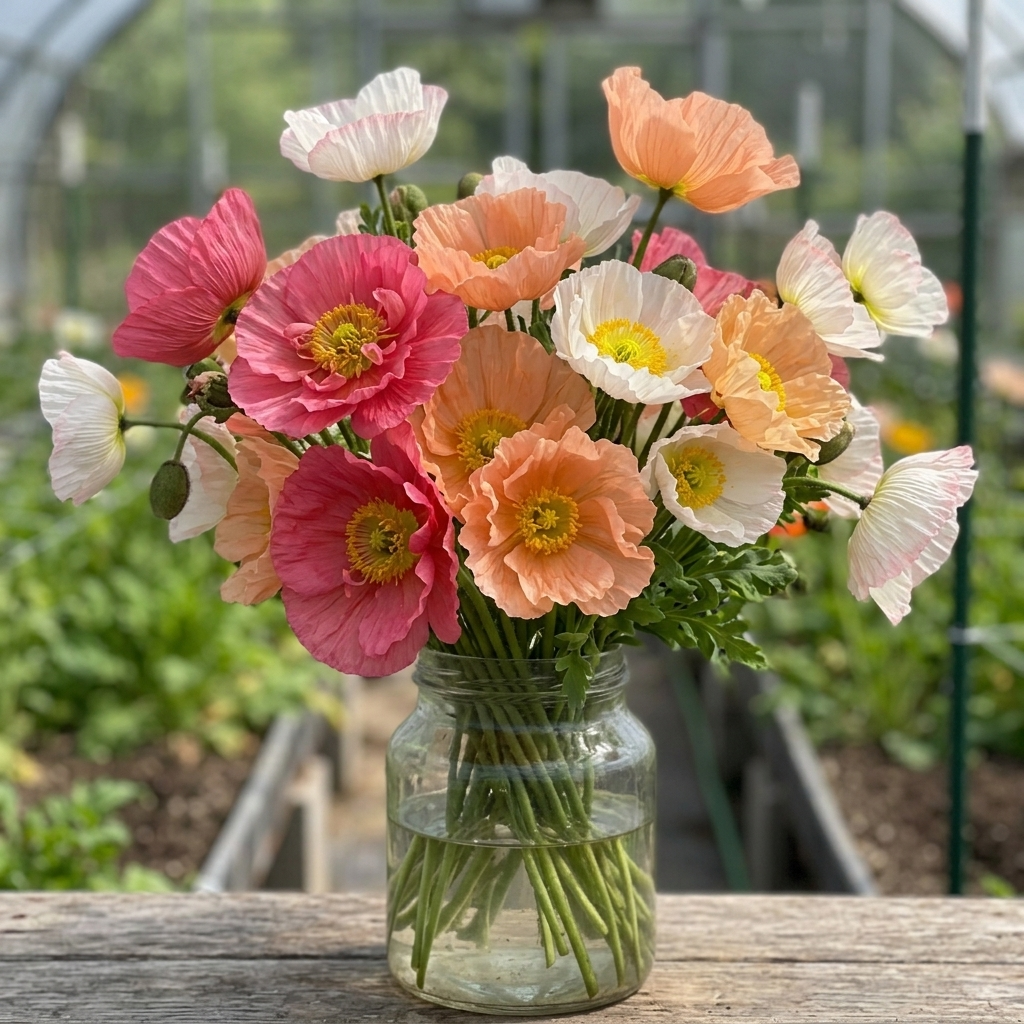
Poppies have a particular kind of magic. Their nodding green buds straighten, split and suddenly reveal petals that look like crumpled silk.
Most annual poppies are happiest sown where they will flower. Their roots dislike disturbance, so direct sowing is usually simpler than raising trays of seedlings.
That suits Hungary well: poppies enjoy cool spring growth and can flower before the strongest summer heat arrives.
We'll meet the poppies in the Holland Kerteszet range and go from sowing tiny seed to flowers, seedheads and next year's possibilities.
1. Meet the Poppy
The name 'poppy' covers a varied group. The classic field poppy is Papaver rhoeas, and garden selections of it include Shirley poppies and Mother of Pearl.
Other ornamental poppies belong to different Papaver species. Iceland poppy is usually Papaver nudicaule, while some old-fashioned ornamental varieties belong to Papaver somniferum.
And what about California poppy?
California poppies also appear on the Holland Kerteszet website, but they are Eschscholzia rather than Papaver. They deserve their own book rather than being squeezed into the same instructions.
Why grow poppies?
Because few flowers give so much beauty for so little effort. Poppies drift through borders, attract insects and leave sculptural seedheads after flowering.
|
GOOD TO KNOW Annual poppies are often happiest when sown directly where they will flower. Their roots dislike being disturbed, so this is one of those occasions when the easiest method can also be the best method. |
2. The Right Place in a Hungarian Garden
Poppies love light. Give them a sunny position and reasonably well-drained soil; deep shade and permanently soggy ground are poor choices.
They do not need rich, heavily fertilised soil. Too much feeding can create soft leafy growth and weaker stems.
In Hungary, early spring sowing is the easiest starting point. Hardy annual types can also be tried in autumn on well-drained soil, but winter wet can be troublesome.
3. The Poppies We Grow With You
The current Holland Kerteszet range includes Single Flowered Mixed, Danish Flag, Shirley Mixed, Mother of Pearl and Iceland Poppy - Excelsior.
Single Flowered Mixed
Single Flowered Mixed gives the classic airy poppy look and a surprise of colour. It is especially pretty woven informally through a border.
Shirley Mixed
Shirley poppies are Papaver rhoeas selections known for soft shades such as blush, salmon, white and rose. They suit romantic borders beautifully.
Mother of Pearl
Mother of Pearl is another Papaver rhoeas selection, loved for pale, pearly pinks, mauves, whites and softly washed tones.
Danish Flag
Danish Flag is bolder: traditionally scarlet with striking white markings at the base of the petals. Some strains sold under this old name belong to Papaver somniferum, so follow the species information and current local requirements for the seed you buy.
Iceland Poppy - Excelsior
Iceland Poppy Excelsior, Papaver nudicaule, is a cool-loving short-lived perennial or biennial with luminous yellow, orange, cream, white and pastel flowers.
|
GROW WITH US Choose by feeling rather than by name alone. Shirley and Mother of Pearl are soft and romantic; Danish Flag is bold and graphic; Iceland Poppy Excelsior is luminous and cheerful; a single-flowered mixture gives you a little bit of surprise. There is no rule saying you have to choose only one. |
4. Let's Sow
Open the packet carefully. Poppy seed is tiny enough that a gust of wind can make the planting decisions for you.
When should we sow?
For annual Papaver types in Hungary, sow early in spring as soon as the soil can be worked. A second small sowing a few weeks later can extend the season.
Prepare the soil, but do not overdo it
Rake the surface fine and crumbly, remove large weeds, and remember that poppy seed should be sown very shallowly.
The sand trick
Mix the seed with a little dry fine sand to make scattering easier. Sow thinly, press gently into the surface and cover only very lightly.
Do not bury the seed deeply. A very light dusting of fine soil is enough, and in some situations simply pressing the seed into contact with the soil is better than covering it heavily.
Water like rain, not like a fire hose
Water with a fine rose or gentle spray so the seed stays where you put it.
|
A COMMON MISTAKE Sowing poppy seed too deeply. Tiny seed has very little stored energy. Give it a fine surface, good contact with the soil and only the lightest covering. If you bury it like a bean, you may wait a very long time for nothing to happen. |
5. The First Green Thread
Poppy seedlings begin as tiny green threads. Keep the surface from drying completely until they establish, then let the soil breathe between waterings.
Thin them - even though it feels cruel
Thinning is difficult but worthwhile. Crowded poppies compete for light and water and usually make weaker stems.
Thin gradually so plants have room. Around 15-25 cm is useful for many annual poppies, with more space for larger forms.
If seedlings are touching, snip extras at soil level rather than pulling and disturbing the roots you want to keep.
Can I transplant them?
Annual poppies generally resent transplanting. If you must move one, do it while small and lift as much soil around the roots as possible.
|
DON'T PANIC Your poppies are not perfectly evenly spaced. Good. A poppy patch often looks more beautiful when it is a little irregular. We want healthy plants, not a military parade. |
6. Growing Strong Poppies
Once established, poppies become surprisingly independent. Our job is mostly to give them sun, reasonable moisture and space.
Watering
Young plants need moisture while they establish. Later, water deeply when the soil actually needs it rather than sprinkling every evening.
Feeding
Poppies need little feeding in ordinary garden soil. Too much nitrogen encourages foliage instead of flowers.
Do they need support?
Most annual poppies stand well on their own, though taller plants in exposed sites may appreciate discreet twiggy support.
The heat question
Poppies are happiest when most growth happens before the hottest Hungarian weather. Very late sowings can rush into heat and flower less generously.
|
WHAT I WOULD DO Sow one patch early, then make a smaller second sowing a few weeks later. You will learn immediately how timing behaves in your own garden - and you may stretch the flowering season at the same time. |
7. When Something Doesn't Look Right
Poppies are easy-going, but problems still happen. Look at the plant and the weather together before reaching for a treatment.
Seedlings disappear overnight
Slugs and snails can damage tender seedlings in damp weather. Check for ragged leaves and slime trails.
Plants are crowded and weak
Weak, crowded plants usually need thinning, not more fertiliser.
Leaves have pale powdery patches
Powdery mildew can appear on stressed or crowded plants. Good spacing and airflow help.
Aphids on buds and stems
Aphids may gather on tender stems and buds. Small colonies are easiest to deal with early.
Flowers last only a short time
Individual poppy flowers are naturally fleeting. Grow enough plants that new buds keep opening as old petals fall.
Nothing flowered before the heat
If flowering is late or poor, check timing, sunlight and crowding; sow earlier next season if summer heat arrived first.
|
A COMMON MISTAKE Seeing a poppy finish flowering and assuming the whole plant has failed. Look at the seedhead forming behind the petals. The flower may be over, but the plant is already preparing the next chapter. |
8. Flowers!
And then one morning the buds begin to lift.
A poppy bud nods while it develops, then straightens just before opening. The green casing drops and the petals unfold - one of the loveliest small performances in the garden.
For the garden
Poppies look best in loose drifts, mingling with cornflowers, nigella, calendula, larkspur, grasses or yarrow.
Can I cut poppies for a vase?
Yes. For the vase, cut when the bud is coloured and just beginning to crack open, and place the stems into water promptly.
Poppies are not the longest-lasting cut flower, so I grow them for beauty rather than expecting them to behave like chrysanthemums.
Deadhead or keep the seedheads?
Deadhead some flowers for neatness and leave others to mature into the beautiful seed capsules that make poppies special.
|
TRY THIS Plant a soft poppy such as Mother of Pearl beside something with a completely different shape - blue cornflowers, airy grasses or flat-headed yarrow. The contrast makes those tissue-paper petals look even more delicate. |
9. After the Petals Fall
Poppies have one of the nicest endings of any annual: the petals fall and a sculptural green seed capsule remains.
Saving seed
Wait until capsules are dry and seed moves freely inside. Collect on a dry day into a paper bag, dry fully and label with the variety and year.
Will seedlings come true?
Saved seed from open-pollinated plants may vary, especially when several compatible varieties grow together. Enjoy the surprise or buy fresh named seed when exact colour matters.
Self-seeding
Leave a few capsules and poppies may self-seed, appearing the next spring in places the garden chose for itself.
And Iceland poppies?
Iceland poppies can behave as short-lived perennials or biennials. Excellent drainage and cooler conditions improve their chances of returning.
|
GOOD TO KNOW Poppy seedheads are beautiful in dried arrangements. If you want them for decoration, cut mature, dry capsules with a good length of stem and finish drying them somewhere airy. Do not assume ornamental seed or seedheads are edible; only use seed for food when it is specifically sold and labelled for that purpose. |
10. Your Poppy Cheat Sheet
Poppies in Hungary: from a pinch of seed to a garden full of colour.
• Choose a sunny, reasonably well-drained position.
• For annual Papaver types, direct sowing is usually easier than transplanting.
• Sow early in spring so plants can establish before summer heat.
• Scatter tiny seed thinly and cover only very lightly.
• Mix seed with dry sand if you want more even sowing.
• Keep the surface gently moist during germination.
• Thin crowded seedlings rather than letting them compete.
• Do not overfeed; rich soil can create soft, leafy plants.
• Watch young plants for slugs and snails.
• Expect individual flowers to be fleeting - grow enough plants for a succession of blooms.
• Cut vase stems at the coloured bud stage, just as they begin to open.
• Leave some seed capsules because they are beautiful and useful.
• Save dry seed in labelled paper envelopes.
• Let a few plants self-seed if you enjoy a slightly wild garden.
If You Remember Only Five Things…
1. Sow them where you want them
Annual poppies dislike root disturbance. Direct sowing keeps life simple.
2. Start early
Cool spring weather is your friend. Hungarian summer heat arrives soon enough.
3. Tiny seed means shallow sowing
Do not bury poppy seed deeply.
4. Thin the seedlings
A few strong plants will give you more than a crowded carpet of weak ones.
5. Leave some seedheads
The flowers are only half the story. Seed capsules bring beauty, seed and next year's surprises.
One Last Walk Around the Garden
Do you remember where we started? With seeds so small they barely looked capable of becoming anything.
We scattered them over cool spring soil, watered gently, watched the first green threads appear and thinned them until each plant had room.
Then stems rose, buds nodded and one morning a flower opened like coloured silk in the middle of the garden.
Perhaps yours was a soft Mother of Pearl pink, a gentle Shirley shade, a bold Danish Flag or a luminous Iceland poppy.
The petals eventually fell, but seedheads remained and the plant quietly prepared next year's possibilities.
That is what I like about poppies. We sow them, but they keep a little freedom of their own - and gardens are better for it.
Save some seed, let a few plants sow themselves, and next spring come back to see where the first crumpled petals unfold.
Come into the garden with me.


