

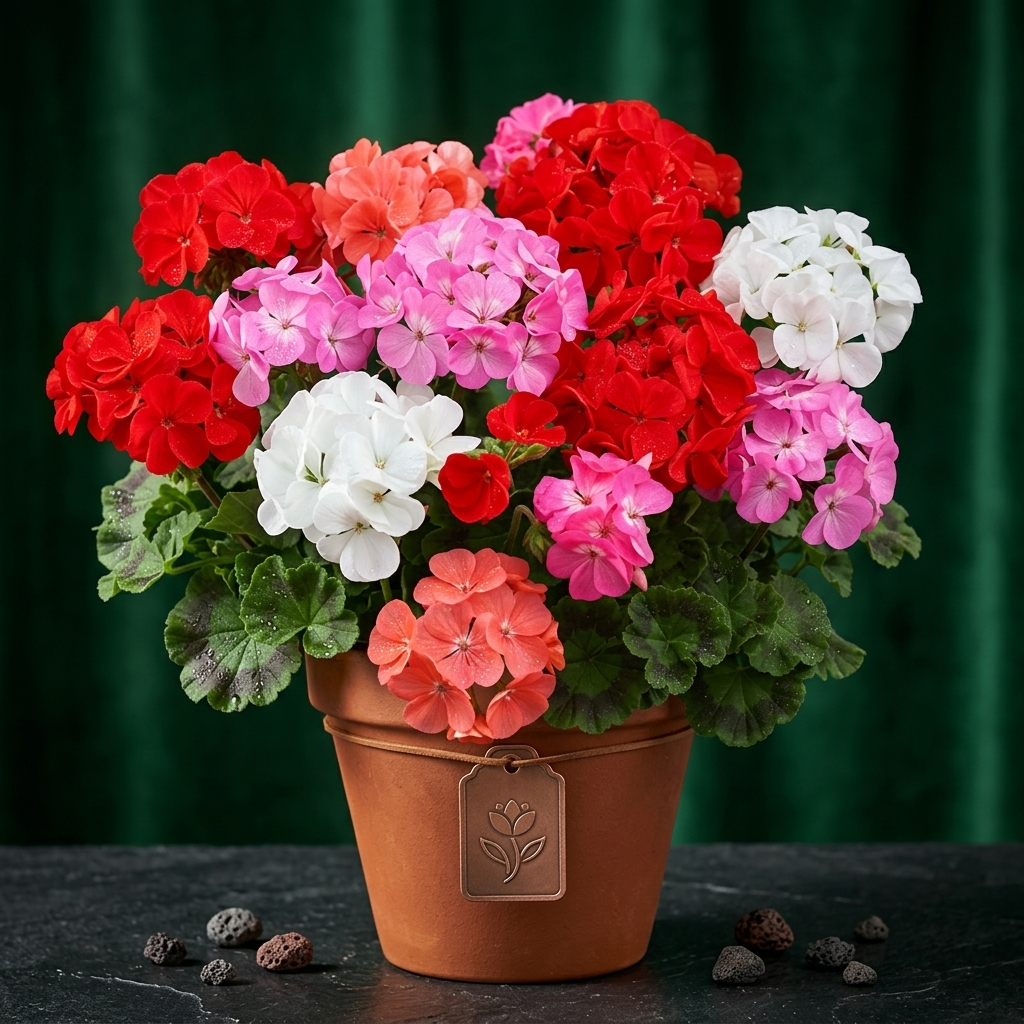
From Ten Tiny Seeds to a Balcony Full of Summer Colour
A friendly guide to sowing, growing and enjoying geraniums in Hungary.
Come Into the Garden With Me…
Today, we're growing geraniums. Or, to be botanically precise, we're growing pelargoniums - the cheerful, sun-loving plants that have been spilling from Hungarian balcony boxes and terrace pots for generations.
This is one of those gardening names that causes confusion. In everyday language we call them geraniums. Garden centres call them geraniums. Your grandmother probably called them geraniums. But the bright red, salmon, pink and white plants we grow in window boxes are usually Pelargonium, not the hardy perennial Geranium that survives outdoors through winter.
For this book, we'll use the familiar word geranium, but we'll know exactly what we mean: compact zonal pelargoniums grown from seed for summer colour.
And they are wonderfully rewarding. Start them early, give them warmth and light, wait until Hungarian frost has properly finished, and by summer those ten tiny seeds can become sturdy little plants covered in rounded clusters of flowers.
We'll go from seed to seedling, from first pot to balcony box, through watering, feeding, deadheading, heat, storms, pests and autumn. We'll even decide whether to say goodbye at the first frost or carry a favourite plant indoors for winter.
1. Meet the Geranium - Which Is Really a Pelargonium
The plants in the Holland Kertészet geranium range are zonal pelargoniums, commonly grouped around Pelargonium x hortorum. They have rounded, slightly fleshy leaves, often marked with a darker 'zone', and strong stems topped with clusters of flowers.
Botanically, pelargoniums are tender perennials. In a frost-free climate they can live for years. In Hungary, however, we normally grow them as annual summer plants because frost will kill them outdoors.
|
GOOD TO KNOW If someone tells you their hardy geranium comes back every spring while yours dies in winter, you may both be right. Hardy Geranium and balcony Pelargonium are relatives, but they are not the same garden plant. |
2. Finding the Right Place
Geraniums are happiest where summer actually feels like summer. Give them plenty of light, good air movement and soil or compost that drains freely.
Sunshine
Most zonal pelargoniums flower best in full sun. A bright terrace in Győr, a balcony in Budapest or a sunny courtyard in Pécs can suit them beautifully. They will tolerate some light shade, especially during the fiercest afternoon heat, but too much shade usually means more leaves and fewer flowers.
Containers are their natural stage
These plants were made for balcony boxes, window boxes and terrace pots. Containers also let us control drainage easily. Use a good-quality potting mix and make sure excess water can escape freely through the bottom.
A pot that stays waterlogged after every watering is far more dangerous than one that dries a little between drinks.
|
A COMMON MISTAKE Putting three small geranium seedlings into an enormous decorative pot with no drainage hole. It looks generous. To the roots, it can feel like living in a bathtub. |
3. The Geraniums We Grow With You
At Holland Kertészet, our current seed-grown geranium collection gives you five very different colour moods, all in compact F1 types that are excellent for pots, balcony trays and summer bedding.
Five colours, five moods
Magic Beauty F1 is the adventurous mixture, with white, pink, salmon, purple and warm red. Cherie F1 is soft salmon. Bright Eyes F1 is red with a crisp white heart. Apollo F1 is clean, elegant white. Mustang F1 gives a lively mix of red, pink, salmon and white on vigorous, well-branched plants.
|
GROW WITH US Choose the colour you naturally reach for - or choose Magic Beauty if you would rather let the seed packet surprise you. |
4. Let's Sow
Geraniums are not the flower we casually scatter outdoors in May and hope for the best. They take time. If we want good plants ready for summer, we start early.
When to sow in Hungary
The Holland Kertészet seed varieties are intended for indoor sowing from January through April. Around 20°C is a useful germination temperature. An early sowing gives the plants time to become sturdy before they move outside after the danger of late frost.
January and February sowings need especially good light. If your windowsill is dark, waiting until March may produce better, sturdier seedlings than starting very early in poor light.
Sowing the seeds
Fill small pots or modules with a fine seed-starting compost and moisten it first. Sow the seeds individually if you can, cover lightly according to the packet guidance, and keep them warm and evenly moist while they germinate.
Do not keep the compost soaking wet. Warm, wet compost with very little air is exactly the sort of environment where young roots can get into trouble.
The first shoots
Once seedlings emerge, light becomes just as important as warmth. Give them the brightest position you can. Pale, stretched seedlings leaning toward a window are asking for more light, not more fertiliser.
|
DON'T PANIC Geranium seedlings begin slowly compared with marigolds or cosmos. That is normal. We started early precisely because this plant likes to take its time before putting on its summer show. |
5. From Seedling to Summer Plant
Once the seedlings have several true leaves and are large enough to handle comfortably, move them into their own small pots if they are not already growing separately.
Pot them on - but not into a bucket
Move up pot sizes gradually. A small root system in a huge volume of wet compost can stay damp for too long. A slightly snug pot is easier to manage while the young plant is establishing.
Pinching for a bushier plant
Many modern F1 pelargoniums branch well naturally, but if a young plant becomes tall and narrow, pinching the growing tip can encourage more side shoots. More side shoots usually means a fuller plant and more places for flowers to develop.
Hardening off
Now comes the Hungarian spring problem. A warm April afternoon can convince us that summer has arrived. The following night may have other ideas.
Geraniums are frost-tender. Gradually harden them off by putting them outside for increasing periods in mild weather, then plant them permanently outdoors only after the risk of late frost has passed. For much of Hungary, mid-May is the sensible landmark rather than an absolute promise.
Choose a bright place, water them in, and let them settle. Don't immediately drown them because planting day feels important.
|
WHAT I WOULD DO Grow one or two plants in individual pots and several together in a balcony box. By August you'll know exactly which setup is easiest to water and which one gives you the display you like best. |
6. Summer: Water, Feed, Repeat
By June, the little seedlings should finally look like proper geraniums. This is when the plants start paying us back for all that early sowing.
Watering
Pelargoniums are quite drought tolerant once established, but container plants still depend on us. Water thoroughly when the compost is beginning to dry, then allow the excess to drain away. Avoid keeping the roots permanently wet.
In July, a balcony box facing south in Budapest may need checking every day. The same plant in a large pot in a partly sheltered garden may need much less frequent watering. The plant does not care what day of the week it is. Check the compost.
Feeding
Container geraniums are hungry because every watering carries some nutrients away. Regular feeding during active growth and flowering keeps plants productive. Follow the fertiliser label rather than making the solution stronger because you want more flowers faster.
Deadheading
Remove finished flower heads regularly. Follow the old flower stem down and snap or cut it cleanly away. This keeps the plant tidy and encourages it to keep putting energy into new growth and flowers.
Heat and storms
Geraniums cope well with Hungarian summer heat, but extreme heat can still slow flowering for a while. After heavy storms, remove damaged flowers and leaves and make sure saucers and decorative outer pots are not holding water around the roots.
|
A COMMON MISTAKE Watering a little every evening because it is hot. A proper drink when the compost needs it is better than keeping the surface permanently damp while deeper roots receive very little water. |
7. When Something Doesn't Look Right
Geraniums are tough summer plants, but they are very good at showing us when their conditions are wrong.
Yellow leaves
One old yellow leaf is not a crisis. Several yellowing leaves can point to overwatering, poor drainage, nutrient shortage or simple stress after transplanting. Check the compost before reaching for either water or fertiliser.
Hardly any flowers
Start with light. A geranium in deep shade may stay green but flower poorly. Then look at feeding: too much nitrogen can produce a magnificent green plant with surprisingly few flowers.
Grey mould and rot
Crowded, damp plants with dead petals trapped among the leaves can develop grey mould. Improve air circulation, remove decaying material and avoid keeping the plant wet for long periods.
Rust, aphids, whitefly and other visitors
Pelargoniums can suffer from rust and may attract aphids, whitefly, thrips or other sap-feeding insects. Check the undersides of leaves and young growth regularly. Early problems are much easier to manage than a balcony box full of them.
Chewed leaves
Caterpillars and other chewing pests occasionally take an interest. Look carefully before treating anything - sometimes the culprit is sitting right there under the leaf.
|
DON'T PANIC If one flower cluster looks terrible after a thunderstorm, remove it. Geraniums are built to keep going. A tidy-up, sensible watering and a few sunny days often make the whole plant look completely different. |
8. Making the Most of the Flowers
By midsummer, this is what we were waiting for: rounded heads of colour sitting above fresh green foliage, one after another.
One colour or a mixture?
For a calm, elegant terrace, repeat one colour. Apollo in white can look wonderful against dark pots or brick. Cherie gives a softer salmon mood. Bright Eyes brings much stronger contrast.
If you prefer the cheerful, slightly old-fashioned balcony look, mix colours. Magic Beauty and Mustang make this easy because the seed packet already gives you variation.
Good companions
Geraniums pair beautifully with trailing plants, silver foliage, lobelia, verbena, alyssum and ornamental grasses. Just make sure the companions enjoy similar sunlight and watering conditions.
Flowers for months, not weeks
This is one reason pelargoniums have remained balcony favourites for so long. With sunshine, food, sensible watering and regular deadheading, they can flower from early summer well into autumn.
Do they help pollinators?
Some pelargonium flowers are visited by insects, but heavily bred double forms may offer less accessible food than open single flowers. If pollinators are a priority, combine your geranium pots with nectar-rich plants such as lavender, alyssum, catmint or verbena.
|
TRY THIS Use three pots of the same size: Apollo white, Cherie salmon and Bright Eyes red-and-white. Repeating the pot shape while changing only the flower colour creates a surprisingly polished terrace display. |
9. When Autumn Arrives
September can still be glorious, but as nights cool, growth slows. Then comes the decision: say goodbye, or keep a favourite.
The simplest Hungarian routine is to treat seed geraniums as annuals. If you want to save one, move it to a bright, cool, frost-free place before frost and water sparingly through winter. You can also take softwood cuttings in late summer; this is the best way to preserve a favourite F1 colour because saved seed may not come true to the parent.
|
GOOD TO KNOW The first autumn frost is not a challenge your balcony geranium is meant to win. If you want to save it, act before frost arrives. |
10. Your Geranium Cheat Sheet
1. Our balcony geraniums are pelargoniums.
2. Sow indoors January-April, around 20°C.
3. Give seedlings bright light and pot on gradually.
4. Harden off before planting outside after frost risk.
5. Grow in sun and free-draining compost.
6. Water thoroughly, then let the compost begin to dry.
7. Feed container plants regularly while flowering.
8. Deadhead old flower clusters and remove damaged leaves.
9. Check undersides of leaves for pests and rust.
10. Protect containers from standing water after storms.
11. Treat them as annuals for the simplest routine.
12. Overwinter frost-free or take cuttings to keep a favourite.
If You Remember Only Five Things…
1. These are pelargoniums. The balcony plants we commonly call geraniums are frost-tender, not hardy garden geraniums.
2. Start early. Seed-grown geraniums need the January-April head start.
3. Think sun, drainage and sensible water. Check the compost before reaching for the watering can.
4. Feed and deadhead. Container plants reward both with a much longer display.
5. Frost ends the outdoor season. Either say goodbye or move favourites somewhere frost-free.
One Last Look at the Balcony
We began with ten small seeds in winter. We gave them warmth, light and patience, waited for May, and then watched them turn into the pots of colour we had imagined.
Next year you'll already know the rhythm. Perhaps Apollo white will be your favourite, perhaps Cherie salmon, or perhaps Magic Beauty will tempt you to let the colours surprise you again.
We don't need to know everything before we start. We only need to understand the plant a little better each season.
When you're ready for the next plant…


