

From a Handful of Seeds to a Summer of Fire
A friendly guide to sowing, growing, cutting and enjoying Gaillardia in Hungary.
Come Into the Garden With Me…
Today, we're growing Blanket Flower - one of those plants that looks as though summer itself decided to become a flower.
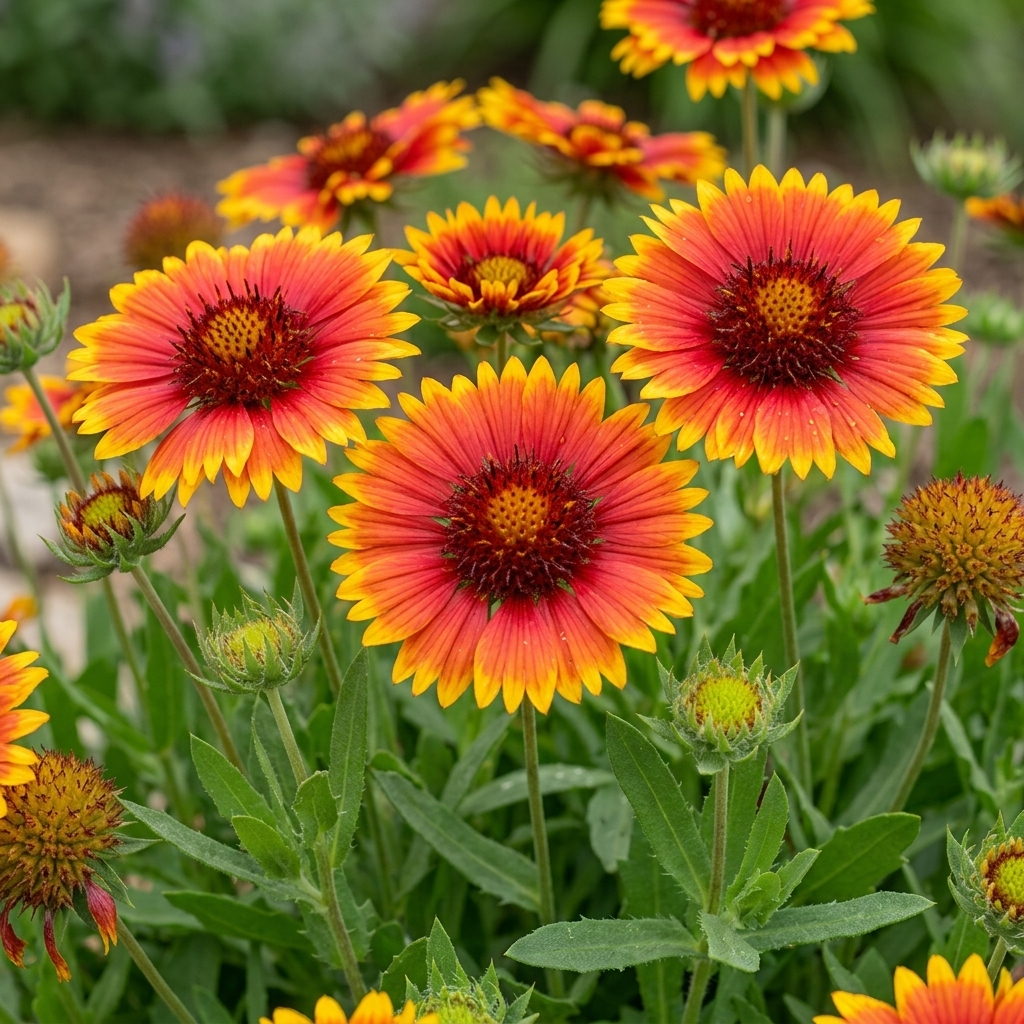
The petals are warm red, orange and golden yellow around a darker centre - little sunsets scattered through the border.
Unlike some flowers we've grown together, Blanket Flower does not ask for rich soil or constant watering. It wants sunshine, drainage and, once established, handles heat and dry spells remarkably well.
That suits Hungary, where July and August can be hot and unforgiving. A flower that keeps going when the lawn has stopped pretending to be green deserves attention.
The Blanket Flower in the Holland Kertészet range is Gaillardia aristata, a perennial type. So we are not only sowing for one summer. With the right place and a little sensible care, we're starting a plant that can return and flower again.
We'll go from seed to established perennial: where to put it, when to sow, how to raise the seedlings, why drainage matters so much in winter, how to keep the flowers coming, and what to do when the plant begins looking tired after a few years.
By the end, you'll know exactly how to turn a small packet of seed into a patch of warm colour that belongs in a Hungarian summer garden.
Ready? Let's find the sunniest place you've got.
1. Meet Blanket Flower
Blanket Flower belongs to the genus Gaillardia. Our plant is Gaillardia aristata, a hardy perennial native to North America and widely grown for its long summer flowering and wonderfully warm colours.
Why is it called Blanket Flower?
The common name is often linked to the colourful patterns of traditional woven blankets. Whether or not that is the story you remember, the name suits the plant beautifully: red, gold and orange are layered together in bold rings and patches.
A perennial, not a one-season guest
This is important. Gaillardia aristata is perennial. It may flower modestly in its first year from an early sowing, but its real strength comes after it has settled into the garden. In later seasons it can form a generous clump and flower for weeks through summer.
What does it look like?
Expect daisy-like flowers above a loose mound of green leaves. Plants from this seed strain are commonly around 60-75 cm tall, although soil, moisture and competition can change the final size. The flowers are usually mixtures of red, orange and yellow rather than one perfectly uniform colour.
|
GOOD TO KNOW Blanket Flower is one of those plants that often performs better when we do not spoil it. Full sun and free-draining soil matter more than rich feeding. |
2. Finding the Right Place
If Blanket Flower could choose its own address, it would probably pick the brightest, driest-looking part of the garden and ask us not to fuss.
Give it full sun
For the strongest stems and the best flowering, choose full sun. A little light shade may be tolerated, but too much shade encourages weaker growth and fewer flowers. In Hungary, a sunny south- or west-facing border can suit it very well.
Drainage is the real secret
Blanket Flower copes with dry soil far better than with soil that stays wet. This matters in summer, but it matters even more in winter. A cold Hungarian winter is not necessarily the problem. Cold roots sitting in wet, airless soil are.
If your garden has heavy clay, improve the structure before planting. A raised bed, gravel garden, sloping border or naturally free-draining patch can be ideal. Do not create a rich planting hole that behaves like a little bathtub inside heavy soil.
What about poor soil?
Quite happily, Blanket Flower does not demand luxury. Ordinary, lean to moderately fertile soil is often excellent. Very rich soil can produce soft, leafy growth that flops and flowers less impressively.
A good plant for hot Hungarian gardens
Think of the places that bake in July: a sunny border in Budapest, a gravelly bed near Lake Balaton, a dry garden on the Great Hungarian Plain, or a south-facing patch beside a warm wall. Once established, Gaillardia can be surprisingly comfortable there.
|
A COMMON MISTAKE Calling a plant drought tolerant and then forgetting that a newly planted seedling still needs water. Drought tolerance comes after the roots have established. |
3. The Blanket Flower We Grow With You
At Holland Kertészet, the Blanket Flower in our seed range is Blanket Flower - 0.75 g from Buzzy. It is Gaillardia aristata: a perennial mixture in warm red, orange and yellow tones.
Why I would grow this one
Because it gives long summer colour, suits naturalistic planting, attracts pollinators and can also be cut for the vase while the blooms are young.
Where it fits
Plant it in a perennial border, a cutting garden, a dry sunny bed or a more natural meadow-style planting. It is especially good beside plants that enjoy similar conditions.
Try it with lavender, salvia, yarrow, ornamental grasses, echinacea, rudbeckia or purpletop vervain. The yellow and red flowers become even warmer beside purple and blue companions.
One packet, many possibilities
Because this is a seed-grown mixture, every plant need not look identical. One may be more golden, another more red. I like that - a seed-grown patch has personality.
|
GROW WITH US Our Blanket Flower is selected as a perennial for sunny, well-drained gardens. Sow it with us, raise the young plants, and let your own Hungarian garden show you which seedlings become your favourites. |
4. Let’s Sow Blanket Flower
Now for the small beginning behind all that colour.
When to sow
The Buzzy packet is designed for outdoor sowing from roughly May to July on a seed bed, followed by transplanting in autumn. That method is wonderfully simple and suits a perennial that is happy to establish before its first full flowering season.
You can also start earlier under protection in modules or small pots, but there is no need to rush this perennial into an instant performance.
How to sow
Use a fine, free-draining seed compost. Sow the seeds thinly and cover lightly. Keep the compost evenly moist while germination begins, but never saturated.
Warmth and patience
A comfortably warm position speeds things along. Depending on conditions, seedlings often appear within a couple of weeks. Give them good light as soon as they emerge so they grow sturdy rather than long and floppy.
Outdoor seed bed method
For a nursery bed, prepare a fine surface, sow thinly in rows and label it. Three weeks later, every mystery seedling looks surprisingly similar.
|
DON’T PANIC The first leaves will not look anything like the finished plant on the packet. Seedlings are allowed to be unimpressive. Their job at this stage is simply to make roots and leaves. |
5. From Seedling to Perennial
Once your seedlings are large enough to handle, we begin preparing them for their permanent home.
Thin or pot on
Crowded seedlings compete for light and moisture. Thin them or move the strongest ones into individual pots or modules. Handle seedlings by a leaf rather than squeezing the stem.
Hardening off
Plants raised under protection need a gradual introduction to outdoor life. Give them increasing amounts of fresh air, wind and direct sun over a week or more before planting permanently.
Autumn planting works beautifully
For the traditional May-to-July sowing, autumn is a natural planting time. The soil is still warm enough for roots to establish, while the intense summer heat has passed. Aim to get plants settled before the ground becomes cold and wet.
Spacing
Allow around 30-40 cm between plants. They look small now, but mature clumps need airflow and room. Good spacing also helps foliage dry after rain and reduces disease pressure.
The first winter
Do not bury the crown under heavy wet mulch. In colder exposed areas, a light protective mulch around - not over - the crown can be useful, but drainage is still your best winter protection.
|
WHAT I WOULD DO I would plant several seedlings together in a loose group rather than placing one isolated plant in three different corners. Blanket Flower has far more visual impact when the warm colours repeat beside one another. |
6. Growing Through a Hungarian Summer
This is where Blanket Flower begins showing why we chose it.
Water deeply, then step away
During the first season, water regularly enough for roots to establish. After that, let the soil dry somewhat between waterings. Deep, occasional watering is usually better than a little splash every evening.
Containers are different
In a large, well-drained pot, Blanket Flower grows happily, but containers dry faster than garden soil. Check pots often during Hungarian heatwaves.
Feeding
Feed modestly. In ordinary soil, a little spring compost is often enough; too much nitrogen encourages leafy, weaker growth.
Deadheading
Cut faded flowers back to a healthy leaf or side shoot. This encourages more buds instead of seed production.
But leave some flowers later
Later in the season, leave a few flowerheads for seed, winter structure and wildlife.
|
GOOD TO KNOW Blanket Flower may bloom from early or midsummer well into autumn when regularly deadheaded. The exact season depends on plant age, sowing time and weather. |
7. When Something Goes Wrong
Blanket Flower is easy-going, but every plant has limits.
The centre dies out
Older clumps can become tired or open in the middle. That is often a sign that the plant would benefit from division. In spring, lift the clump, keep healthy outer pieces and replant them in fresh positions.
Floppy growth
Ask three questions: Is it getting enough sun? Is the soil too rich? Is it being watered too frequently? Blanket Flower usually stands better when conditions are bright and not overly generous.
Powdery mildew
A white powdery coating can appear during warm, humid or stressful conditions. Improve airflow, avoid crowded planting and water the soil rather than repeatedly wetting foliage late in the day.
Root or crown rot
This is the problem I take most seriously. Soft, blackened or collapsing growth at the base often points to excessive moisture and poor drainage. Once rot is advanced, saving the plant can be difficult. Prevention is much easier.
Hardly any flowers
Too much shade and too much nitrogen are common reasons. A young plant may also simply be building itself before flowering heavily. Move it only if the position is clearly wrong; otherwise give a first-year perennial time.
|
A COMMON MISTAKE Trying to rescue a struggling Gaillardia with more water and fertiliser. If the real problem is shade or wet soil, extra kindness makes things worse. |
8. Flowers, Pollinators and the Vase
Then comes the reward: the first red-and-gold flower opens, another follows, and suddenly the border looks warmer.
Pollinators notice too
The open daisy-like blooms are easy for bees and other insects to visit. In a sunny mixed border, Blanket Flower can become part of a long buffet when planted beside other summer-flowering perennials.
Cutting for the house
Cut flowers while they are still young, choosing freshly opened blooms on firm stems. Cut in the cool part of the day, remove lower foliage and place stems straight into clean water.
What does it combine with?
In a vase, the warm colours look wonderful with deep purple, blue, burgundy and airy grasses. Add yarrow, rudbeckia, salvia or a few seedheads and you have a bouquet that feels like late summer in the Hungarian countryside.
Deadhead or cut?
Fortunately, both jobs lead in the same direction. Whether you cut a flower for the kitchen table or remove one that has faded, you are encouraging the plant to keep producing while the season remains favourable.
|
TRY THIS Cut five stems in slightly different shades from your seed-grown patch. Put them in a simple glass jar with one grass stem. The differences between the flowers become part of the arrangement. |
9. Autumn, Winter and Starting Again
By autumn the flowers slow, nights cool and the plant begins preparing for winter.
Do not force late growth
Ease off feeding well before frost. Soft, late growth is not what we want going into a Hungarian winter. Let the plant naturally slow down.
Cut back or leave?
You can remove untidy stems after frost, or leave some dry stems and seedheads through winter for structure. If your garden is damp, do not leave a dense wet mat of collapsed foliage sitting over the crown.
Winter drainage
I know we've said it several times. That is because it matters. A sunny summer position can still become a wet winter position. If water pools around the crown after winter rain or snowmelt, improve drainage before the next season.
Divide established clumps
Every few years, divide tired clumps in spring. This refreshes the plant and gives you extras for another part of the garden or for a gardening friend.
Saving seed
Let a few flowerheads mature fully until dry. Collect the seed on a dry day and store it labelled in a cool, dry place. Seed-grown offspring may vary - which is part of the pleasure of growing a mixture.
|
GOOD TO KNOW A Gaillardia that dislikes one wet corner may thrive only a few metres away in a raised, sunnier bed. With perennials, the right place often matters more than doing more work. |
10. Your Blanket Flower Cheat Sheet
Here is the whole journey in one place.
1. Start with Gaillardia aristata. The Holland Kertészet Blanket Flower is a perennial seed mixture.
2. Choose full sun. More sun usually means stronger plants and more flowers.
3. Put drainage first. Winter wet is a bigger danger than ordinary Hungarian cold.
4. Sow from May to July outdoors. A nursery bed is the traditional simple method.
5. Cover seed lightly. Keep evenly moist while germination begins.
6. Give seedlings good light. We want sturdy young plants, not stretched ones.
7. Plant out in autumn. Let roots establish while the soil is still warm.
8. Space around 30-40 cm apart. Mature plants need air and room.
9. Water while establishing. Young plants are not drought tolerant yet.
10. Water less once established. Deep and occasional is better than constant splashing.
11. Feed modestly. Rich soil can create soft, floppy growth.
12. Deadhead through summer. This encourages more flowers.
13. Cut young flowers for the vase. Use clean tools and clean water.
14. Watch for mildew and crown rot. Airflow and drainage prevent many problems.
15. Leave some seedheads in autumn. For seed, winter interest and wildlife.
16. Divide old clumps. Spring division can refresh a tired plant.
17. Save seed if you like surprises. Seed-grown plants may show slightly different colours.
18. Let it become part of the garden. A perennial should get easier, not harder, with time.
If You Remember Only Five Things...
1. Sunshine first
Blanket Flower wants a bright position. Do not hide it in shade.
2. Drainage matters more than feeding
Lean, free-draining soil is often exactly what it wants.
3. Young plants still need water
Let the roots establish before expecting drought tolerance.
4. Keep cutting or deadheading
Removing old blooms helps extend the flowering season.
5. Think beyond one summer
Gaillardia aristata is perennial. Plant it where it can become part of your garden for years.
One Last Walk Around the Garden
Do you remember where we started? A small packet of seed, with no hint yet of those fiery red-and-gold flowers.
We sowed it, raised the seedlings and found them a sunny home where rain could drain away. The first season may have been quiet, but then another Hungarian summer arrived - and suddenly Blanket Flower looked completely at home.
That is the pleasure of growing a perennial from seed. Little by little, it stops feeling like something you planted and starts feeling like part of the garden.
You will learn which corner it loves, which flowers the bees visit first, and which seedlings give you your favourite colours. And one day you may have seeds or a divided plant to share with someone else.
Come into the garden with me.


