

From Curious Green Spikes to Beautiful Bouquets
A friendly guide to sowing, growing, cutting and drying Bells of Ireland in Hungary.
Come Into the Garden With Me...
Today, we're growing Bells of Ireland - one of those plants that makes people stop, look twice and ask, 'What is that?'
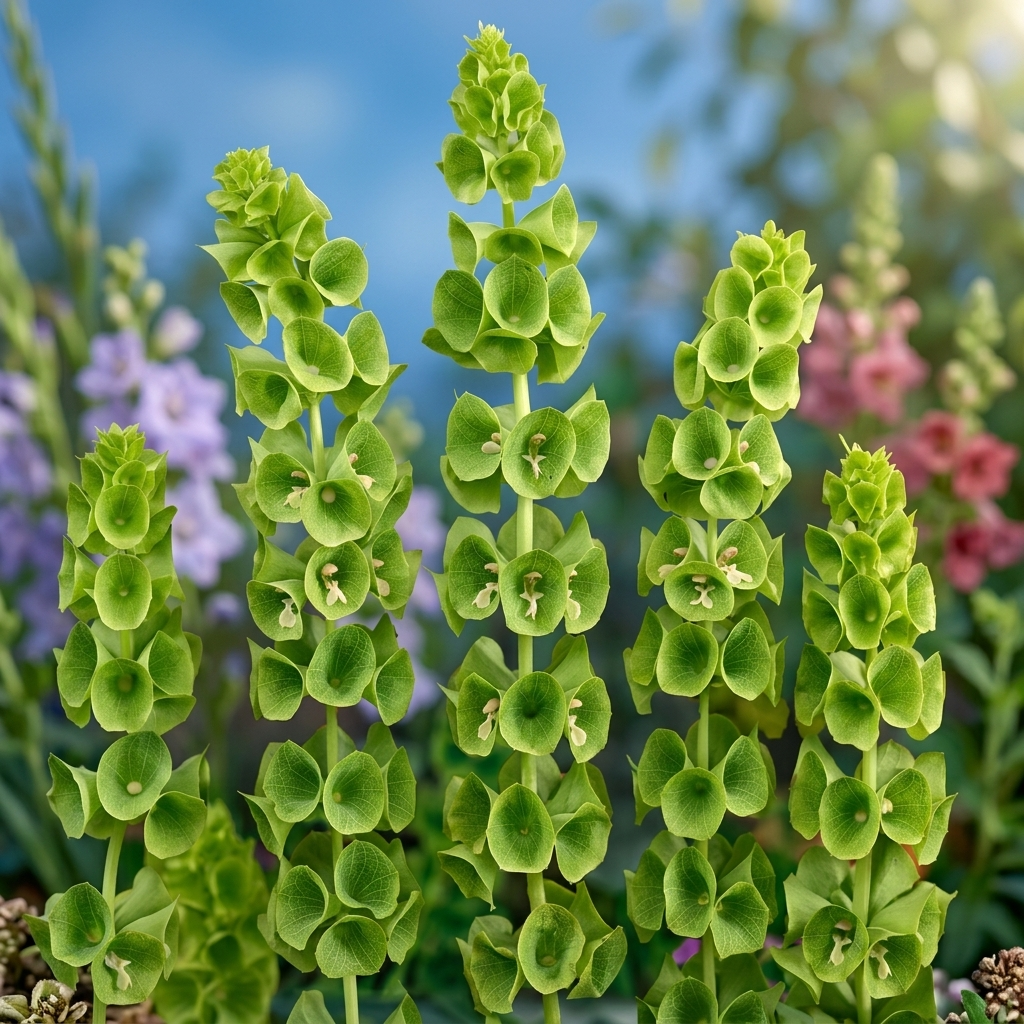
At first glance, you might think the tall green stems are covered in large flowers. They aren't. The real flowers are tiny and pale, tucked inside those wonderful apple-green bells. The showy part is actually the calyx surrounding each flower.
And no, despite the name, Bells of Ireland is not originally from Ireland. Its botanical name is Moluccella laevis, and its natural range is much farther east. The Irish connection comes from the fresh green colour that made the plant especially popular in bouquets and floral symbolism.
What I love about it is how different it looks beside ordinary summer flowers. A garden full of pinks, oranges and purples suddenly feels more interesting when a tall green spike rises through the middle. In a vase, it does the same thing: it gives height, structure and that beautiful fresh green colour that makes everything around it look better.
Bells of Ireland is an annual, so we grow it from seed each year. It prefers the cooler part of the season, which matters in Hungary because our summer heat can arrive quickly. Getting the timing right is one of the main secrets.
We'll go from seed to tall flowering stems, talk about the slightly fussy germination, find the best position in the garden, cut stems for fresh bouquets, dry some for winter, and even save seed for another year.
Ready? Let's grow something wonderfully unusual.
1. Meet Bells of Ireland
Bells of Ireland is Moluccella laevis, an upright annual in the mint family. It can reach around 60 to 90 cm in many gardens, sometimes taller in very good conditions, and produces long vertical flower spikes through summer.
Those green bells are not the flowers
The part we notice first is the pale green, bell-shaped calyx. Inside sits a tiny white or pale flower. The bells are what give the plant its distinctive appearance and what remain attractive as the stems mature and dry.
A flower that is really about shape
Most flowers win us over with colour. Bells of Ireland wins us over with form. Its tall vertical stems add structure to a border and are especially useful in a cutting garden where not every flower needs to be round, fluffy or brightly coloured.
A little surprise when you touch it
Look closely at the stems and you may notice small sharp points. They are not dramatic thorns, but they are enough to make you handle the plant carefully when cutting or stripping leaves.
|
GOOD TO KNOW Bells of Ireland is an annual. We sow it, enjoy it for one growing season, and then either save seed or start again with fresh seed next year. |
2. Finding the Right Place
Bells of Ireland likes a bright position, reasonably fertile soil and good drainage. It can tolerate some light shade, but good light helps the stems grow strongly.
Sun, but not a Hungarian furnace
Full sun is generally suitable, especially in spring and early summer. But remember that Bells of Ireland prefers cooler conditions than some heat-loving annuals. In a very hot, exposed Hungarian garden, a little afternoon protection can help once summer becomes intense.
Moist but well drained
The plant grows best when the soil does not swing constantly between swamp and dust. Keep moisture reasonably even, especially while plants are young and stems are developing, but make sure water can drain away.
Give tall stems some shelter
Because Bells of Ireland grows upright and can become top-heavy, a position protected from the strongest wind is helpful. In an exposed garden on the Great Hungarian Plain, support may be useful. In a sheltered Budapest courtyard, you may never need it.
|
A COMMON MISTAKE Planting Bells of Ireland too late. If seedlings only get established just as Hungarian summer heat arrives, stems may be shorter and the plants less impressive. |
3. The Bells of Ireland We Grow With You
At Holland Kertészet, the Bells of Ireland in our current flower-seed range is sold as Bells of Ireland - Molucella - 0.75 g.
Why grow it?
Because it does something that almost no other annual does. It gives you tall, architectural green stems that work equally well in the border and in a vase.
If you already grow cosmos, zinnias, dahlias, asters or ranunculus for cutting, Bells of Ireland gives your bouquets a completely different shape. One or two stems can make a simple bunch suddenly look deliberate and beautifully arranged.
What colour is it?
Green. Gloriously, unapologetically green. The bells begin fresh and pale, then gradually become firmer and more papery as they mature.
That makes them especially good with white, blush, peach, burgundy, purple and almost every other garden colour.
|
GROW WITH US Bells of Ireland - Molucella - 0.75 g is part of the current Holland Kertészet flower-seed collection in Hungary. |
4. Let’s Sow Bells of Ireland
This is the chapter where I need to warn you: Bells of Ireland can be a little stubborn about germination.
Don't let that put you off. Once you know what the seed prefers, it becomes much less mysterious.
A little cold can help
Fresh seed often germinates better after a short period of chilling. You can place the dry seed in the refrigerator for roughly one to two weeks before sowing. This mimics a brief cool period and can improve germination.
When to sow in Hungary
Direct sowing in early spring is often a very good option once the soil can be worked and has begun to warm. You can also start seeds under protection about six to eight weeks before planting out.
Because the plant develops a taproot and dislikes root disturbance, sow transplants individually rather than crowding many seedlings together for later separation.
Do not bury the seed deeply
Bells of Ireland seed benefits from light for germination. Press the seed onto the surface of moist seed compost and leave it uncovered or only barely covered.
Temperature and patience
Germination commonly takes around two to three weeks under suitable conditions. Keep the medium evenly moist and around 18 to 20°C if sowing under protection.
|
DON’T PANIC One seedling appears and the others seem to be doing absolutely nothing? Normal. Bells of Ireland can germinate unevenly. Give the tray time before declaring it a failure. |
5. From Seedling to Garden Plant
Once those first seedlings appear, the difficult part is largely behind us.
Handle roots gently
If you started seed in individual modules or small pots, keep the root ball intact when transplanting. Bells of Ireland does not particularly enjoy having its taproot disturbed.
Give seedlings plenty of light
Strong light encourages sturdy growth. Weak, stretched seedlings are much more likely to flop later.
Harden off
Before planting outside permanently, gradually introduce indoor-raised seedlings to real spring conditions. Give them increasing time outdoors over a week or more, beginning in a sheltered spot.
Spacing
For strong stems and good airflow, allow roughly 25 to 30 cm between plants. Crowding may produce thinner growth and can make watering and harvesting awkward.
Water the young plants in well and keep an eye on moisture while they establish.
|
WHAT I WOULD DO If I wanted Bells of Ireland mainly for cutting, I would plant several together in a small block rather than scatter them through the whole garden. Harvesting becomes easier, and the tall green spikes look wonderful as a group. |
6. Growing Tall, Strong Stems
Now the plant begins to show us why we gave it space. The stems rise quickly and the first green bells begin forming along the upper growth.
Watering
Aim for consistent moisture while plants are actively growing. During a dry Hungarian May or June, don't let young plants sit bone dry for days. Water deeply when needed rather than giving tiny surface splashes.
Feeding
Moderately fertile soil is enough. A little compost before planting is useful, but excessive nitrogen can create soft growth that falls over easily.
Do I need to stake it?
Sometimes. In a sheltered garden, probably not. In exposed conditions or very fertile soil, stems can lean or lodge after wind and rain. A simple support net or discreet stakes can save a beautiful crop.
Watch the heat
Bells of Ireland is happier in cool to moderate temperatures than in prolonged extreme heat. If July arrives with weeks of very hot weather, don't be surprised if the plant begins moving more quickly toward seed production.
|
GOOD TO KNOW Bells of Ireland often performs best when it gets established early and produces its main stems before the hottest part of the Hungarian summer. |
7. When Something Goes Wrong
Bells of Ireland is generally healthy, but there are still a few things worth watching.
Poor germination
This is the most common frustration. Chill the seed before sowing, keep it close to the surface, maintain even moisture and be patient. Deeply buried seed or warm, drying compost can reduce success.
Plants are floppy
Check three things: too much fertiliser, too little light, or too much wind. Tall stems need sturdy growth from the beginning.
Short stems
Late sowing followed by hot weather can shorten the growing period. Crowding and drought can do the same. Earlier sowing usually gives the plant more time to build height.
Yellowing lower leaves
A few older leaves yellowing as stems mature is not necessarily a problem. Widespread yellowing, however, can point to overwatering, poor drainage or root stress.
Pests and disease
Bells of Ireland is usually relatively trouble-free. Good airflow, sensible spacing and watering at soil level rather than constantly soaking foliage are simple ways to keep plants healthy.
|
A COMMON MISTAKE Trying to fix short, heat-stressed plants with lots of fertiliser. Timing, temperature and water are usually more important than extra food. |
8. The Bells Arrive
Then one morning the stems look different. The pale green bells are stacking themselves up the spike, and suddenly the plant has become unmistakable.
Look closely
Inside each green bell is the tiny true flower. The bells themselves become the decorative part, and as the stem matures they stay attractive for a surprisingly long time.
Cutting for fresh bouquets
For fresh use, cut when the stems are well developed and roughly half the bells have opened and coloured up. Harvesting regularly can encourage useful side shoots.
Use clean secateurs and wear gloves if the little stem points bother your hands. Remove leaves that would sit below the waterline and place stems into clean water promptly.
What should we combine it with?
Almost anything. Try Bells of Ireland with blush ranunculus, burgundy dahlias, pink asters, white cosmos, peach zinnias or soft apricot yarrow.
Its green works like foliage, but with much more personality.
|
TRY THIS Make one arrangement using only Bells of Ireland and three or four white flowers. You will suddenly see how much structure those green stems bring to a bouquet. |
9. Drying, Seed Saving and the End of the Season
One of the nicest things about Bells of Ireland is that the season does not have to end when the fresh stems are finished.
Drying the stems
For dried arrangements, cut stems once the bells feel firm and papery but before the seed is fully mature. Remove excess foliage, tie a few stems into small bundles and hang them upside down somewhere dry, shaded and well ventilated.
The fresh green gradually softens toward pale green and beige, but the wonderful shape remains.
Saving seed
If you want seed for next year, leave a few stems on the plant until the bells dry naturally and seed develops. Collect on a dry day before too much seed falls to the ground.
Store thoroughly dry seed somewhere cool, dry and labelled. Future you will be grateful for the label.
Will it self-seed?
It can. If mature seed is allowed to fall, you may find volunteer seedlings the following year. Whether this is a delightful surprise or an unwanted one depends on your garden.
And then frost comes
As an annual, Bells of Ireland finishes its life cycle in one season. Once the plants are spent, remove them or leave some dry stems temporarily for structure before clearing the bed.
|
GOOD TO KNOW Cut stems for drying before the seed is fully ripe. Leave separate stems on the plant if your main goal is collecting seed for next year. |
10. Your Bells of Ireland Cheat Sheet
From slightly stubborn seed to tall green spikes - here is the whole journey in one place.
1. Bells of Ireland is Moluccella laevis, an annual grown for tall green bell-shaped calyces.
2. The green bells are not the true flowers; the real flowers are tiny and sit inside them.
3. Start early enough to give plants a cool growing period before Hungarian summer heat.
4. Chilling seed for one to two weeks before sowing can improve germination.
5. Direct sow in early spring, or start under protection six to eight weeks before planting out.
6. Sow on the surface or barely cover; light helps germination.
7. Keep the sowing medium evenly moist, not saturated.
8. Expect germination to take roughly 12 to 21 days and sometimes longer or unevenly.
9. Avoid disturbing the taproot when transplanting.
10. Give seedlings strong light and harden them off gradually.
11. Space plants roughly 25 to 30 cm apart.
12. Choose sun or light part shade and well-drained soil.
13. Keep moisture reasonably even while plants are growing strongly.
14. Do not overfeed; soft growth flops more easily.
15. Support tall stems in windy or exposed gardens if necessary.
16. Harvest fresh stems when the bells are well developed and still green.
17. Use clean water and strip leaves that would sit below the waterline.
18. Cut separate stems later for drying when the bells feel firm.
19. Leave a few stems to mature fully if you want to collect seed.
20. Expect the plant to finish with frost and start again next year.
If You Remember Only Five Things...
1. Start early. Bells of Ireland likes the cooler part of the season more than the hottest weeks of Hungarian summer.
2. Chill the seed and sow it shallowly. Germination is the fussy stage, so help the seed rather than burying it deeply.
3. Give tall stems room and support if needed. A little planning prevents a summer thunderstorm from flattening your bouquet crop.
4. Cut it twice in your mind: once for fresh bouquets, and again later for drying.
5. Grow it for shape, not just colour. That fresh green vertical line is what makes Bells of Ireland special.
One Last Walk Around the Garden
Do you remember where we started?
With a packet of seeds that didn't seem particularly dramatic.
We chilled them. Sowed them almost on the surface. Waited longer than we wanted to. Wondered whether anything was happening.
Then the seedlings appeared.
We gave them light, moved them outside carefully and found them a place where the stems could grow tall without being battered by every gust of wind.
And then, almost without us noticing exactly when it happened, the green bells began stacking themselves up the stems.
Suddenly we had one of the strangest and most elegant plants in the garden.
Perhaps you cut a few stems and put them beside pink flowers on the kitchen table. Perhaps you dried a bundle and kept it through winter. Perhaps you left one stem long enough to collect seed and found yourself planning next year's patch before this year's garden had even finished.
That is one of the things I enjoy most about growing annuals. They teach us to begin again.
Every spring there is another chance to sow a little earlier, space the plants a little better, try another corner or grow enough stems that we can cut them without feeling guilty.
And when someone sees those tall green bells and asks, 'What on earth is that?'
You'll know exactly what to tell them.
Enjoy your Bells of Ireland. Enjoy the bouquets. Save a few seeds.
And when you're ready for the next plant...
Come into the garden with me.


