

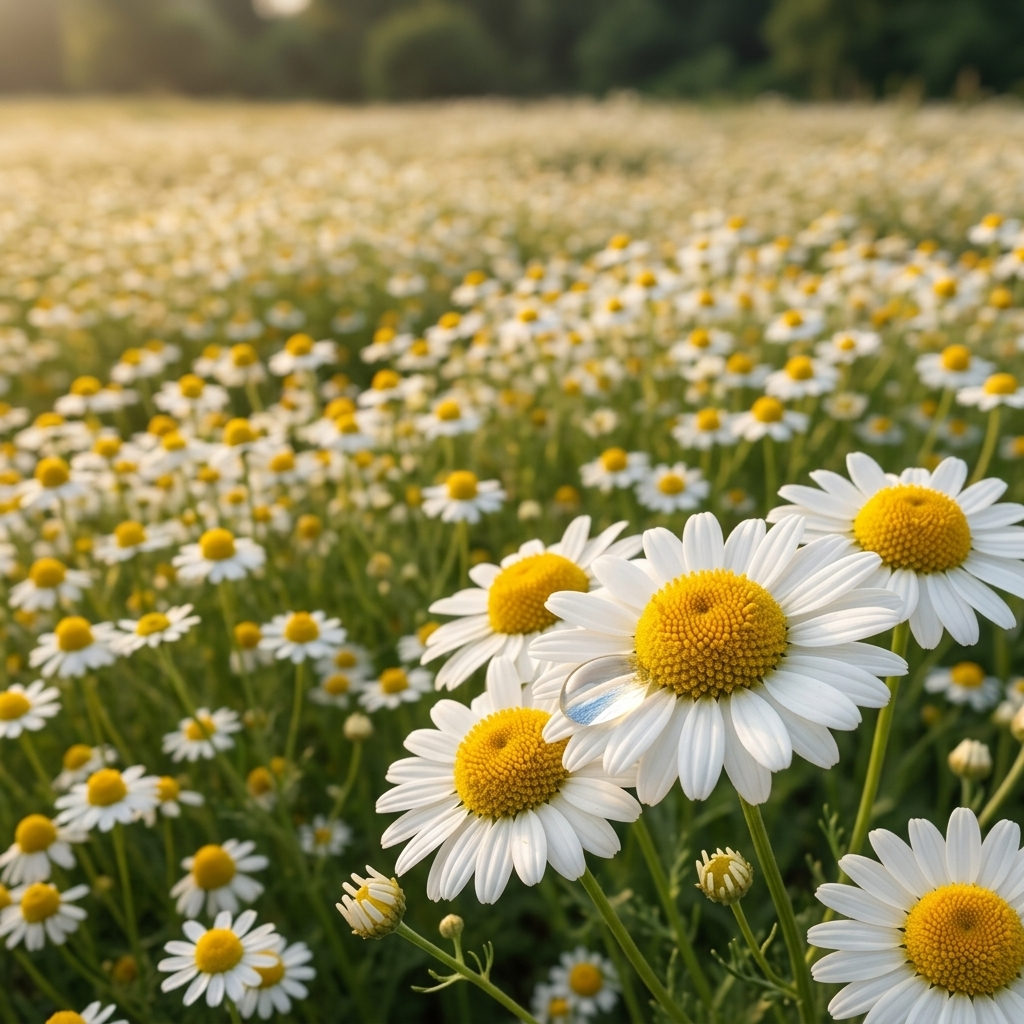
From Tiny Seeds to a Cup of Summer
A friendly guide to sowing, growing, harvesting and enjoying chamomile in Hungary.
Come Into the Garden With Me…
Today, we're growing chamomile.
And this is one of those plants that seems almost too simple to deserve an entire book. Tiny white petals. A bright yellow centre. Fine green leaves. Nothing particularly dramatic.
But then you bend down, brush the foliage with your hand, and that familiar warm, apple-like scent rises from the plant. Suddenly chamomile feels less like a little daisy and more like an old garden friend.
Chamomile gives us flowers for bees, soft airy planting for the herb garden, and flower heads we can dry for a simple herbal infusion. It is also wonderfully approachable for beginners because it grows quickly from seed and doesn't demand rich soil or complicated feeding.
For Hungarian gardeners, the timing is especially friendly. We can sow from spring into early summer, enjoy flowers through the warm months, and collect enough dried blooms to carry a little of the garden into autumn and winter.
We'll go from seed packet to seedlings, flowers, harvesting, drying and seed saving. We'll also talk about the difference between German and Roman chamomile, because the common name can be surprisingly confusing.
By the end, I want you to look at one of those tiny flower heads and know exactly what to do with it.
Come on. Let's find a sunny corner near the kitchen.
1. Meet Chamomile
The name chamomile is used for more than one plant, but the two names you'll meet most often are German chamomile and Roman chamomile.
German or Roman?
German chamomile, usually called Matricaria chamomilla or Matricaria recutita, is an annual. You sow it, it grows, flowers, sets seed and finishes its life cycle in one season. It is the classic tall, airy chamomile often grown for dried flowers and tea.
Roman chamomile, Chamaemelum nobile, is a low perennial that can return for years and is sometimes used as a fragrant groundcover or lawn substitute.
The Holland Kertészet packet is sold simply as Chamomile, without a botanical name on the current product page. Its March-June sowing and June-September flowering schedule fits the annual tea-chamomile style, so this book follows that practical growing rhythm while making the distinction clear.
What does it look like?
Chamomile has finely divided foliage and small daisy-like flowers with white petals around yellow centres. The flowers may look modest individually, but a whole patch becomes soft, light and wonderfully natural.
The scent is part of the charm. Fresh flowers and foliage have a warm herbal fragrance often described as apple-like.
|
GOOD TO KNOW Chamomile belongs to the daisy family. If you are very sensitive or allergic to plants such as ragweed, chrysanthemums or other members of the Asteraceae family, handle and drink chamomile cautiously and seek medical advice if you're unsure. |
2. Finding the Right Place
Chamomile doesn't need the richest corner of the garden. In fact, slightly lean conditions often suit it beautifully.
Give it sunshine
Choose a position with full sun if you can. In Hungary, good spring and early-summer light helps plants stay compact and flower freely. A little light afternoon shade can be tolerated, especially in very hot locations, but too much shade makes the plants loose and reduces flowering.
Loose, well-drained soil
The Holland Kertészet listing recommends loose, well-drained soil, and that is exactly right. Chamomile dislikes sitting in waterlogged ground, especially after heavy rain.
If you garden on heavy Hungarian clay, loosen the top layer well and improve the structure before sowing. A raised herb bed or large container is also an easy option.
Near the kitchen is useful
Because you'll probably want to harvest the flowers often, don't hide chamomile at the far end of the garden. Put it somewhere you naturally pass: beside herbs, along a path, in a sunny kitchen garden or in a pot near the terrace.
|
A COMMON MISTAKE Overfeeding chamomile can create soft leafy growth instead of more flowers. Ordinary, well-drained soil and plenty of light are usually enough. |
3. The Chamomile We Grow With You
At Holland Kertészet, the current packet is Chamomile - 0.25 g from Buzzy, product code C069.
The webshop recommends sowing from March to June and gives a flowering window from June to September. It describes the plant as compact and bushy, suitable for herb gardens, flower beds and containers, with flowers that attract bees and other beneficial pollinators.
Why grow it from seed?
Chamomile seed is tiny, but a very small packet can give you a surprising number of plants. That makes it one of those satisfying crops where a little sowing goes a long way.
You also don't need a permanent bed. One season you might grow a patch beside parsley and dill; the next you might let it soften the edge of a flower bed.
A plant with two personalities
Chamomile is both useful and pretty. In one moment you're harvesting it for the kitchen cupboard; in the next you're leaving a whole section for bees because the flowers look too cheerful to pick.
|
GROW WITH US If this is your first chamomile patch, sow a little more than you think you need. You'll want some flowers to harvest, some to leave for pollinators, and a few to mature seed for next year. |
4. Let's Sow
Chamomile seed is very small, so this is a job for calm hands rather than enthusiasm.
When to sow
For the Holland Kertészet packet, March through June is the recommended sowing period. In much of Hungary, April is a particularly easy starting point outdoors once the soil can be worked and the weather is settling.
You can also start a small tray under protection if you prefer more control, but direct sowing is perfectly practical because chamomile dislikes unnecessary disturbance once established.
Sow on the surface
Prepare a fine seedbed, remove weeds and water the soil first if it is dry. Scatter the seed thinly over the surface and press it gently into contact with the soil. Cover only very lightly, if at all. These tiny seeds do not want to disappear under centimetres of soil.
Water gently
Use a fine rose on the watering can or a gentle mist. A strong stream can wash half your chamomile into one corner of the bed.
Keep the surface lightly moist while germination begins, especially during dry spring weather.
|
DON’T PANIC You can barely see where the seeds landed. That's normal. Mark the row or patch clearly so you don't weed out your chamomile seedlings before they have a chance to introduce themselves. |
5. From Seedling to Flowering Plant
Thin early
Once the seedlings are large enough to recognise, thin crowded patches. Air and light matter. A little space between plants helps reduce fungal problems and gives the plants room to branch.
Aim for roughly 15-20 cm between plants in a dedicated patch. You can leave them a little closer for a soft meadow effect, but don't create a solid wet mat.
Water while they establish
Young plants need regular moisture while their roots are developing. Once established, chamomile is more forgiving, but flowering plants still appreciate water during prolonged dry spells.
Containers can dry quickly in a hot Hungarian June, so check them more often than plants in the ground.
Don't overfeed
Chamomile generally doesn't need much fertiliser. If the soil is extremely poor, a little compost is enough. Heavy feeding can make plants tall and soft rather than floriferous.
6. Summer Care in Hungary
By early summer, chamomile should be filling out and the first little white flowers begin opening.
Water deeply, not constantly
During hot weather, check the soil before watering. If the top few centimetres are dry and the plants are wilting, water thoroughly. Then allow the surface to begin drying again rather than keeping the bed permanently wet.
Keep the patch open
Chamomile looks lovely when it grows loosely, but don't let weeds smother it. Good airflow becomes especially important after summer rain.
Harvesting encourages attention
Once you begin picking flowers every few days, you'll naturally notice problems early: aphids, mildew, drying plants or weeds moving in. Harvesting becomes its own little garden inspection routine.
What about extreme heat?
A very hot Hungarian spell can shorten flowering and make plants tire earlier. Keep them adequately watered, harvest regularly and accept that chamomile is happiest before the fiercest part of summer. A later sowing may give you another flush as conditions moderate.
|
GOOD TO KNOW Chamomile is a light, airy plant. It often looks best when we stop trying to make it stand like a formal bedding plant and let it move a little in the breeze. |
7. When Something Goes Wrong
The seedlings vanished
Very tiny seedlings can dry out quickly, be washed away by heavy watering or disappear under weeds. Resow, keep the surface consistently moist during germination and mark the area clearly.
The plants are tall and floppy
Too much shade, rich feeding or crowded growth are common reasons. Increase light if possible, avoid heavy fertiliser and thin overcrowded plants.
Powdery or spotted foliage
Fungal problems are more likely where plants are crowded and leaves stay damp for long periods. Improve airflow, water the soil rather than soaking foliage late in the day, and remove badly affected material.
Aphids
Tender new growth can attract aphids. Small colonies are often easy to rub or wash away. If treatment is necessary, use a product suitable for edible or herbal crops and follow the current Hungarian label directions carefully.
Hardly any flowers
Check light first. Then look at feeding. A sunny plant in modest soil generally flowers more freely than one pushed with nitrogen in shade.
|
A COMMON MISTAKE Treating every yellow leaf as a feeding problem. Before adding fertiliser, check water, drainage, heat and natural ageing. Chamomile usually wants simpler care, not more products. |
8. Harvesting for the Cupboard
This is the moment that makes chamomile feel different from an ordinary bedding flower: we can bring part of the harvest into the kitchen.
When to pick
Harvest flower heads when they are fully open and the white petals are spread around the bright yellow centre. Choose a dry day, ideally after morning dew has disappeared.
Pinch or snip off the heads with as little stem as practical. A chamomile rake is useful for large crops, but for a home garden your fingers are perfectly adequate.
Drying
Spread the flowers in a single layer on a clean screen, tray or drying rack somewhere warm, shaded and well ventilated. Avoid direct strong sun, which can fade colour and aroma.
Turn them gently if needed and make sure they are completely dry before storage. Any remaining moisture can lead to mould in the jar.
Storage
Store dried chamomile in a clean airtight container somewhere cool, dark and dry. Label it with the year. The ritual of opening a jar in winter and smelling the summer garden again is one of the small rewards of growing herbs yourself.
|
KITCHEN NOTE Use home-grown chamomile only when you are certain of the plant's identity and it has been grown without unsuitable sprays. Chamomile tea is a traditional herbal drink, not a substitute for medical treatment; if you are pregnant, take medication, or have plant allergies, ask a healthcare professional if you are unsure about using it. |
9. Flowers, Pollinators and Seed Saving
Leave some for the bees
Chamomile flowers attract bees and other useful insects, so don't harvest every single bloom. Leave part of the patch flowering freely.
Let a few flowers mature
Toward the end of the season, stop harvesting from a few healthy plants and allow the flower heads to dry naturally. The centres will darken and become papery as seed develops.
Collecting seed
On a dry day, snip the mature heads into a paper bag. Let them dry further indoors, then crumble them gently and separate as much chaff as practical.
Store the seed somewhere cool, dry and dark in a labelled paper envelope. You don't need laboratory-perfect cleaning for home sowing.
Or let it self-seed
Chamomile can sometimes sow itself around the garden if mature heads are left in place. In a relaxed herb garden, this can be a lovely way to get surprise plants the following spring.
|
TRY THIS Leave one corner completely unharvested. Watch the insects use it, let the seeds ripen, and see where the next generation appears. Not every useful plant needs to be managed to the centimetre. |
10. Your Chamomile Cheat Sheet
Choose Holland Kertészet Chamomile - 0.25 g, Buzzy C069.
Sow from March to June; April is often an easy outdoor starting point in Hungary.
Choose full sun and loose, well-drained soil.
Sow the tiny seeds on or very near the surface and press gently into contact with the soil.
Keep the surface moist while germination begins, using gentle watering.
Thin seedlings so air can move between plants.
Water young plants regularly; established plants cope better with short dry spells.
Do not overfeed. Chamomile usually prefers modest soil.
Harvest fully open flowers on a dry day and dry them thoroughly in shade with good airflow.
Leave some flowers for pollinators and a few mature heads for seed saving or self-seeding.
If You Remember Only Five Things…
1. Tiny seed, shallow sowing
Don't bury chamomile deeply. The seed belongs right near the surface.
2. Give it sun
A bright position means sturdier plants and more flowers.
3. Keep young plants moist, not soggy
The seedlings are delicate; established plants are much tougher.
4. Harvest on dry days
Pick fully open flowers and dry them completely before storage.
5. Share with the bees
You don't need every flower in your jar. Leave part of the patch buzzing.
One Last Walk Around the Garden
Do you remember where we started? With seeds so small they were almost difficult to see.
We scattered them on the soil, pressed them gently into place and tried not to wash them away with the watering can.
Then came the first feathery leaves. The plants filled out. Little yellow centres appeared, surrounded by white petals.
And suddenly our herb garden had become a patch of tiny summer daisies.
We learned that chamomile doesn't want rich, complicated treatment. It wants light, drainage, enough water to establish and a little room to breathe.
We learned to harvest when the flowers are open, dry them slowly and keep some safely in a jar for later.
We also learned not to take everything. Some flowers stay outside for bees. Some become seed. Some simply belong in the garden because they look beautiful there.
Perhaps one winter evening you'll open that jar of dried flowers and remember the exact warm morning when you picked them.
That's one of my favourite things about growing useful plants: they let a season follow us indoors.
And when you're ready for the next seed packet…


