

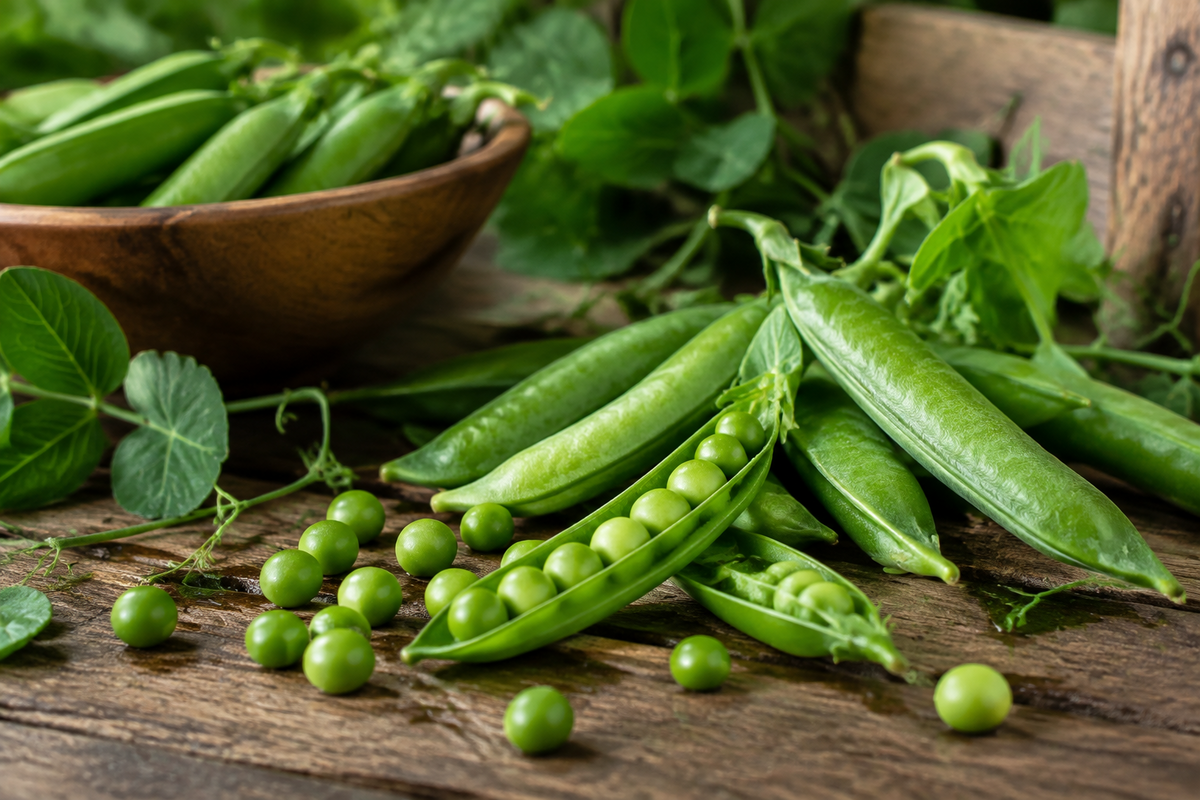
A practical vegetable garden series
Grow sweet garden peas, crisp mangetout and juicy sugar snaps in the cool days of spring.
|
GROW WITH US Sow peas early, give climbing vines something to hold and pick the pods while they are sweet and tender. |
Written for home gardeners in Hungary
CHAPTER WELCOME
Your pea-growing season starts here
This book follows the whole journey: seed → seedling → garden → care → harvest → kitchen → next season.
Peas are cool-season climbers with delicate tendrils, pretty flowers and pods that are best eaten soon after picking. “Peas” can mean shelling peas, whose round seeds are removed from the pod, or edible-pod types such as mangetout and sugar snaps. Near Győr, sow outdoors as soon as the soil is workable and no longer sticky, often from late February or March through April. An early start helps the plants make pods before summer heat slows flowering. Choose full sun, prepare a well-drained bed, and add supports for climbing varieties. Small sowings a week or two apart can spread the harvest.
Peas are one of the most rewarding first crops: the seeds are large and easy to handle, and the young plants grow quickly in spring. Keep seed safe from mice and seedlings protected from birds and slugs. Water well when flowers appear and again as pods begin to swell. Pick shelling peas when the pods are full, and harvest mangetout while pods are still flat and sugar snaps while plump and crisp. Regular picking encourages more pods, but the crop naturally slows when warm summer weather arrives.
Our Hungarian calendar
|
Late February–March |
Sow outdoors as soon as the soil is workable. |
|
March–April |
Make small repeat sowings for a longer picking season. |
|
Spring |
Protect seedlings and guide climbing plants onto supports. |
|
Late spring |
Water well when flowers and pods are forming. |
|
Late spring–summer |
Pick regularly while pods are sweet and tender. |
|
After harvest |
Cut tops at soil level and leave roots in the bed. |
|
WHAT I WOULD DO I would sow a short row in early spring, then sow a second row two weeks later so all the peas do not ripen at once. |
The rule for this series: dates guide us, but the plant and the weather make the final decision.
CHAPTER 1
Meet the Pea
A cool-season climber with sweet pods to shell or eat whole.
Garden pea (Pisum sativum) is a hardy annual grown for its sweet seeds, crisp edible pods or tender shoots. Shelling peas are picked when the pods are plump, then the peas are removed. Mangetout, also called snow peas, are eaten while the pods are flat and tender; sugar snaps are eaten whole when the peas inside have started to swell. Varieties range from compact bushes to tall climbers. Peas prefer cool spring weather, and their flowers may stop setting pods when summer turns hot. A little trellis or twiggy support keeps vines upright and makes picking easier.
Shelling pea or edible pod?
|
Shelling peas |
Harvest plump pods and remove the sweet peas inside. |
|
Mangetout and sugar snaps |
Eat the crisp pods whole while young and tender. |
Choose the pea that suits your plate
· Shelling peas: remove the sweet round peas from well-filled pods.
· Mangetout: pick flat, tender pods before the peas swell.
· Sugar snaps: harvest crisp pods once peas inside begin to plump.
· Dwarf varieties: shorter plants need simple twiggy supports.
· Climbing varieties: taller vines need netting or a sturdy trellis.
· Cool-season crop: sow early so flowers and pods form before summer heat.
|
GOOD TO KNOW Pea flowers can stop setting pods in hot weather. An early sowing helps the crop mature in cool spring conditions. |
CHAPTER 2
Choose Your Peas
Pick a type for eating, then plan a cool, sunny place for sowing.
Ask yourself five questions
1. Would I like shelling peas, flat mangetout or crisp sugar snaps?
2. Do I have room for a trellis, or should I choose a dwarf variety?
3. Can I sow early into soil that is workable and well drained?
4. Can I keep birds, mice and slugs away from the young crop?
5. Will I be able to pick the pods regularly once they begin forming?
A beginner-friendly first planting
|
Sow early |
Peas crop best before summer heat arrives. |
|
Protect seed |
Mice and birds may take seeds or seedlings. |
|
Add support |
Climbing vines need netting or twiggy sticks. |
|
Pick often |
Regular harvest keeps pods tender and encourages more picking. |
|
A COMMON MISTAKE Sowing into cold, waterlogged soil. Wait until the bed is workable and drains freely. |
|
TRY THIS Sow two short rows a week or two apart so the harvest is spread out. |
CHAPTER 3
Let’s Sow
Peas are a lovely first crop because their seeds are easy to sow and the plants quickly show you how they grow. Decide whether you want shelling peas, mangetout or sugar snaps, and check the expected plant height on the packet. Near Győr, sow outdoors in late winter or early spring once the soil is workable, commonly from late February or March through April. Do not work wet, sticky ground; seed can rot in cold, waterlogged soil. Peas enjoy a sunny position and cool weather, so early sowing gives the crop time to flower before summer heat.
When to sow in Hungary
In the Győr area, peas can often be sown from late February or March as soon as the soil has thawed, dried enough to crumble and can be worked without smearing. A late frost is usually less of a worry for young plants than cold, saturated soil, but cover emerging seedlings if severe frost or hungry birds are expected. Sow a short row, then another one or two weeks later for a longer picking season. Avoid very late sowings in warm weather, as heat can interrupt flowering and pod set.
What you need
· Fresh pea seed of a shelling, mangetout or sugar-snap variety
· A sunny, well-drained bed with loose soil
· A low trellis, pea netting or twiggy sticks for support
· Labels and a trowel for making a shallow drill
· Light netting or fleece to protect seed and young plants
Sowing, step by step
6. Prepare a sunny bed and remove weeds before sowing.
7. Make a shallow trench about 4–5 cm deep.
8. Place seeds about 5–7 cm apart, following the packet guidance.
9. Cover with soil, firm gently and water if the bed is dry.
10. Mark the row and add supports before climbing vines need them.
|
DON’T PANIC A few notches on the leaves are often pea and bean weevil feeding; healthy plants usually keep growing. |
|
A COMMON MISTAKE Waiting too long to set up supports. Put netting or pea sticks in place before the vines start to tangle. |
CHAPTER 4
Seedling School
Pea seedlings grow quickly in spring; a little protection helps them reach the trellis.
Recognise young pea plants
Pea seeds send up sturdy shoots with pairs of rounded leaflets and fine tendrils that reach for nearby support. The young plants grow quickly when the soil is moist and mild. If a row seems to have gaps, mice may have taken seeds, or cold, wet soil may have slowed or rotted them. Protect the row with mesh or start a few extra seeds in deep pots to fill gaps. Handle seedlings gently, keeping the root ball intact if you move them.
Why are the leaves nibbled?
Small notches along the leaf edges are often caused by pea and bean weevils; on established plants this damage is usually alarming to see but rarely serious. Larger ragged gaps may point to slugs, snails or pigeons. Check plants in the evening for slugs, clear hiding places near the row and cover young growth with netting. Keep the bed open and sunny, and avoid crowding so air can move through the vines.
Water while they settle
Keep the seedbed lightly moist while seeds germinate, but do not let it stay waterlogged. Once the plants are growing, water during dry spells and give the row a deep drink when flowers appear and again as pods swell. Water at soil level rather than over the leaves. Even moisture helps the pods fill; dry soil during flowering can shorten the harvest. A light mulch can help the bed hold moisture as days grow warmer.
Feeding
Peas usually need little extra fertiliser in ordinary garden soil. Work in mature compost if the bed is poor, but avoid a strong nitrogen feed that encourages leafy growth. Peas are legumes and can make use of nitrogen with the help of bacteria around their roots. Weed shallowly because their roots sit near the surface, and leave the roots in the ground after cutting the finished plants.
|
WHAT I WOULD DO I would grow a dwarf mangetout in a wide container if I had only a sunny balcony or patio. |
|
DON’T PANIC If some pods contain caterpillars, remove affected pods and check the rest as you shell them. |
CHAPTER 5
Ready for the Real World
Sow peas early, protect young plants and support the vines before they start climbing.
Before sowing: check the bed and the seed
11. Choose a sunny spot where water does not sit after rain.
12. Wait until the soil is thawed, workable and no longer sticky.
13. Select shelling peas, mangetout or sugar snaps for the way you like to eat.
14. Check the packet for plant height and set out supports for tall varieties.
15. Plan to protect seeds and seedlings from mice, birds and slugs.
When will peas be ready in Hungary?
Near Győr, an early outdoor sowing can often begin from late February or March when the soil is workable. The exact day varies with the spring: a sheltered, light bed may be ready sooner than a cold, wet garden. Peas are a cool-season crop; most varieties need around 50–80 days, depending on type and weather. Early sowings may provide pods from late spring into early summer. The plants can slow or stop flowering when hot weather arrives, so sowing early is more useful than trying to extend the crop into midsummer.
Sow seeds about 5–7 cm apart and 4–5 cm deep, or follow the packet for the variety. Allow space between rows for picking and airflow; taller types need a row support. Put netting in place before sowing if mice or birds are a problem, and check seedlings often for slugs. For a longer harvest, make another small sowing one or two weeks later. Pick pods regularly once they are ready, as mature pods left on the vines can slow further flowering.
|
A COMMON MISTAKE Letting ripe pods stay on the plant. Pick them promptly so the vines keep producing. |
|
GOOD TO KNOW Peas can fix nitrogen with the help of bacteria in their root nodules. Cut the tops after cropping and leave roots in the soil. |
CHAPTER 6
Give Them a Good Home
Sun, free-draining soil and sturdy supports help pea plants crop well.
The right place
Choose a sunny, open bed with fertile, free-draining soil. Peas tolerate cool conditions and do best when they can grow steadily through spring. Avoid a spot that stays waterlogged, and do not sow into soil that is compacted or smeary. Add mature compost before sowing if the ground needs organic matter. Rotate peas and other legumes around the garden rather than growing them in the same bed year after year.
Spacing
For most varieties, sow seeds about 5–7 cm apart in rows. Taller peas need a support and enough room around the rows for good airflow and easy picking. Dwarf types take less space but still benefit from pea sticks or a low mesh. Follow the seed packet for plant height and spacing, as varieties differ. A wide container can work for dwarf peas or mangetout, but it needs regular watering and usually produces a smaller harvest than a garden row.
Sowing day
16. Make a shallow drill about 4–5 cm deep in the prepared bed.
17. Sow seeds 5–7 cm apart, taking care not to crack them.
18. Cover with fine soil and firm gently to bring seeds into contact with it.
19. Water lightly if the soil is dry, then label the row.
20. Add a trellis or twiggy pea sticks for climbing varieties.
Growing in raised beds
Peas grow well in a raised bed if it is deep enough to hold moisture but drains freely. Choose a compact or dwarf variety if space is limited, and add short twiggy sticks or a low trellis for support. Sow directly into the bed once the soil is workable. Raised beds warm early, which can help a spring sowing, but they may dry quickly; check moisture as the plants flower and form pods. A container is possible for a small crop if it is wide, deep and watered regularly.
|
TRY THIS Try one pod at each stage—flat mangetout, plump sugar snap and full shelling pea—to learn when you like them best. |
CHAPTER 7
Water, Feed & Keep Them Growing
Keep the soil moist as flowers and pods develop, and guide the vines onto support.
Watering
Peas need the most reliable moisture as they flower and pods begin to swell. Water deeply at the base during dry spells, and check more often in raised beds or containers. Try not to wet the foliage, as damp leaves can encourage fungal problems. A light mulch helps slow water loss and suppress weeds. If the spring is naturally cool and rainy, you may need very little extra water.
Mulch
Once seedlings are established, a light mulch of compost or clean straw can help retain moisture and hold back weeds. Leave a small clear space around the stems so air can move freely. Mulch is especially useful later in spring, when sunny days can dry a raised bed quickly. Keep the support and row visible so you can tie or guide vines and pick pods without trampling the bed.
Feeding
Peas in a reasonably fertile bed usually need no additional fertiliser. Mature compost incorporated before sowing is enough for most gardens. Avoid overfeeding with nitrogen, which can produce plenty of leaves but fewer pods. If the plants look weak, check drainage, weeds, crowding and moisture first. After harvest, cut the tops at soil level and leave the roots in place; their nitrogen-rich root nodules can add organic matter as they break down.
Keep plants healthy
Put supports in place early so tendrils can grip before vines tangle. Keep the row open, weed shallowly and water at soil level. Protect young plants from birds and slugs, and check the pods as you pick in case pea moth caterpillars are inside. White powdery patches on leaves can appear in warm, dry conditions; keep plants spaced, water the soil and pick regularly. Rotate the crop and clear plant debris when the season ends.
|
WHAT I WOULD DO I would pick a few pods every day in peak season and eat them the same evening while they are sweetest. |
CHAPTER 8
Leaves, Pods & “What Is That?”
Tendrils, flowers and changing pod shapes are all part of a normal pea crop.
Why have the flowers stopped making pods?
Peas prefer cool spring weather. When temperatures rise quickly, flowers may fail to set well or the plants may stop flowering altogether. This is why early sowing matters in Hungary: it gives the crop a chance to flower and fill pods before summer heat. Check that the bed has not dried out, especially once flowers appear, and keep picking mature pods. A later sowing can be tried in a cool, sheltered spell, but it may be less reliable than a spring crop.
The beginner’s trouble guide
|
Seeds have not appeared |
Check for cold, waterlogged soil or seeds taken by mice. |
|
Leaf edges have notches |
Pea and bean weevils often make small scalloped marks. |
|
Flowers but few pods |
Heat or dry soil may interrupt flowering and pod set. |
|
White dusty leaves |
Powdery mildew can develop in warm, dry conditions. |
|
Pods contain caterpillars |
Check carefully for pea moth damage while shelling. |
|
DON’T PANIC Peas slow down when hot weather arrives. Pick what is ready, then plan an earlier sowing next year. |
|
A COMMON MISTAKE Pulling the whole plant out after picking. Cut the tops and leave the roots in the soil. |
CHAPTER 9
Can I Pick It Yet?
Yes—pick often, matching the pod to the type of pea you planted.
What “ready” looks like
For shelling peas, pick when the pods look plump and the peas inside have filled out. Mangetout should be harvested while pods are still flat, tender and crisp. Sugar snaps are ready when the pods have swollen but remain bright, juicy and easy to snap. Start checking the crop every day or two once pods begin to form. Taste one if you are unsure; peas are sweetest when freshly picked and not left to become starchy.
Harvest the pods regularly
|
Shelling peas |
Pods full and rounded; peas sweet and tender. |
|
Mangetout |
Pods flat, bright and still crisp. |
|
Sugar snaps |
Pods swollen, juicy and easy to snap. |
|
Picking |
Check every day or two in peak season. |
How often should I check?
Pick peas regularly, usually every day or two when the crop is at its peak. Hold the vine with one hand and remove the pod carefully with the other so you do not pull down the plant. Work from the lower pods upward, as they often ripen first. If you have more than you can eat, shell and freeze peas promptly or chill edible pods. In Hungary, a spring sowing may be picked from late spring into early summer, but heat can bring the crop to an early finish.
|
READY TO HARVEST? Pick shelling peas when pods are plump; pick mangetout flat and sugar snaps crisp and swollen. |
|
TRY THIS Pick peas just before dinner and add them to pasta with mint, butter and a squeeze of lemon. |
CHAPTER 10
From the Garden to the Kitchen
Fresh peas are sweet enough to enjoy simply, minutes after picking.
The first rule: pick just before eating
Peas begin losing sweetness soon after harvest, so pick them as close to mealtime as you can. Shell garden peas just before cooking, and use mangetout or sugar snaps whole after trimming the ends and removing any tough strings. Briefly steam or sauté the pods so they stay bright and crisp. Add fresh peas to pasta, soup, risotto or a salad, or eat a handful straight from the garden.
Match peas to the dish
· Shelling peas: steam briefly and toss with butter, mint or dill.
· Mangetout: slice into salads or stir-fry quickly while still crisp.
· Sugar snaps: serve raw as a snack or sauté with garlic.
· Pea shoots: add tender tips to salads, sandwiches or noodles.
|
FROM THE KITCHEN Eat mangetout and sugar snaps raw or briefly cooked; shell fresh peas just before using. |
Storing fresh peas
For the sweetest flavour, eat peas on the day you pick them. If needed, refrigerate unwashed pods in a breathable bag and use them within a few days. Shelling peas can be shelled and chilled promptly, or blanched and frozen for a longer store. Keep edible-pod peas cool and dry, and avoid leaving them in a warm kitchen after harvest. Wash shortly before cooking.
When you have more than you can use
Freeze a surplus while the peas are fresh and sweet. Shelling peas can be blanched briefly, cooled quickly, drained and frozen in small portions. Mangetout and sugar snaps can also be frozen, though their texture is best when eaten fresh. If you want to save seed, leave a few healthy pods on the plant until they turn brown and dry, then dry the seed fully indoors and label it.
CHAPTER 11
Next Season Starts Now
Note when you sowed, which type you grew and how long the pods kept coming.
Keep a tiny garden record
· Variety name and whether it was dwarf or climbing
· Sowing date and how many sowings you made
· When the first flowers and pods appeared
· How well the supports worked
· Whether birds, mice or slugs caused trouble
· When you began picking and which type you liked best
· How much you froze or saved for seed
Saving seed and planning another crop
To save seed, leave a few healthy pods on the plant instead of picking them for eating. Let them turn brown and dry until the seeds rattle inside, then remove the pods and finish drying them indoors in a well-ventilated place. Store completely dry seed in a labelled container in a cool, dry place and use it within a year for best germination. Save seed only from open-pollinated varieties if you want plants similar to the parent; F1 hybrids may not come true. Rotate peas to a different bed next year.
21. Choose healthy plants and leave several well-formed pods to mature fully.
22. Wait until the pods turn brown and the seeds rattle inside.
23. Pick the pods and spread them indoors to dry completely.
24. Shell the dry pods and label the seed with its variety and date.
25. Store the seed cool and dry, and use it within a year.
|
GOOD TO KNOW Freshly picked peas are sweetest on the day they are harvested. |
|
WHAT I WOULD DO I would freeze any surplus the same day, while the peas are still sweet and tender. |
COME GROW WITH ME
PEAS CHEAT SHEET
The page to come back to when you have soil on your hands and no time to reread the whole book.
|
SOW |
Late Feb–April outdoors |
When soil is workable |
|
POSITION |
Full sun |
Cool, free-draining bed |
|
SPACING |
Seeds 5–7 cm apart |
Support tall varieties |
|
CARE |
Water at flowering and pod fill |
Protect young plants |
|
HARVEST |
Late spring–summer |
Pick pods regularly |
|
Start |
Choose shelling, mangetout or sugar snap peas. |
|
Sow |
Plant early into workable, free-draining soil. |
|
Support |
Add netting or sticks before vines climb. |
|
Care |
Water as flowers and pods develop. |
|
Harvest |
Pick at the right stage and check often. |
|
Next season |
Rotate the crop and sow again in early spring. |
|
HUNGARY IN ONE LINE Near Győr, sow peas outdoors from late February or March once the soil is workable, then pick pods from late spring into early summer. |
COME GROW WITH ME • PEAS
Seasonal guidance is adapted for Hungarian home gardens.


