

A practical vegetable garden series
Grow one or two productive zucchini plants in a warm Hungarian garden, then pick tender fruits all summer long.
|
GROW WITH US Start zucchini in warmth, give it room and pick the fruits while they are small and tender. |
Written for home gardeners in Hungary
CHAPTER WELCOME
Your zucchini season starts here
This book follows the whole journey: seed → seedling → garden → care → harvest → kitchen → next season.
Zucchini, also called courgette, is a warm-season summer squash that rewards you with a steady harvest from just one or two plants. Near Győr, sow seed indoors in April or early May and plant out after frost risk has passed, usually from late May into June. Give each plant a sunny spot, rich soil and regular water. Pick the fruits while they are still small and tender; if they swell into marrows, the plant slows down making new ones.
Zucchini (Cucurbita pepo) is a tender annual in the cucumber family. It forms large leaves and yellow male and female flowers on the same plant. Bees move pollen between them, and a pollinated female flower grows into a fruit. The first flowers are often male, so it is normal for them to drop without a zucchini behind them. In Hungary’s summer, plants can crop quickly once established. Check beneath the leaves often, water at the base and harvest regularly to keep fresh fruits coming.
Our Hungarian calendar
|
April–early May |
Sow indoors in individual pots. |
|
Late May–June |
Plant out after frost risk, into warm soil. |
|
Early summer |
Water well as the plant establishes. |
|
Midsummer |
Check under leaves and harvest often. |
|
Late summer |
Keep picking while the plant remains healthy. |
|
Autumn |
Clear old vines after the crop finishes. |
|
WHAT I WOULD DO I would grow one compact plant in a sunny bed and check it every other day once fruits begin. |
The rule for this series: dates guide us, but the plant and the weather make the final decision.
CHAPTER 1
Meet Zucchini
A generous summer squash with yellow flowers and tender green or golden fruits.
Zucchini (Cucurbita pepo) is a bush or trailing summer squash grown for its immature fruit. The fruits can be long or round, green, striped or yellow, depending on the variety. Large rough leaves shade the soil, and bright yellow flowers appear on separate male and female blooms. Unlike pumpkins or winter squash, zucchini is picked young while the skin is soft and the seeds are small. It likes warmth, sun, fertile soil and steady moisture, and it can produce heavily through summer.
A summer plant that keeps on cropping
|
Botanical name |
Cucurbita pepo; zucchini or courgette. |
|
Plant family |
Cucurbitaceae; a tender summer squash. |
Choose how you want to grow the plant
· For an easy start: sow one seed in each indoor pot in April.
· For a small garden: choose a compact bush variety.
· For a steady supply: grow one plant and pick fruits often.
· For a longer harvest: sow a second plant a few weeks after the first.
· For an edible-flower treat: pick a few male flowers as they open.
· For next year: note which variety cropped best in your garden.
|
GOOD TO KNOW One healthy zucchini plant can provide a generous harvest through summer. |
CHAPTER 2
Choose Your Zucchini
Plan for warmth, a sunny growing place and a regular harvest routine.
Ask yourself five questions
1. Can I give a zucchini plant a warm, sunny and sheltered spot?
2. Can I wait until frost risk has passed before planting outside?
3. Do I have about a square metre for a spreading plant?
4. Can I water at the base during hot or dry weather?
5. Will I check the plant every few days and pick fruits while small?
A beginner-friendly first planting
|
Start |
Sow indoors in April or early May. |
|
Position |
Warm, sunny and sheltered. |
|
Space |
About 90 cm to 1 m for a full-size plant. |
|
Water |
Regularly at the base, especially while fruiting. |
|
A COMMON MISTAKE Planting out too early. Wait until frost risk has passed and soil is warm. |
|
TRY THIS Choose a compact bush variety for a large container or smaller garden. |
CHAPTER 3
Let’s Sow
For your first try, grow one zucchini plant rather than filling the bed with several. A single healthy plant can make plenty of fruit. Sow one seed in an individual pot indoors in April or early May, then move the seedling outside when frost risk is past and the soil is warm. Choose a sunny place with rich soil, and leave room for the large leaves to spread. Keep the plant watered and start checking for fruits as soon as female flowers appear.
When to sow and plant in Hungary
Near Győr, sow zucchini indoors in April or early May for an early start. Harden seedlings off and plant outside from late May into June, only once nights are mild and the soil has warmed. You can also sow directly outdoors in late May or early June. Do not rush into cold ground: zucchini is frost-tender and seedlings stall in chilly conditions. If you want to extend the harvest, sow a second plant about three weeks later, but one plant is often enough for a household.
What you need
· Zucchini seed suited to your space and preferred fruit type
· Individual pots and seed compost for an indoor start
· A warm, sunny bed with fertile, well-drained soil
· A gentle watering can or hose and a plant label
· A sharp knife or secateurs for harvesting
Sowing, step by step
1. Fill an individual pot with moist seed compost.
2. Sow one seed on its side about 1.5 cm deep.
3. Keep the pot warm until the seedling appears.
4. Move it to bright light and water when needed.
5. Harden off and plant out after frost risk has passed.
|
DON’T PANIC The first flowers may be male and fall without fruit. Female flowers arrive later. |
|
A COMMON MISTAKE Letting fruits grow too large. Frequent picking helps the plant keep cropping. |
CHAPTER 4
Seedling School
Warmth, bright light and careful watering help young zucchini grow quickly.
Recognise a healthy seedling
Zucchini seedlings begin with two large seed leaves, followed by broad, rough-edged true leaves. They grow quickly in warmth and light. Keep the compost moist but not soggy, and move seedlings to a bright place as soon as they emerge. Harden them off gradually before planting outside. Water the pot before transplanting, then slide out the root ball without pulling the roots apart. Young plants are a favourite target for slugs and snails, so inspect them regularly.
Why have the seeds not sprouted?
Cold compost is a common reason zucchini seed takes a long time to emerge. Keep the pot warm and lightly moist, and check that the seed was not buried too deeply. Seed compost that stays waterlogged can also cause seed to rot. If nothing appears after a couple of weeks, sow another seed in fresh mix. Use only one seed per pot, since the young plant grows fast and does not like being separated from close neighbours.
Water while they settle
Water seedlings gently and do not let their pots dry out. After planting out, water at the base to settle the roots. Keep the soil evenly moist while the plant establishes and as fruits begin to swell. In hot Hungarian weather, large leaves can lose water quickly, so check the soil beneath the canopy. Deep watering is more useful than frequent splashes, and keeping foliage dry helps reduce fungal problems.
Feeding
Prepare the bed with mature compost or well-rotted manure before planting. Zucchini growing in fertile garden soil often needs no extra feed. Container plants have less soil to draw from, so once the first fruits start to swell, feed every 10–14 days with a high-potash liquid fertiliser according to its label. Water before feeding, and avoid a heavy nitrogen feed that encourages leaves instead of fruit.
|
WHAT I WOULD DO I would water at the base in the morning and keep the leaves as dry as I can. |
|
DON’T PANIC A tiny fruit that shrivels may not have been pollinated; bees and warmer weather help. |
CHAPTER 5
Ready for the Real World
Harden off the seedlings and plant outside into warm soil after frost risk has passed.
Before planting out: prepare the bed and young plants
1. Choose a sunny, sheltered spot with rich, well-drained soil.
2. Add mature compost and remove weeds before planting.
3. Water the seedling in its pot before moving it.
4. Harden it off gradually for about a week.
5. Plant the intact root ball, then water it in well.
When can it live outside in Hungary?
Zucchini is tender and can be damaged by frost. Near Győr, wait until spring frost risk has passed, usually late May or early June, and until the soil is warm. Harden plants off rather than moving them directly from a warm room into sun and wind. If a late cold spell is forecast, protect young plants overnight with fleece or a cloche, but remove the cover when flowers open so bees can reach them. Direct sowing outdoors also works once the soil has warmed.
Allow about 90 cm to 1 m around a full-size plant; some trailing varieties need more space. Compact bush varieties suit a smaller bed or a large container at least 45 cm wide. Fill containers with rich compost and check their moisture often, since pots dry quickly in summer. Choose a site where you can reach under the leaves to water and harvest. Rotate the planting area away from other cucurbits when possible.
|
A COMMON MISTAKE Pulling fruits from the stem. Cut with a knife or secateurs to avoid damage. |
|
GOOD TO KNOW Male flowers have a slender stem; female flowers have a small fruit at the base. |
CHAPTER 6
Give Them a Good Home
Sunshine, rich soil and regular water support a long zucchini harvest.
The right place
Choose full sun, warmth and shelter from strong wind. Zucchini grows best in rich soil that holds moisture but drains well. Work mature compost into the bed before planting, then give the plant space for its broad leaves to spread. Near Győr, water is especially important during hot, dry spells. Avoid placing the plant in a cold hollow or deep shade, where growth and pollination may be poor.
Spacing
Give a full-size zucchini plant about 90 cm to 1 m of space in each direction; vigorous types may need more. Compact varieties are easier to fit in small plots and large pots. For a container, choose one at least 45 cm wide with drainage holes and plant one zucchini in it. Crowded plants are harder to inspect and harvest, while adequate spacing lets air circulate around leaves after rain.
Planting day
1. Water the plant and prepare a rich, moist planting hole.
2. Make a hole as deep and wide as the root ball.
3. Set the plant at the same depth it was growing before.
4. Firm the soil gently around the roots.
5. Water at the base and add a label.
Growing in containers or under cover
A compact zucchini variety can grow in a large container at least 45 cm wide, provided you water it regularly. A growing bag also works for compact plants. Under cover, make sure the plant has good airflow and that bees can reach the flowers; open doors and vents on warm days. If pollination is poor, you can move pollen by touching a male flower to a female flower. Support leaves gently and harvest often so fruits do not hide beneath the canopy.
|
TRY THIS Pick a few male flowers on the day they open and stuff or fry them. |
CHAPTER 7
Water, Feed & Keep Them Growing
Steady watering and frequent picking help zucchini plants stay productive.
Watering
Zucchini needs regular water, especially while fruit is forming and during hot weather. Water deeply at the base so moisture reaches the roots, rather than spraying the leaves. A pot may need daily checking in summer. If you can, water in the morning and avoid splashing soil onto foliage. Consistent moisture supports good growth and helps prevent stress during fruit development.
Mulch
Once the soil has warmed, add a layer of clean straw or compost around the plant to slow evaporation and suppress weeds. Leave a clear space around the stem to reduce the risk of rot. Mulch also keeps developing fruits off damp bare soil. Weed shallowly while the plant is small; once the leaves spread, pull larger weeds by hand rather than disturbing roots.
Feeding
Zucchini planted in a rich bed usually grows well without extra feeding. For container plants, apply a high-potash liquid feed every 10–14 days after the first fruits begin to swell, following the product label. If leaves are pale, check water, soil and root space before adding fertiliser. Too much nitrogen can encourage lots of leaves but fewer useful fruits.
Keep plants healthy
Check the plant often for slugs and snails, especially when it is young. Remove badly damaged leaves and keep weeds down around the base. Powdery mildew may appear as a white coating on older leaves late in the season; improve airflow and remove heavily affected foliage. Do not wet leaves when watering. Let bees visit flowers, and avoid disturbing the plant’s shallow roots or any roots forming along a trailing stem.
|
WHAT I WOULD DO I would pick young zucchini often and grate extras for the freezer. |
CHAPTER 8
Leaves, Flowers & “What Is That?”
Male flowers grow on slender stems; female flowers have a tiny zucchini behind them.
Why do some flowers fall without a fruit?
Zucchini makes male and female flowers separately on the same plant. Male flowers usually appear first and do not have a swelling at the base, so they fall without producing fruit. Female flowers have a small zucchini behind the petals; after a bee pollinates the flower, it begins to swell. Cool, rainy weather can keep bees away and cause young fruits to shrivel. Give the plant time as weather improves, or hand-pollinate using pollen from a fresh male flower.
The beginner’s trouble guide
|
Seed does not sprout |
The compost may be too cold or wet; sow again in warm, fresh mix. |
|
Young plant disappears |
Slugs and snails may be feeding; inspect at dusk and protect seedlings. |
|
Flowers fall off |
Early male flowers fall naturally; female flowers need bee pollination. |
|
Tiny fruits shrivel |
Cool, wet weather or poor pollination may be the cause. |
|
White leaf coating |
Powdery mildew can appear late in the season; remove badly affected leaves. |
|
DON’T PANIC Large leaves can hide fruit. Look beneath the canopy whenever you water or harvest. |
|
A COMMON MISTAKE Harvesting only once a week in hot weather. Check every few days so fruits stay tender. |
CHAPTER 9
Can I Pick It Yet?
Pick zucchini while the fruits are small and tender, then keep checking the plant every few days.
What “ready” looks like
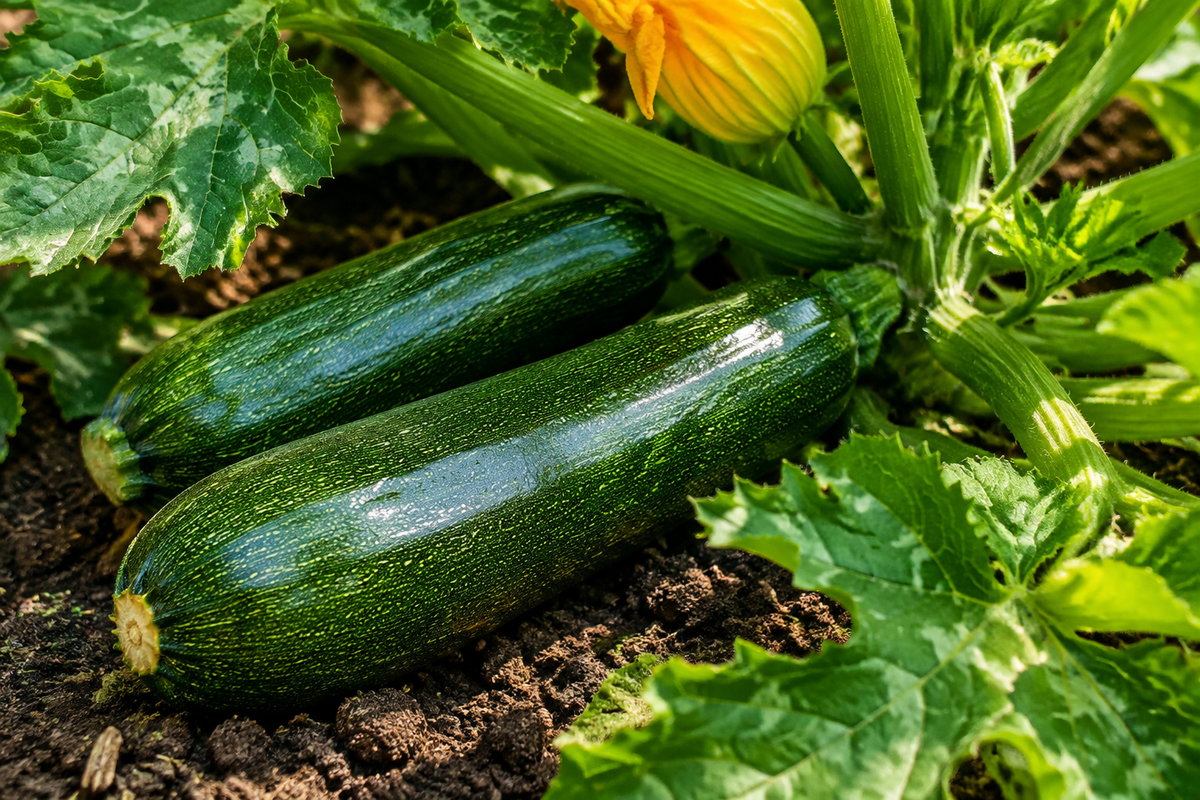
Zucchini is ready when it is firm, glossy and about 10–15 cm long, though the best size depends on the variety and how you plan to cook it. The skin should still be soft and the seeds small. Check beneath the leaves because fruits can grow surprisingly fast in warm weather. Use a sharp knife or secateurs to cut the stem cleanly. Regular harvesting encourages the plant to keep producing new fruits.
Harvest for the use you want
|
Plant |
Firm, glossy fruit about 10–15 cm long. |
|
Skin |
Soft and tender, with small seeds inside. |
|
Harvest |
Cut cleanly with a knife or secateurs. |
|
Repeat |
Keep checking as warm weather speeds growth. |
How often should I check?
Check plants at least every two or three days once fruits begin forming; in warm weather, check daily. Cut fruits rather than twisting or pulling, which can damage stems. Pick even oversized zucchini so the plant can focus on making more flowers and fruit. Harvest when the foliage is dry if possible. You can also pick male flowers on the day they open; leave female blooms if you want more zucchini.
|
READY TO HARVEST? Cut fruits while small and glossy, before the skin hardens and seeds enlarge. |
|
TRY THIS Grate young zucchini into fritters with egg and fresh herbs. |
CHAPTER 10
From the Garden to the Kitchen
Fresh zucchini is tender, mild and easy to enjoy in quick summer meals.
The first rule: keep the skin tender
Wash the fruit and trim the ends. Young zucchini usually needs no peeling; its soft skin and small seeds cook quickly. Slice or grate it just before use, then grill, roast, sauté or fold it into fritters. The blossoms are edible too: choose male flowers without the tiny fruit behind them, rinse gently and cook the same day. A large zucchini is still useful for baking or soup, though it may have larger seeds and a firmer skin.
Match the fruits to the dish
· Grill: cut into long slices, brush with oil and cook until lightly browned.
· Fritters: grate, squeeze out excess water and mix with egg and herbs.
· Pasta: sauté thin slices with garlic and finish with herbs.
· For later: grate or slice and freeze for cooked dishes.
|
FROM THE KITCHEN Use tender young fruits with their skin on for quick cooking. |
Keeping the harvest fresh
Store unwashed zucchini in the refrigerator and use it within several days for the best texture. Do not leave it in a very cold spot for long, as the skin can pit and the flesh become watery. If you have a glut, grate or slice the fruits and freeze them for cooked dishes such as soup, bread or fritters. Dry the pieces before freezing and label the date. Use flowers on harvest day, while fresh and open.
When you have more than one use
One plant can produce more zucchini than one meal can use. Pick young fruits for grilling or salads, grate a few for fritters or baking, and freeze extra portions for winter cooking. If a fruit grows large, scoop out mature seeds and use the flesh in soup or cake. Keep checking the plant so the next fruits do not become hidden under the leaves.
CHAPTER 11
Next Season Starts Now
Write down which variety, planting spot and picking rhythm gave you the best harvest.
Keep a tiny garden record
· Variety name and whether it was compact, trailing or climbing
· Indoor sowing and outdoor planting dates
· Which bed or container gave the strongest growth
· How often you watered during hot, dry weather
· When male and female flowers appeared
· Whether early fruits set or shrivelled
· How often you picked and how many fruits you used
Saving seed and planning next year
Zucchini cross-pollinates with other varieties of Cucurbita pepo, including some pumpkins and summer squash, so saved seed may not grow true to type. For dependable fruits, buy fresh seed each year. If you want to experiment, save seed only from a healthy open-pollinated variety and label it clearly; avoid relying on seed from hybrid varieties. Rotate zucchini to a different bed and add mature compost before planting next spring.
1. Choose a new sunny bed away from last year’s cucurbits.
2. Clear old vines and remove any diseased leaves.
3. Add mature compost to the next planting site.
4. Choose a compact variety if space was limited.
5. Buy fresh seed if you want predictable fruit shape and colour.
|
GOOD TO KNOW Pick male flowers only if you want flowers for the kitchen; leave female blooms to set fruit. |
|
WHAT I WOULD DO I would harvest a little at a time and share extras while they are fresh. |
COME GROW WITH ME
ZUCCHINI CHEAT SHEET
The page to come back to when you have soil on your hands and no time to reread the whole book.
|
START |
April indoors |
Wait for warm, frost-free planting weather. |
|
POSITION |
Full sun and rich soil |
Leave room for broad leaves. |
|
SPACE |
90 cm–1 m per plant |
Compact types fit large containers. |
|
WATER |
Regularly at the base |
Keep moisture steady while fruit grows. |
|
HARVEST |
10–15 cm long |
Cut often for tender fruits. |
|
Start |
Sow one seed per pot indoors. |
|
Prepare |
Choose a sunny bed and add mature compost. |
|
Plant |
Harden off and plant out after frost risk. |
|
Care |
Water at the base and keep weeds shallow. |
|
Pick |
Cut fruits young and check plants often. |
|
Next season |
Rotate beds and choose a variety for your space. |
|
HUNGARY IN ONE LINE Near Győr, sow zucchini indoors in April and plant outside from late May once frost risk has passed. |
COME GROW WITH ME • ZUCCHINI
Growing Summer Squash and Zucchini in Home Gardens. Seasonal advice is adapted for Hungarian home gardens.


