

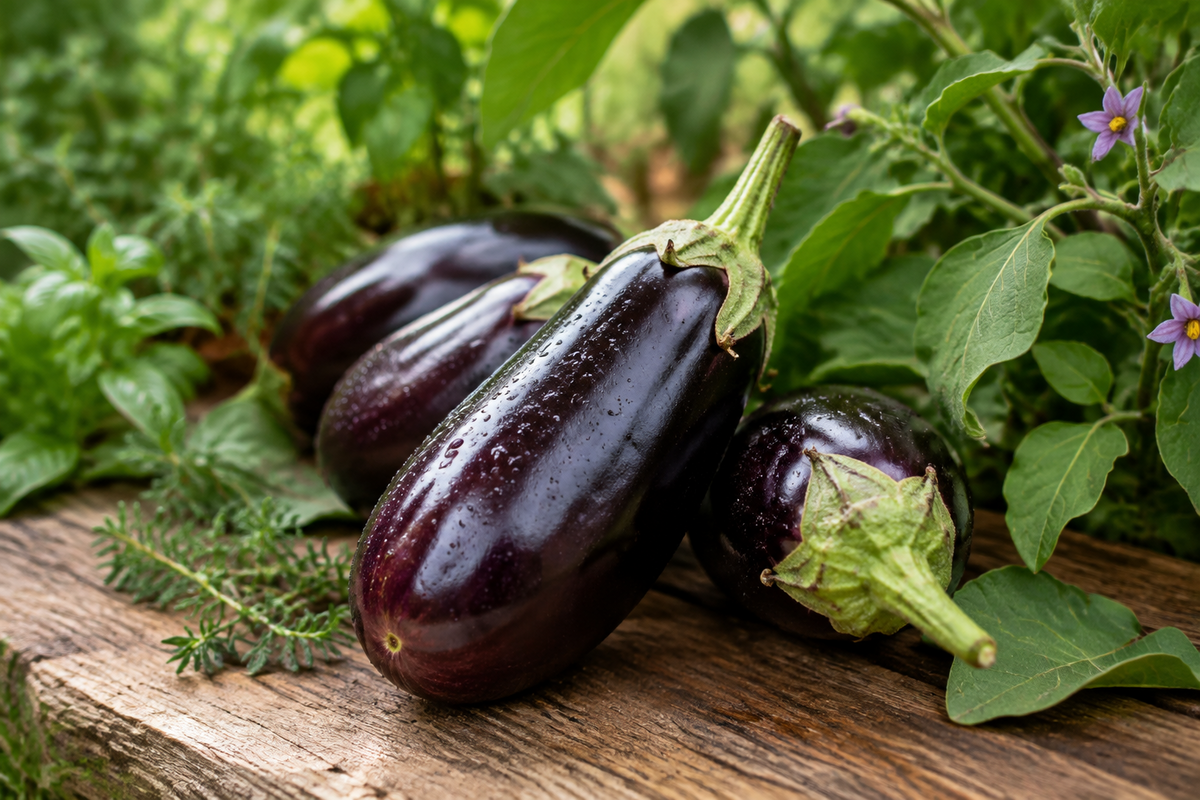
A practical vegetable garden series
A warm-season crop with glossy fruits and a long summer harvest.
|
GROW WITH US Eggplant loves sunshine, warmth and a long summer. Start seeds indoors, grow plants on in bright, warm conditions and wait until frost has passed before planting outside. Give each plant a sunny place, keep the soil moist and pick fruits while their skin is glossy. |
Written for home gardeners in Hungary
CHAPTER WELCOME
Your eggplant season starts here
This book follows the whole journey: seed → seedling → garden → care → harvest → kitchen → next season.
Eggplant, also called aubergine, is a heat-loving plant with attractive flowers and glossy fruits. It is related to tomatoes and peppers, but needs even more warmth and a long season to crop well. In a Hungarian garden, a greenhouse or polytunnel gives the most dependable harvest; a sunny, sheltered patio or warm wall can also work in a hot summer.
Start seeds indoors in late winter or early spring, then grow the seedlings on in warmth and good light. Plant outside only after frost has passed and the soil and nights are warm, usually from late May into June. Near Győr, keep a backup plan for a chilly spring: grow in a large pot that can be moved under cover. Pick fruits while their skin is glossy and firm.
Our Hungarian calendar
|
February |
Start seeds indoors in warmth for greenhouse growing. |
|
Late February–March |
Sow for plants that will grow outdoors later. |
|
May |
Move plants into an unheated greenhouse when nights are mild. |
|
Late May–June |
Plant outdoors after frost risk passes and soil warms. |
|
August onward |
Pick fruits when full-sized, firm and glossy. |
|
Autumn |
Remove late flowers and harvest before cold weather. |
|
WHAT I WOULD DO I would start two early varieties indoors in March, then grow one in a greenhouse and one in a large pot beside a sunny wall. I would wait for warm nights before moving the pot outside and harvest fruits while their skins are shiny. |
The rule for this series: dates guide us, but the plant and the weather make the final decision.
CHAPTER 1
Meet the Eggplant
Eggplant is a tender relative of tomatoes and peppers, and needs a long, warm growing season.
Eggplant (Solanum melongena) is known as aubergine in many parts of Europe and as brinjal in South Asia. It belongs to the nightshade family, along with tomatoes, peppers and potatoes. Plants have broad leaves, star-shaped flowers and fruits in many shapes and colours, including deep purple, white, green and striped. The familiar large purple fruit is only one of many choices.
Choose a fruit shape and size
|
Large-fruited types |
Classic oval fruits; need warmth and a long season. |
|
Compact types |
Smaller fruits can be a better choice for containers and outdoor growing. |
Different fruits, the same need for warmth
· Large oval types: classic fruits for roasting and grilling.
· Long, slender types: often quick to cook and easy to slice.
· Small or compact types: useful for containers and short summers.
· Colours: purple, white, green and striped varieties are available.
· Greenhouse or sheltered outdoor crop: warmth matters most.
· Nightshade family: rotate away from tomatoes, peppers and potatoes.
|
GOOD TO KNOW Eggplant, aubergine and brinjal are common names for the same crop. Fruits may be purple, white, green or striped, depending on the variety. |
CHAPTER 2
Choose Your Eggplant
Look for an early or compact variety if you are growing outdoors or have a short warm season.
Ask yourself five questions
1. Can I give this plant a very warm, sunny place?
2. Will it grow under cover or in a sheltered outdoor spot?
3. Do I have time and light to start seeds indoors?
4. Can I water regularly and support a fruit-heavy plant?
5. Would a compact variety suit my patio or greenhouse?
A beginner-friendly first planting
|
Start early indoors |
Eggplants need a long season to mature. |
|
Keep seedlings warm |
Seeds germinate best at about 21°C. |
|
Wait for warm nights |
Cold can stall growth and damage plants. |
|
Choose a sunny site |
Greenhouses and warm walls improve reliability. |
|
A COMMON MISTAKE Sowing seeds in a cool room. Eggplant seed needs warmth to germinate; keep the pot at about 21°C until shoots appear. |
|
TRY THIS Grow one classic purple type and one smaller-fruited variety. Compare which one ripens most reliably in your warmest spot. |
CHAPTER 3
Let’s Sow
Eggplant needs a long growing season, so start seeds indoors while there is still time for the plants to mature. Warmth is important at germination, and seedlings need bright light as soon as they appear. Sow one seed per small pot, then move the young plant into a larger pot as it grows. Keep the roots warm and avoid overwatering.
When to sow in Hungary
For a heated greenhouse, sow indoors from February. For an unheated greenhouse or outdoor planting, sow in late February or March, about eight to ten weeks before you expect to move plants to their final place. Sow one seed about 1 cm deep in a small pot of seed compost. Keep it at 21°C or warmer to germinate. Once seedlings appear, move them to bright light and a slightly cooler, warm room. Germination usually takes one to two weeks.
What you need
· Eggplant seeds suited to your growing space
· Small pots, seed compost and plant labels
· A warm propagator or another warm place to germinate
· Bright windowsill or grow light for seedlings
· Larger pots for growing plants on before planting out
Sowing, step by step
1. Fill small pots with moist seed compost and label each variety.
2. Sow one seed about 1 cm deep in each pot.
3. Keep warm until seedlings appear, then give bright light.
4. Water gently when the surface of the compost begins to dry.
5. Pot seedlings on when roots fill the first pot; keep them warm.
|
DON’T PANIC Eggplant seedlings often grow slowly at first. Keep them warm and bright, and pot them on as roots fill the container. |
|
A COMMON MISTAKE Planting outdoors after one warm week. Eggplant needs reliably mild nights and warm soil, not just a sunny afternoon. |
CHAPTER 4
Seedling School
Eggplant seedlings grow slowly at first. Warm roots, bright light and careful watering help them build into strong plants.
Look for healthy true leaves
The first leaves are seed leaves; true leaves soon follow and look more like the adult plant. When a seedling has its first true leaves, move it to an individual pot if needed. Handle it by the leaves rather than squeezing the stem, and keep the root ball intact. Give it plenty of light, warmth and room so it stays sturdy instead of stretching.
Why are my seedlings growing slowly?
Eggplant is a heat-loving crop, so cool compost or a chilly windowsill can pause growth. Move the pot to a warmer, brighter spot and water only when the compost starts to dry. Do not feed a small seedling to force it along. If you sowed very early, keep potting the plant on as roots fill the pot so it does not become cramped.
Water while they settle
Keep seed compost lightly moist, not saturated. Young roots need air as well as water, so empty any water from saucers and let the surface begin to dry between watering. As seedlings grow, water thoroughly and allow excess to drain. Warm water can be more comfortable for plants grown in a heated room.
Feeding
Fresh potting compost provides nutrients while seedlings are small. Once plants are established in their final container or bed, feed container-grown eggplants every two weeks with a high-potassium liquid feed after the first flowers appear. Follow the label. Plants in fertile garden soil may need little extra feeding.
|
WHAT I WOULD DO I would grow eggplant in the warmest place I have, then use a cane to support the stem before the fruits become heavy. |
|
DON’T PANIC A flower may fall without setting fruit during a cool spell. Keep moisture steady, allow pollinators into the greenhouse and wait for more flowers. |
CHAPTER 5
Ready for the Real World
Move eggplants outside only when frost has passed and warm conditions have settled. Harden seedlings off gradually before planting.
Before planting: check the plants and the bed
1. Choose compact seedlings with healthy leaves and roots.
2. Water pots before moving the plants.
3. Harden off gradually over about a week.
4. Prepare a warm, sunny, sheltered site or large container.
5. Plant at the same depth, firm gently and water in.
When is it ready in Hungary?
For a heated greenhouse, plants can move into their final position earlier if warmth is maintained. In an unheated greenhouse, wait until nights are reliably mild. Outdoors, plant in late May or early June only after the last frost risk has passed and the soil has warmed. Eggplants are more sensitive to cold than tomatoes, so do not rush them out during a sunny spell followed by cold nights.
Around Győr, choose a south-facing wall, sheltered patio or greenhouse, and favour early or smaller-fruited varieties outdoors. A large pot is useful because it can be moved under cover on cold nights. If the summer is cool, keep the plant in the warmest place available and remove late flowers that will not have enough time to form ripe fruit.
|
A COMMON MISTAKE Letting ripe fruits become dull and soft. Pick them while they are still glossy and firm for the best texture. |
|
GOOD TO KNOW Eggplant fruits come in many sizes and colours. Use the seed packet to judge the mature size and expected colour for your variety. |
CHAPTER 6
Give Them a Good Home
Full sun, warmth, steady moisture and sturdy support help eggplants flower and set fruit.
The right place
Choose the hottest, sunniest spot you have: a greenhouse, polytunnel, warm wall or sheltered patio. Eggplant likes fertile soil that drains freely but holds some moisture. Add mature compost before planting and keep the plant out of cold winds. In a greenhouse, open vents on warm days so pollinating insects can reach the flowers, and prevent the space from becoming stiflingly hot.
Spacing
In the ground, space plants about 60 cm apart. In a container, use a pot at least 30 cm in diameter and grow one plant per pot. Compact varieties need less room, but still require airflow and access for picking. Put a sturdy cane in place at planting time so you do not damage roots later. Check the seed packet for the mature size.
Planting day
1. Water seedlings and prepare the warm final position.
2. Make a hole just large enough for the root ball.
3. Set the plant at the same depth it grew in its pot.
4. Firm gently, water well and add a support cane.
5. Cover outdoors with fleece for a few nights if conditions are cool.
Growing in pots
Choose a pot at least 30 cm wide, with drainage holes and fresh potting mix. Grow one eggplant per pot and place it in full sun, ideally against a warm wall or inside a greenhouse. Containers are easy to move under cover when nights turn cold, but they dry quickly in summer. Check moisture daily during hot weather and feed after flowers appear.
|
TRY THIS Roast sliced eggplant with olive oil, garlic and herbs until tender, then serve with yoghurt or a tomato sauce. |
CHAPTER 7
Water, Feed & Keep Them Growing
Eggplants need steady moisture and warmth from flowering through fruit development.
Watering
Water regularly so the compost or soil stays evenly moist. A dry spell followed by a heavy soak can stress the plant and interrupt fruit growth. Container plants may need water daily in hot weather. Water at the base in the morning and avoid letting pots stand in water. In a greenhouse, keep the air moving while protecting plants from cold draughts.
Mulch
Once the soil is warm, spread a layer of compost around ground-grown plants to conserve moisture and suppress weeds. Keep mulch away from the stem. Do not cover a cold bed too early; eggplants need warm soil to make steady growth. In pots, check the compost often, as mulch cannot prevent a container from drying in a heatwave.
Feeding
After the first flowers appear, feed container plants every two weeks with a high-potassium liquid fertiliser such as tomato feed, following the label. Plants in a rich greenhouse border may not need regular feeding, although a modest feed can help fruiting. Avoid excess nitrogen, which can encourage leafy growth at the expense of flowers and fruit.
Keep plants healthy
Eggplants can become top-heavy as fruits develop, so tie the main stem loosely to a sturdy cane. At about 30 cm tall, pinch out the growing tip if you want a bushier plant. In a greenhouse, open vents on warm days and allow pollinating insects to visit flowers. Check leaves for aphids and spider mites, especially in dry, warm conditions.
|
WHAT I WOULD DO I would grow only one or two plants at first. Each needs a long warm season, but a single plant can provide several fruits. |
CHAPTER 8
Flowers, Leaves & “What Is That?”
Eggplant flowers are star-shaped and may be pale purple or white, depending on the variety.
Why are flowers falling without fruit?
Cold nights, a chilly greenhouse or very dry compost can stop flowers setting fruit. Eggplants need warmth and steady moisture. Open greenhouse doors or vents on warm days so pollinating insects can reach flowers; gently tapping a flower can also help release pollen. If the plant is healthy but conditions are cool, wait for warmer weather and new flowers.
The beginner’s trouble guide
|
Flowers fall |
Cool nights or dry compost can interrupt fruit set. Keep plants warm and water regularly. |
|
Leaves curl or have sticky spots |
Aphids may be feeding. Check new growth and rinse or remove small clusters. |
|
Leaves look speckled |
Spider mites may be present, especially in warm, dry greenhouse air. |
|
Fruit skin turns dull |
The fruit may be overripe. Pick glossy fruits earlier next time. |
|
Plant has many leaves, few fruits |
Check warmth and feeding; avoid excess nitrogen and allow flowers to set. |
|
DON’T PANIC Not every flower will become a fruit. Warmth, steady water and insect access help, but conditions still affect how many fruits set. |
|
A COMMON MISTAKE Using a small pot that dries out quickly. Eggplants need room for roots and regular moisture, especially in hot weather. |
CHAPTER 9
Can I Pick It Yet?
Yes—when the fruit has reached its variety’s full size and has smooth, glossy skin. Pick while it is firm and shiny; dull skin is a sign it may be overripe.
What “ready” looks like
Fruit size and colour vary by variety, so check the packet rather than waiting for every eggplant to become large and deep purple. A ripe fruit is well-coloured, full-sized and glossy, and it feels firm. Cut through the stalk a few centimetres above the fruit with clean secateurs. Wear gloves if the stems have small prickles.
Harvest from late summer until frost
|
Small-fruited types |
Pick at the full size shown on the packet. |
|
Large oval types |
Harvest when well-coloured, glossy and firm. |
|
Skin turns dull |
Fruit may be overripe and seedy. |
|
How to pick |
Cut the stalk a few centimetres above the fruit. |
How often should I check?
Check plants every few days once the first fruits begin to grow. Pick each fruit at its best stage to encourage the plant to ripen others. A dull or soft fruit is usually overmature and may have tough seeds. Check the variety’s expected colour before picking. As autumn approaches, remove new flowers or tiny fruits that are unlikely to ripen before cold weather.
|
READY TO HARVEST? Pick when the fruit has reached its variety’s full size and its skin is glossy. Cut the stalk cleanly with secateurs rather than pulling the fruit from the plant. |
|
TRY THIS Compare the fruit with the variety description. When it reaches its expected size and colour and still has smooth, shiny skin, it is ready to pick. |
CHAPTER 10
From the Garden to the Kitchen
Freshly picked eggplant has tender flesh and a mild flavour that suits many dishes.
The first rule: cook it before serving
Wash the fruit, remove the calyx and cut it to suit your recipe. Eggplant is usually cooked: roast, grill, bake or sauté it until the flesh is tender. Smaller fruits often have fewer noticeable seeds, while large mature fruits may need salting if your recipe calls for it. Use freshly picked eggplant soon, as it does not store for long.
Match the fruit to the dish
· Large oval fruits: roast, grill or bake in slices.
· Long, slender fruits: sauté or stir-fry quickly.
· Small fruits: roast whole or halve and grill.
· Extra harvest: cook and freeze for sauces or stews.
|
FROM THE KITCHEN Simple roasted eggplant: cut into cubes or slices, toss with olive oil and salt, then roast until golden and tender. Finish with lemon and herbs. |
Storing fresh eggplant
Eggplant is best used soon after picking. Keep whole fruits in a cool place and avoid bruising the glossy skin. If you refrigerate them, use them within a few days, as prolonged cold storage can soften the texture. Cut fruit browns quickly, so prepare it just before cooking.
When you have more than you can use
Cook extra eggplant before freezing, as raw pieces can become spongy. Roast or grill slices until tender, cool them completely and freeze in portions for pasta sauce, soups or stews. You can also make a cooked dip or preserve a glut in a tested recipe. Keep picking fruits as they mature so the plant can ripen the next ones.
CHAPTER 11
Next Season Starts Now
A few notes about sowing, warmth and fruit size will help you get a better eggplant harvest next year.
Keep a tiny garden record
· Variety name and fruit colour or shape
· Date seeds were sown and seedlings appeared
· When plants moved to the greenhouse or outdoors
· How warm the planting place stayed at night
· When the first flowers and fruits appeared
· Which fruit size and flavour you preferred
· Which varieties ripened before autumn cold
Saving seed and planning another crop
Eggplant seeds can be saved from a healthy, fully mature fruit, but plants grown from hybrid varieties may not match the parent. Choose one fruit from a plant you liked and allow it to ripen well beyond the eating stage. Scoop out the mature seeds, rinse away the pulp and dry them completely before storing. Buying fresh seed is simplest if you want a dependable named variety.
1. Choose a healthy plant with fruit you liked.
2. Leave one fruit on the plant to mature beyond eating size.
3. Scoop out seeds from the fully ripe fruit.
4. Rinse away pulp and dry the seeds thoroughly.
5. Label with variety and year; store cool and dry.
|
GOOD TO KNOW The glossy skin is a useful harvest clue. Dull skin often means the fruit has passed its best stage. |
|
WHAT I WOULD DO I would harvest each fruit as it becomes full-sized instead of waiting for all fruits to ripen together. |
COME GROW WITH ME
EGGPLANT CHEAT SHEET
The page to come back to when you have soil on your hands and no time to reread the whole book.
|
SOW |
Late February–March indoors |
About 1 cm deep in warm compost |
|
GERMINATE |
At least 21°C |
Usually one to two weeks |
|
POSITION |
Hottest, sunniest sheltered spot |
Greenhouse or warm patio |
|
PLANT |
After frost risk has passed |
Late May–June outdoors |
|
HARVEST |
August onward |
Pick full-sized, firm, glossy fruit |
|
Water |
Keep moisture steady; check pots daily in heat. |
|
Feed |
Use high-potassium feed for containers after flowers. |
|
Support |
Tie the main stem to a sturdy cane. |
|
Warmth |
Move pots under cover on cold nights. |
|
Harvest |
Pick fruit while skin is glossy and firm. |
|
Next season |
Choose early types that ripened in your garden. |
|
HUNGARY IN ONE LINE Start eggplants indoors, move them out only after frost and cold nights pass, then grow them in the warmest sunny spot you have. |
COME GROW WITH ME • EGGPLANT
Horticultural reference: RHS, How to grow aubergines. Seasonal guidance is adapted for Hungarian home gardens.


