

A Carpet of Colour for the Sunniest Corner
A friendly guide to sowing, growing and enjoying Livingstone daisies in Hungary.
Come Into the Garden With Me…
Today, we are growing one of those little flowers that can make a surprisingly big impression: the Livingstone daisy.
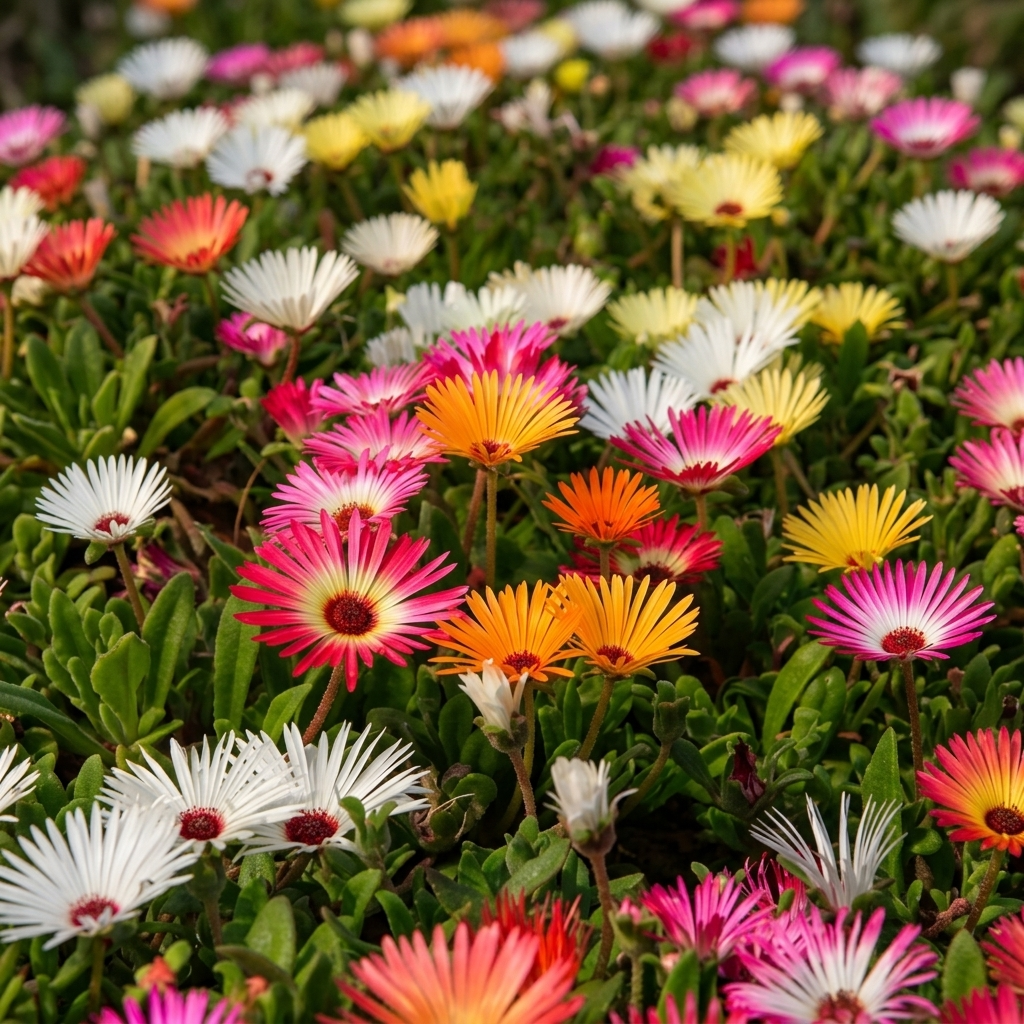
It stays low. Very low. Instead of building height, it spreads itself into a bright, sparkling carpet only around 10 to 15 cm tall. Then, when the sun comes out, the flowers open in pink, purple, cream, yellow, orange, red and every cheerful shade in between.
And there is something wonderfully theatrical about them. On a dull day the flowers may stay partly closed. Then the clouds move away, the light strengthens, and suddenly the whole patch seems to wake up at once.
For a Hungarian garden, that makes Livingstone daisy especially interesting. It loves full sun, likes sharply drained soil, copes well with dry conditions once established, and is perfectly at home in gravel gardens, hot borders, containers and flower boxes.
The leaves are unusual too. They are fleshy and succulent, almost as though the plant has built tiny water stores into itself. That is our first clue that this is not a flower that wants heavy, wet soil or constant watering.
We will begin with those tiny seeds, raise the seedlings, find the right sunny place, learn when to water and when not to, and then enjoy the moment when the first flowers open. By the end, I want Livingstone daisies to feel easy rather than mysterious.
Come on. Let us find the brightest, driest little corner of the garden.
1. Meet the Livingstone Daisy
The botanical name you will most often see today is Cleretum bellidiforme. Older seed packets and gardening books may call it Dorotheanthus bellidiformis or even Mesembryanthemum. Do not let the name changes worry you: we are talking about the same familiar low-growing South African annual.
Livingstone daisy belongs to the ice-plant family, Aizoaceae, and that explains the succulent foliage. The leaves are grey-green to fresh green, fleshy, and often look as if they are covered with tiny glistening droplets.
Then come the flowers: neat daisy-like faces only a few centimetres across, but produced in such numbers that a good group can look like a woven carpet of colour.
The plant is naturally mat-forming rather than upright. It is therefore much more useful along the front of a border, between stones, beside a path, in a gravel bed, or spilling gently across the surface of a container than hidden behind taller flowers.
Why do the flowers close?
Livingstone daisies are strongly responsive to light. Their flowers open best in bright sunshine and may close in cloudy weather and at night. This is normal, not a sign that the plant is unhappy.
|
GOOD TO KNOW If your Livingstone daisies look quiet on a grey morning, do not rush for the watering can. Wait for the sun. On a bright day the same plants can suddenly look completely different. |
2. Why They Suit a Hungarian Summer
Livingstone daisies come from southern Africa, so sunshine does not frighten them. In fact, full sun is one of the secrets to getting the best flower display.
Think of a south-facing terrace in Győr, a hot gravel bed near Pécs, a sunny balcony in Budapest, or a low border beside a path that bakes during July. These are exactly the sort of places where Livingstone daisies can be very useful.
They also prefer soil that drains quickly. Sandy or gravelly ground is excellent. Ordinary garden soil is fine if it does not stay wet. Heavy clay can be more difficult, especially after rain, so improve drainage or choose a raised bed or container instead.
And here is another useful point: these are not hungry plants. Rich soil and heavy feeding can encourage soft growth at the expense of the compact, flower-filled habit we actually want.
Once the roots are established, the fleshy leaves help the plants cope with short dry periods. But remember the distinction we have made in many of our books: drought tolerant does not mean a newly planted seedling should be abandoned in dry soil for a week.
|
A COMMON MISTAKE Treating Livingstone daisy like a thirsty bedding plant. Constantly wet soil is much more dangerous than letting the surface dry a little between waterings. |
3. The Livingstone Daisies We Grow With You
At Holland Kertészet, we currently offer two Livingstone Daisy packets, and both are designed to give that bright mixed-colour carpet effect.
Livingstone Daisy
This mix grows to about 15 cm and is described as a colourful annual for sunny, dry positions. It is particularly suited to flower carpets and flower boxes.
Livingstone Daisy – Mixed
This second mixed packet is also about 15 cm tall and gives a cheerful range of colours for the same sunny, dry situations. It is another excellent choice for edging, low beds and containers.
The colours are part of the pleasure. Depending on the mix and individual seedlings, Livingstone daisies can flower in pink, magenta, purple, cream, yellow, orange, red and soft combinations between them.
Because both products are mixtures, do not expect every seedling to look identical. I would actually call that an advantage. A mixed patch has the relaxed feeling of a tiny summer mosaic, and you discover the final colour combination only when the plants begin to flower.
|
GROW WITH US Both Holland Kertészet packets are annual mixed Livingstone daisies. Sow several plants together rather than one lonely specimen; this flower is at its best when it creates a patch, ribbon or carpet of colour. |
4. Let’s Sow
The seeds are small, so our first job is simply not to bury them too deeply.
For both Holland Kertészet packets, sow under glass from mid-March to mid-April, or sow outdoors in a seedbed from mid-April to mid-May. The young plants can be planted out after about five to six weeks.
Use a fine, well-drained seed compost. Moisten it before sowing, scatter the seed thinly, and press it gently onto the surface. A very light covering is enough. Livingstone daisy seed germinates well in mild spring warmth; around 16–19°C is a useful target under protection.
Keep the compost lightly moist while germination begins, but do not turn the tray into a swamp. A fine spray or careful bottom watering is much safer than a heavy stream from a watering can.
Once seedlings appear, give them excellent light. Weak, stretched seedlings are usually telling us that the light is too poor.
|
DON'T PANIC The seedlings are tiny at first. That is normal. Livingstone daisy starts delicately and then becomes much tougher once it has filled its pot and moved into bright outdoor conditions. |
5. From Seedling to Flower Carpet
When the seedlings are large enough to handle, thin them or move them carefully into small modules. Hold them by a leaf rather than pinching the stem.
If you started them indoors, harden them off before planting. Give them a little outdoor time each day, gradually increasing the exposure to sun, breeze and cooler nights.
Do not plant them permanently outside while hard frost is still a realistic possibility. In much of Hungary, the safest permanent planting time is after the danger of damaging spring frost has passed.
When you plant, think in groups. A row along the front of a bed, a broad patch in a rockery, or several plants in a shallow container is much more effective than scattering individuals all over the garden.
Allow enough room for the mats to spread. Around 15–20 cm between plants is a practical starting point for a carpet effect without immediate overcrowding.
Water them in after planting and keep an eye on moisture during the first couple of weeks. Once the roots have settled, begin allowing the soil surface to dry slightly between waterings.
|
WHAT I WOULD DO I would plant Livingstone daisies where I can see them from above: beside a path, near the terrace, or in a low container. The sparkling foliage and changing flower colours are much easier to appreciate close up. |
6. Summer Care: Less Fuss, More Sun
By early summer the little plants should begin knitting themselves together into a low mat.
Sun is still the priority. Too much shade means fewer open flowers and looser growth. If a container spends half the day in deep shade, move it if you can.
Water when the soil has dried enough to need it, then water thoroughly and let excess moisture drain away. Container plants will need checking more often than plants in the ground because pots heat and dry quickly in Hungarian summer weather.
Feeding should be modest. In the ground, good drainage matters more than fertiliser. In containers, a weak liquid feed occasionally can help, but do not push the plants with lots of nitrogen.
Deadheading is not absolutely essential for every flower, but removing tired blooms and trimming straggly growth can keep a small display looking fresh for longer.
If a spell of extreme heat arrives, do not compensate by keeping the soil permanently wet. Morning watering is usually better than repeated little splashes throughout the day.
7. When Something Goes Wrong
The plant is soft, yellowing or collapsing at the base? First check the soil. Livingstone daisies dislike waterlogged conditions, and roots sitting in wet compost can fail quickly.
Hardly any flowers? Check the light. These plants really do need strong sun for their best display, and the flowers naturally remain more closed in dull weather.
The plants are lush but floppy? Think about feeding and soil richness. Too much nitrogen can give you more leaf and less of the compact flowering habit you wanted.
Leaves or young shoots being eaten? Slugs and snails can damage young plants, particularly in damp spring weather. Check around the plants after rain or in the evening.
Aphids can also gather on soft growth. Small colonies can often be dealt with early before they become a bigger problem.
The good news is that Livingstone daisies are generally not famous for serious disease problems when they have sun, airflow and drainage.
|
A COMMON MISTAKE Seeing closed flowers on a cloudy day and deciding the plant must need fertiliser. Livingstone daisies simply follow the light. Sunshine usually does more for the flowers than another feed. |
8. A Carpet of Colour
This is the stage we have been waiting for.
The mat is full. The succulent leaves catch the light. Then, on a bright morning, dozens of little flowers open together.
A mixed Livingstone daisy planting can look almost painted: warm orange beside pale cream, shocking pink beside purple, yellow between red and magenta.
Because the plants stay so low, they are excellent partners for taller flowers. Try them at the feet of cosmos, gaura, verbena, dwarf dahlias or ornamental grasses, provided the taller plants do not cast too much shade.
They are also very effective in gravel gardens and rockeries, where the dry surface and stones suit their character. In containers, use them around the edge rather than burying them behind tall central plants.
And remember to look at them in different weather. On a dull morning they can seem almost sleepy. On a bright afternoon they can look as if someone has switched the whole border on.
If you are planning a container, Livingstone daisies work especially well in a wide, shallow pot where their roots are not trapped in permanently wet compost. Mix them with other plants that enjoy sun and drainage rather than pairing them with something that wants constant moisture. That way one watering routine suits the whole container.
For a softer cottage-garden effect, let the mixed colours meet pale grasses, white alyssum or silvery foliage. For something bolder, put them beside orange marigolds, purple verbena or a dark-leaved dahlia. Because the plants are so low, the colour scheme can be playful without overwhelming the border.
And if you have a narrow strip of dry soil between paving and a sunny wall, remember this plant. Many flowers dislike that reflected heat. Livingstone daisies often regard it as an invitation.
|
TRY THIS Plant one broad ribbon of Livingstone daisies along the front of a sunny border instead of dotting them around. Repetition turns a small 15 cm plant into a strong design feature. |
Livingstone Daisies in Pots and Flower Boxes
Livingstone daisies are almost made for containers, especially if your garden soil is heavy. A pot lets you control drainage, and because the plants stay so low, even a modest balcony box can become a complete little landscape of colour.
Choose a container with proper drainage holes and use a free-draining potting mix. If the pot sits inside a decorative cachepot, empty any water that collects after rain. The roots should never spend hours standing in a hidden puddle.
Wide containers are better than very deep narrow ones for the carpet effect. Plant several seedlings across the surface, leaving enough room for each one to spread. As they grow, the spaces disappear and the colours begin to merge into one low mosaic.
A window box on a sunny balcony can be spectacular, but remember that a small volume of compost dries faster than garden soil. In a July heatwave, check the box every day. Water thoroughly when needed, then let excess water run away. Do not keep adding small splashes just because the top looks dry.
If the plants become tired in midsummer, remove spent flowers, trim straggly stems lightly and give a very weak feed. Then stand back. Livingstone daisies respond better to sunshine and good drainage than to constant intervention.
9. Autumn and the End of the Season
Livingstone daisy is an annual for us in Hungary, so autumn eventually brings the season to an end.
As nights cool and the first real frosts approach, flowering slows and the succulent foliage begins to lose its freshness. There is no need to try to protect the plants outdoors through winter.
Remove the old plants once they are finished and add healthy material to the compost if you wish. If a plant has been badly affected by pests or rot, dispose of it separately rather than leaving it around the new garden bed.
If you enjoy saving seed, leave a few flowers to mature fully rather than deadheading everything. Collect only dry, mature seed and store it somewhere cool, dry and clearly labelled.
Do remember that seed from a mixed planting can give you another surprise next year. That is part of the charm.
10. Your Livingstone Daisy Cheat Sheet
1. Choose a mixed packet and plan to grow several plants together.
2. Sow under glass from mid-March to mid-April.
3. Or sow outdoors in a seedbed from mid-April to mid-May.
4. Use fine, free-draining seed compost and cover seed only lightly.
5. Keep germinating seed gently moist, never waterlogged.
6. Give seedlings strong light.
7. Plant out after about five to six weeks when conditions are safe.
8. Harden indoor-raised seedlings off first.
9. Choose full sun.
10. Give them sharply drained soil.
11. Plant in groups for the best carpet effect.
12. Water regularly while plants establish.
13. Once established, allow the soil surface to dry slightly between waterings.
14. Feed lightly, especially in containers.
15. Do not worry when flowers close in dull weather.
16. Watch young plants for slugs and snails.
17. Check soft growth for aphids.
18. Trim tired growth if the carpet starts looking untidy.
19. Enjoy the flowers through the sunny part of summer.
20. Treat the plants as annuals and start again from seed next spring.
If You Remember Only Five Things…
1. Sunshine is not optional
Livingstone daisies flower best in strong light. Give them the brightest place you have.
2. Drainage matters more than rich soil
A dry, lean, well-drained position is much safer than heavy, wet ground.
3. Small seedlings still need care
The mature plant is drought tolerant, but young seedlings need steady moisture while they establish.
4. Closed flowers are often perfectly normal
Cloud, evening and dull weather can close the blooms. Wait for the sun before diagnosing a problem.
5. Think in carpets, not individuals
This is a low mat-forming annual. Its real magic appears when several plants grow together.
One Last Walk Around the Garden
We began with a packet of tiny seeds and a sunny patch of soil.
At first there was almost nothing to see. Then came the seedlings, the fleshy little leaves, the spreading mats, and finally those bright daisy faces opening toward the sun.
Livingstone daisies are not grand plants. They will never tower over the border or dominate a garden. Their pleasure is smaller and closer: a ribbon of colour beside the path, a flower box glowing in the afternoon light, a patch of pink, orange and yellow between warm stones.
Perhaps that is why they are such satisfying beginner flowers. You do not need a greenhouse full of equipment, a complicated feeding schedule or perfect garden soil. You need light, drainage, a little patience at the seedling stage and the confidence not to overwater once the plants are established.
They also remind us that a garden changes with the weather. On one day the flowers can be tucked away beneath a grey sky. On the next, under clear Hungarian sunshine, the very same patch can be blazing with colour. That movement makes the planting feel alive.
And because the plants are annuals, there is no pressure to make a permanent decision. Try them in a window box this year. Put them beside the gravel path next year. Sow a broad carpet another spring. Each season can be slightly different.
And they teach a useful gardening lesson too. Some plants reward us most when we stop trying so hard. Less feeding. Less watering. Better drainage. More sun.
Next spring, when you see that little packet again, you will know exactly what to do. Sow lightly. Keep the seedlings bright. Wait for the frost danger to pass. Give them the driest sunny corner you have. Then let the summer do the rest.
And when the first flowers open together, you will understand why this tiny plant earned a whole book of its own.
When you are ready for the next one…


