

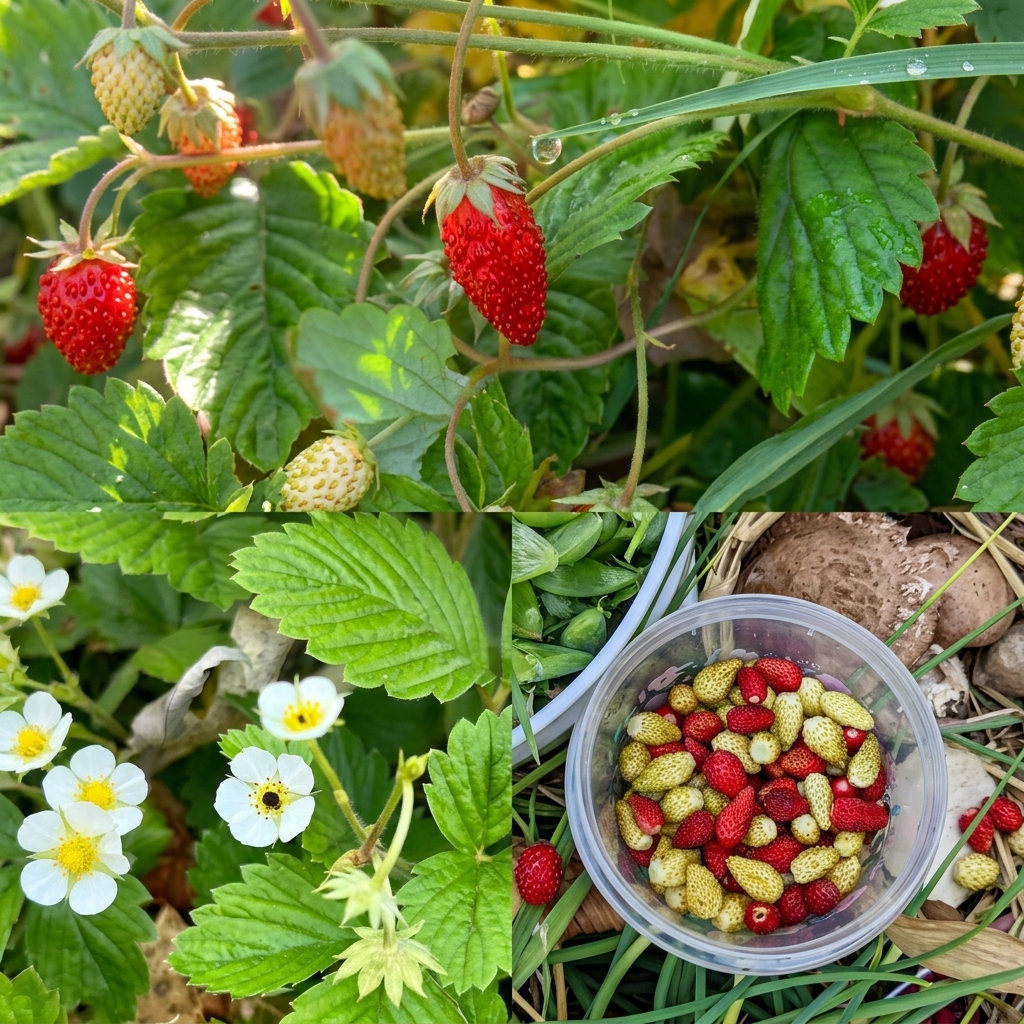
From Tiny Seeds to Little Berries Full of Flavour
A friendly guide to sowing, growing, picking and enjoying alpine strawberries in Hungary.
Come Into the Garden With Me…
Today, we're growing alpine strawberries. And this time, our reward will not be a vase of flowers. It will be something much harder to carry back to the kitchen without eating on the way.
Alpine strawberries are small, fragrant cousins of the large supermarket strawberry. The fruits may be tiny, but their flavour can be astonishingly intense - sweet, aromatic and much closer to the wild strawberries you might discover at the edge of a woodland path.
They are also wonderfully useful plants. They stay compact, fit into pots and balcony boxes, tuck neatly along the edge of a bed and can produce fruit over a long season. Many alpine types make few or no runners, so instead of taking over the garden they form tidy little clumps.
For Hungarian gardeners, they are especially interesting because they are perennial. We sow them once, establish the plants, and with sensible care they can return for several years. They enjoy sun, but unlike some Mediterranean summer flowers they are also grateful for a little afternoon protection where Hungarian summer heat becomes fierce.
We'll start with almost impossibly tiny seed, learn how to coax it into seedlings, move those seedlings into the garden, encourage flowering and fruit, solve the usual problems, and then take the plants safely through winter.
By the end, I want you to be able to pick one of those tiny berries, taste it, and know exactly how you got there.
Ready? Come into the garden with me.
1. Meet the Alpine Strawberry
Alpine strawberries are forms of Fragaria vesca, the wild strawberry. They are smaller and more delicate than the large garden strawberries most of us know, but what they lose in size they often make up for in fragrance and flavour.
Small fruit, big flavour
An alpine strawberry is not trying to become enormous. The berries are usually small and conical, and the plants produce them over time rather than giving one huge commercial-style crop. This makes them perfect for the gardener who enjoys wandering outside and picking a few ripe berries almost every day.
A very tidy strawberry
Many alpine varieties, including Baron von Solemacher, are runnerless or nearly so. Instead of sending long stems across the bed looking for somewhere else to live, they make compact clumps. That is wonderful for edging paths, raised beds, balcony boxes and pots.
Perennial, not a one-summer visitor
Alpine strawberries are perennial. In Hungary, established plants are generally hardy enough to remain outside through winter. The leaves may look tired after cold weather, but the crown remains alive and produces fresh growth in spring.
|
GOOD TO KNOW Alpine strawberries are not simply miniature versions of large garden strawberries. Think of them as a different experience: smaller harvests, intense flavour, compact plants and a wonderfully long picking season. |
2. Finding Their Place in a Hungarian Garden
Our usual rule still applies: don't start with the plant. Start with the place.
Sun - but use a little common sense
Alpine strawberries fruit best with plenty of light. In much of Hungary, morning sun and good daytime light are excellent. But a pot baking against a south-facing Budapest wall in the middle of July can become much hotter and drier than a plant growing in open garden soil.
In very hot positions, a little afternoon shade can reduce stress and help the soil stay moist longer. The aim is good light without turning the root zone into an oven.
Soil
Give them fertile, humus-rich soil that drains well but does not dry instantly. This is a different balance from plants such as yarrow, which are happy in lean, dry ground. Strawberries like moisture around their roots, just not stagnant water.
Work compost into poor soil before planting. In heavy clay, improve structure and consider a slightly raised position. In sandy soil, organic matter helps the ground hold moisture through hot Hungarian summers.
Pots, balconies and terraces
Alpine strawberries are excellent container plants. Yellow Cream is specifically suitable for balconies, window sills and patios, and both of our varieties fit naturally into small-space gardening. Use a pot with proper drainage holes and enough soil volume that it will not dry out every few hours in summer.
|
A COMMON MISTAKE Putting strawberries into a tiny decorative pot because the plant itself looks small. Small plant does not mean tiny root space. Give the roots enough compost to stay cool and evenly moist. |
3. The Alpine Strawberries We Grow With You
At Holland Kerteszet, we currently grow this story around two lovely alpine strawberry choices: Baron von Solemacher and Yellow Cream. They show just how different two small strawberries can be.
Baron von Solemacher
Baron von Solemacher is a classic German alpine strawberry with small, bright red, glossy, conical fruit. The flavour is aromatic and sweet with a slight tang, which makes the berries wonderful eaten straight from the plant but also useful for desserts, garnishes, jam and even summer drinks.
It is especially well suited to outdoor growing and its compact habit makes it easy to fit into a productive garden without giving up half the bed to runners.
Yellow Cream
Yellow Cream is the surprise of the pair. Its fruit ripens to a pale yellow or creamy white rather than red. The berries are very sweet, and there is a practical little bonus: birds are often less quick to recognise pale fruit as ripe strawberries.
It is a lovely choice for a balcony, patio or window box, but I also like it simply because it makes people stop and ask, 'Is that really a strawberry?'
Which would I choose?
If you want the classic wild-strawberry experience, choose Baron von Solemacher. If you like unusual plants and the idea of creamy-white fruit, choose Yellow Cream.
Or grow both. Red berries on one side of the path, pale berries on the other. Gardening decisions do not always have to be difficult.
|
GROW WITH US These are the alpine strawberries in the Holland Kerteszet range. We choose the seed; you discover how each variety behaves in your own Hungarian garden. That is where the real growing knowledge begins. |
4. Sowing Seeds That Look Like Dust
This may be the moment you open the packet and wonder whether someone forgot to put the seeds inside.
Strawberry seed is tiny. Very tiny. So we treat it gently.
When to sow
For Hungary, early spring sowing under protection is a very practical approach. Yellow Cream can be started in a propagator at around 20 C in early spring, or later in a cold frame. Starting early gives the seedlings time to develop before they are planted out in early summer.
Do not bury them deeply
Fill a clean tray or small pots with fine seed-starting compost and moisten it first. Scatter the seeds on the surface as evenly as you can. Press them gently into contact with the compost and cover only very lightly, if at all.
Then water with great care. A fine mist or gentle bottom watering is much better than pouring water directly onto the surface and washing all your future strawberries into one corner.
Patience
Strawberries are not among the fastest seeds in the garden. Keep the compost evenly moist, provide good light and warmth, and give them time.
|
DON’T PANIC Nothing has happened after a few days? Good. That is normal. Alpine strawberries reward patience. Keep the tray moist and bright rather than digging around to check whether the seeds are still there. |
5. From Tiny Seedling to Proper Plant
Eventually, little green leaves appear. At first they look almost impossibly delicate. Then the familiar three-part strawberry leaves begin to form and suddenly you can see what the plant is becoming.
Pricking out
Once seedlings are large enough to handle, move the strongest ones into individual small pots or modules. Hold them by a leaf rather than squeezing the stem, and set them at the same depth they were growing before.
Light matters
Young strawberry plants need good light. If they are stretching and leaning toward a window, they are asking for more. Turn trays regularly and give them the brightest appropriate position you can.
Hardening off
Before planting them permanently outside, gradually introduce them to outdoor conditions. Hungarian spring can still give us cold nights, strong sun and surprisingly drying wind. A week or two of hardening off makes the transition much easier.
Planting out
Plant in early summer once the seedlings are sturdy and serious frost danger has passed. Keep the crown - the point where the leaves emerge - level with the soil. Burying the crown too deeply can cause trouble, while planting too high leaves roots exposed.
|
WHAT I WOULD DO Grow a few extra seedlings. Keep the strongest, give one or two to a friend, and use the rest to experiment with different positions. You will quickly discover where alpine strawberries are happiest in your own garden. |
6. Growing, Flowering and the First Berry
Once established, the plants begin producing small white flowers. And now every flower suddenly looks important, because somewhere in that flower is the possibility of a strawberry.
Watering
Keep the soil consistently moist during flowering and fruiting, especially in containers. Irregular watering can stress the plant and reduce the quality of the harvest. Water the soil rather than repeatedly soaking flowers and fruit.
In a hot Hungarian summer, containers may need checking daily. Plants in open ground, especially where the soil contains good organic matter, usually hold moisture much longer.
Feeding
A little balanced feeding can help container plants and those in poor soil, but don't turn them into lush leaf factories. Once flowering begins, a feed suitable for fruiting plants can be useful when applied according to its instructions.
Mulch
A light mulch helps conserve moisture and keeps ripening berries away from bare soil. Straw is the traditional choice - which is, after all, how strawberries got their English name - but clean organic mulch can work well too.
The first berry
Wait until the fruit is properly ripe. Baron von Solemacher should become bright red; Yellow Cream develops its pale creamy-yellow ripe colour. Then pick gently with a small piece of stem attached if possible.
And eat the first one immediately. I consider this an important gardening rule.
7. When Something Goes Wrong
Strawberries are delicious. Unfortunately, we are not the only ones who know this.
Birds
Red fruit can attract birds as it ripens. Netting may be useful where bird pressure is high, but it must be installed safely so wildlife cannot become trapped. Yellow Cream has a small advantage here because its pale fruits are less obvious to birds.
Slugs and snails
Low fruit and tender leaves can attract slugs and snails, especially during damp weather. Keep the area reasonably tidy, raise fruit away from wet soil with mulch, and use wildlife-conscious control methods where necessary.
Grey mould or rotting fruit
Fruit sitting in damp, stagnant conditions can develop mould. Improve airflow, avoid crowding, remove rotten berries promptly and try not to wet the fruit every time you irrigate.
Leaves are scorched or plants collapse in heat
A container may simply be overheating or drying too fast. Move it away from reflected afternoon heat, increase soil volume if the pot is tiny, and check moisture before watering.
Hardly any berries
Young plants may simply need time. Also check light, feeding and watering. Too much shade gives fewer flowers; severe drying during flowering can reduce fruit set.
|
A COMMON MISTAKE Picking fruit because it looks almost ripe. Alpine strawberries have their best aroma when fully ripe. Give them that extra little bit of time - unless a blackbird is watching, in which case negotiations may be required. |
8. A Long Season of Little Harvests
This is where alpine strawberries become addictive.
You may not fill a supermarket punnet every morning. Instead, you get a handful. Then another handful. Then three berries while you're watering. Then two more on the way back to the house.
Pick often
Check plants regularly and harvest ripe fruit promptly. This keeps berries at their best and reduces the chance of overripening, mould or pests getting there first.
What do we do with them?
The most obvious answer is: eat them fresh.
But alpine strawberries are also beautiful on cakes, yoghurt, ice cream and desserts. Baron von Solemacher can be used for small-batch jam or garnishes, while Yellow Cream makes a particularly unusual decoration because people do not expect a strawberry to be pale.
Let the children find them
If children visit your garden, alpine strawberries are one of the nicest edible plants to grow at their height. The small fruit feels like treasure hunting, and because the plants are compact, they can be tucked along a path where every ripe berry becomes an event.
|
TRY THIS Plant alpine strawberries along the edge of a raised bed instead of hiding them in a separate fruit patch. You will walk past them more often - which means you will notice ripe berries before someone with wings does. |
9. Autumn, Winter and Keeping Plants for Years
By autumn, fruiting slows and the plants begin preparing for winter. Unlike African daisies, we are not saying goodbye. Our alpine strawberries are staying.
Autumn tidy-up
Remove obviously diseased or dead foliage, but there is no need to strip the plant bare. Keep the bed free of rotten fruit and heavy weed competition.
Winter in Hungary
Established Fragaria vesca is hardy enough for normal Hungarian winter conditions, especially in the ground. The greater risk for container plants is that the root ball freezes harder and dries more easily than garden soil.
Move pots to a sheltered position, group them together, or insulate the container during severe cold. Water occasionally during mild dry periods if the compost has become completely dry, but don't keep dormant plants soggy.
Spring renewal
When spring returns, remove tired old leaves and top-dress with a little compost. Fresh green growth will appear from the crown, followed by flowers, and the whole cycle begins again.
How long should we keep them?
Plants can remain productive for several years, but an old tired clump eventually becomes less generous. Raise fresh plants from seed periodically so you always have younger plants coming through.
|
GOOD TO KNOW Because many alpine strawberries do not make runners, renewal is often done by seed or careful division rather than waiting for the plant to send baby plants across the bed. |
10. Your Alpine Strawberry Cheat Sheet
1. Choose Baron von Solemacher for classic aromatic red fruit, or Yellow Cream for very sweet pale fruit.
2. Start tiny seeds under protection in early spring.
3. Sow on or very near the surface - do not bury them deeply.
4. Keep the compost evenly moist and be patient with germination.
5. Give seedlings excellent light.
6. Prick them out once they are large enough to handle.
7. Harden plants off before they live outside permanently.
8. Plant with the crown level with the soil.
9. Give them fertile, moisture-retentive but well-drained ground.
10. Provide plenty of light, with afternoon protection in fiercely hot positions if needed.
11. Water consistently during flowering and fruiting.
12. Check pots frequently during Hungarian summer heat.
13. Mulch to conserve moisture and keep fruit clean.
14. Watch for slugs, birds and moulding fruit.
15. Pick berries when fully ripe for the best flavour.
16. Harvest little and often.
17. Keep container plants protected from extreme winter freezing.
18. Clean up tired foliage in spring.
19. Refresh old plants with younger seed-grown ones every few years.
20. Never expect the first ripe berry to reach the kitchen.
If You Remember Only Five Things…
1. Alpine strawberries are small on purpose
Don't compare them with supermarket strawberries. Their gift is flavour, fragrance and a long season of little harvests.
2. Tiny seed needs patience
Sow shallowly, keep it moist, give it light and resist the temptation to interfere every second day.
3. Keep the crown at soil level
Too deep invites rot. Too high exposes roots. Level with the soil is just right.
4. Consistent moisture matters when fruit is forming
Especially in pots. A tiny balcony container can dry out very quickly during Hungarian summer weather.
5. Wait until the berry is truly ripe
That last bit of ripening is where much of the wonderful alpine-strawberry perfume appears.
One Last Walk Around the Garden
Do you remember where we started? With seeds so small they barely looked capable of becoming anything at all.
We scattered them onto compost, watered carefully and waited. Tiny leaves appeared, then proper strawberry leaves, then one little white flower. And eventually, hiding beneath the foliage, a berry.
Perhaps it was the glossy red of Baron von Solemacher, small but wonderfully fragrant. Or perhaps it was Yellow Cream, pale and unusual, looking almost unripe until you tasted how sweet it was.
This is what I love about alpine strawberries. They make us slow down. You don't harvest them with a wheelbarrow; you notice them. One here, two there, another tucked behind a leaf.
And because they're perennial, next year you already know where to look. Wherever yours grow in Hungary, they soon become part of the garden. Pick one more before you go inside - and when you're ready for the next plant, come into the garden with me.


