

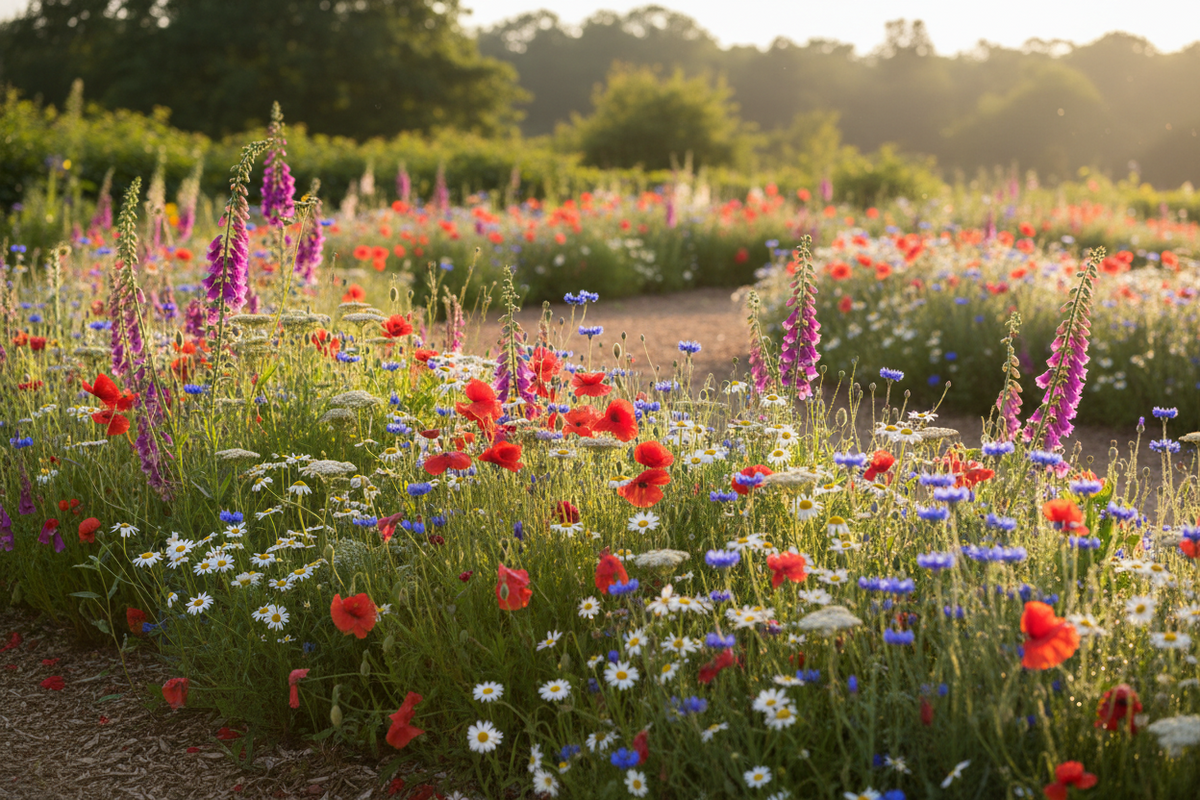
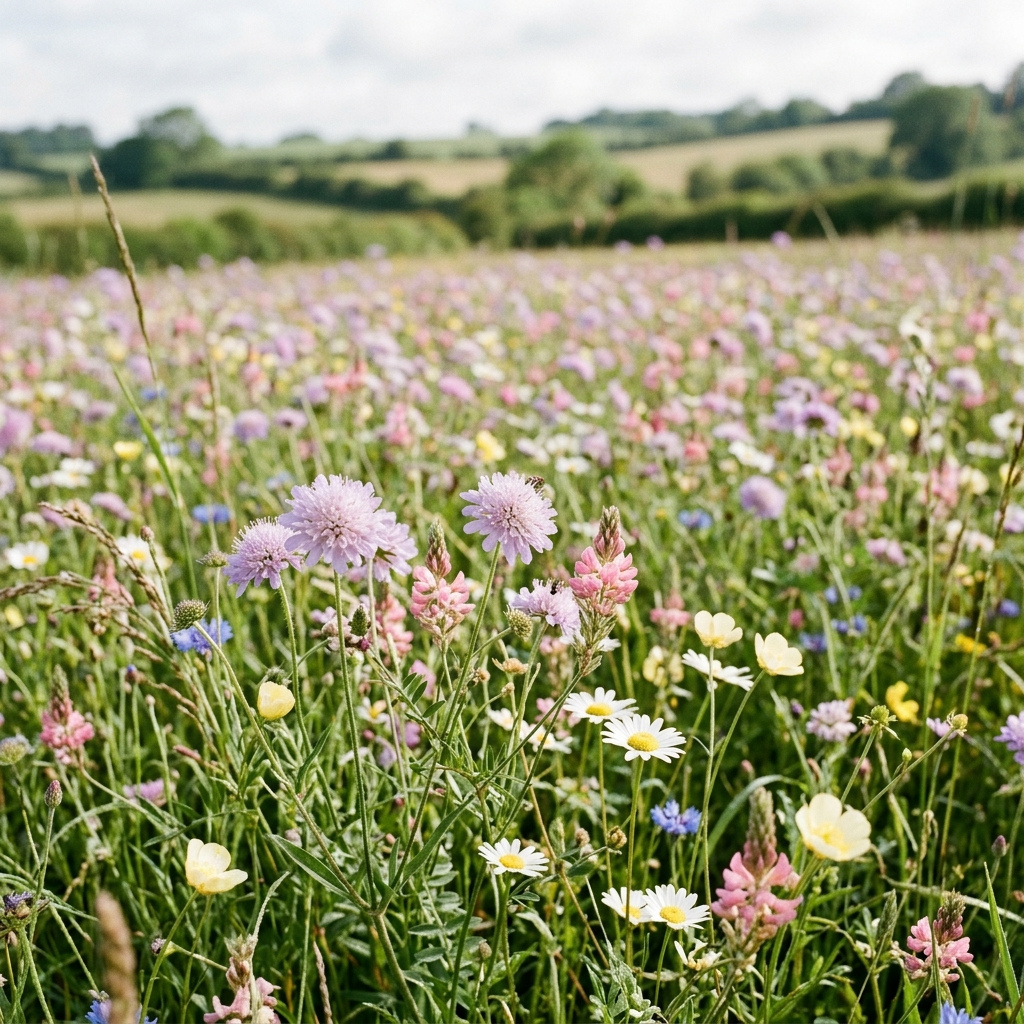
There is a quiet ecological crisis hiding in plain sight. Over 67% of wildflower meadows have been lost since the 1930s, with flower-rich grassland now covering a mere 15% of the Hungarian land area. That figure carries real consequences: 41% of all species have seen a decline since 1970, with a complete loss of 150 species in the last one hundred years. Therefore, every garden that makes space for a wildflower seed mix, however modest, is doing measurable conservation work, not just creating something beautiful.
The good news is that you do not need acres of countryside to make a difference. Meadows can be any size, even a small patch of ground or part of a border can be transformed into an attractive, pollinator-friendly mix of grasses and wildflowers. The key is choosing the right mix for your conditions and following a logical process from soil preparation through to annual maintenance. Get these decisions right and your display will reward you for many years to come.
Key Takeaways
-
The 97% statistic demands action: Since the 1930s, Hungary has lost 67% of its wildflower meadows, and a third of wild pollinator species decreased between 1980 and 2013. Every wildflower patch contributes to reversing this trend, choose native-species mixes where possible.
-
Annual vs perennial is your first decision: Annual wildflower mixes have a one-year life cycle, meaning they are quick-growing, very colourful and floriferous, and often contain species such as cornflower, field poppy, corncockle and corn marigold. Perennial mixes take longer but build richer, self-sustaining habitat.
-
Sowing rates are precise, do not guess: Whether you choose a grass and wildflower seed mix sown at 4 grams per m², or a 100% wildflower mix at 1.5 grams per m², getting the sowing rate and timing right is key. Oversowing is one of the most common beginner mistakes.
-
Timing windows are narrow: For the strongest establishment sow your seeds in spring (March to May) or in late summer to early autumn (late August to early October), when soil conditions are just right for germination. Miss these windows and germination rates drop sharply.
-
Poor soil is an advantage: Wildflowers prefer infertile soils and do not thrive in areas of high fertility. If your garden has been fertilised for years, soil preparation becomes the single most important step.
Quick-Start Prioritisation Framework
| Mix Type | Best For | Effort Level | Time to First Flowers |
|---|---|---|---|
| Annual cornfield mix | Instant colour, first-year impact | Low | 8-10 weeks from spring sowing |
| 100% wildflower mix (no grass) | Small beds, borders, containers | Low-Medium | 8-10 weeks (annuals); year 2 (perennials) |
| Meadow mix (80% grass, 20% wildflower) | Larger areas, long-term habitat | Medium | Year 2 flowering; year 4-5 peak |
| Perennial specialist mix | Wildlife gardens, permanent meadows | High | Year 2-3 onwards |
| Soil-type specific mix | Clay, chalk or sandy ground | Medium | Varies by species composition |
Start here if you are:
-
A first-time grower with a small garden: Choose an annual cornfield mix; it delivers striking colour within weeks and teaches you the basics without a multi-year commitment.
-
Focused on pollinators and long-term wildlife value: A mixed annual and perennial wildflower seed mix gives you first-year colour while perennials establish their root systems beneath.
-
Working with a large open space or lawn conversion: A traditional meadow mix (80% grass / 20% wildflower) is the most ecologically complete option, though it demands patient, careful management for the first two to three years.
Understanding the Types of Wildflower Seed Mix
Annual Mixes: Fast Colour, Lower Complexity
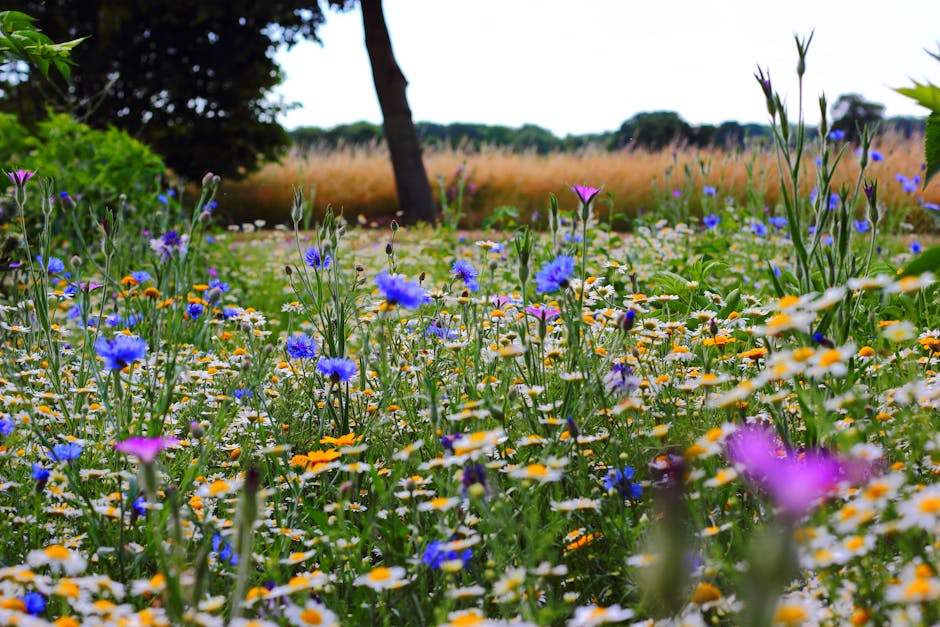
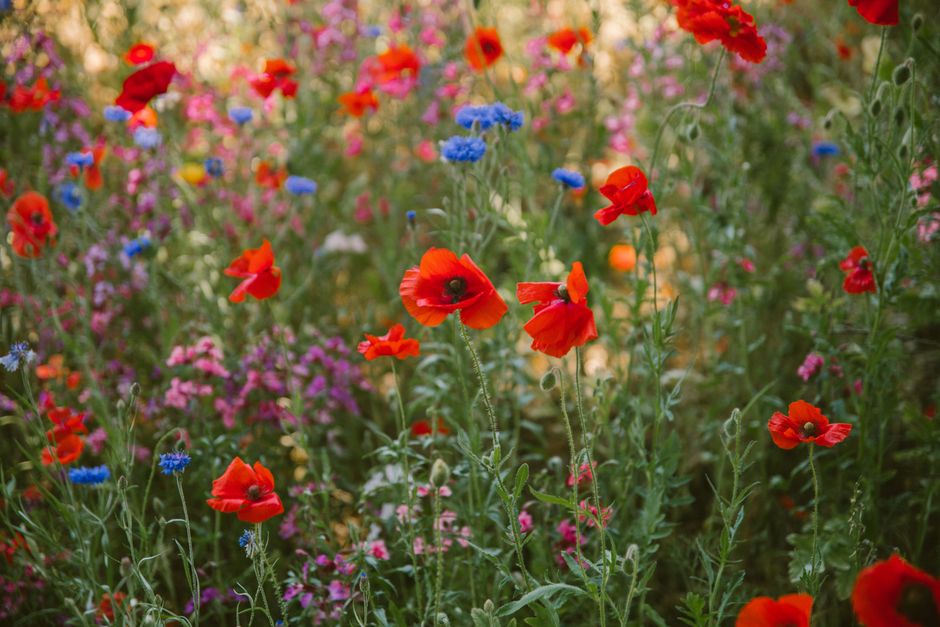
Annual wildflowers bloom in their first season, giving a bright show of colour from early summer before dying and setting seed in late summer or autumn. Annual wildflower seeds such as cornflowers, poppies and corn cockle look very effective scattered in beds and borders. They suit gardeners who want a high-impact display without waiting several seasons, and they work particularly well in fertile soils where a perennial meadow would struggle.
The trade-off is that annual mixes require re-sowing each year. Cornfield annuals are annual plants and need to be sown every year. If you find the yearly commitment appealing rather than burdensome, this is a perfectly valid long-term approach. Many gardeners combine an annual mix with a small perennial patch to enjoy the best of both.
Pro Tip: When sowing an annual mix in spring, do not cut back the display until September at the earliest. New meadows sown with annuals as part of the seed mix should not be cut back until September, if you cut before then, you will not see the annuals go to flower.
Perennial and Mixed Mixes: Long-Term Investment
Perennial meadows generally take longer to establish, most take at least two years to flower well from seed, but then continue for years to come. They can contain a wide range of species including ox-eye daisies, red campion, knapweed and field scabious. This patient approach pays dividends in ecological depth.
It is worth noting that perennial meadows take some time to establish, and it will be several years before you see the meadow at its best. A reliable tactic is to blend the two types: growing a wildflower mix with annuals and perennials means these wildflowers can work together to help establish your meadow. Annuals will bloom in the first season, helping to discourage weeds and giving you a burst of blooms in the first year while perennials establish their root systems.
Choosing a Mix Matched to Your Soil
Knowing your site characteristics, wet, medium or dry soil and full sun, filtered sun, or shade, is essential to understanding which species will thrive on your site and create a mixed meadow that knits together in a mosaic of colours and textures. This is a step many beginners skip, and it is the most common cause of disappointing results.
Choose a seed mix that is suited to your site and soil type, some species like fertile soil (such as clovers and lady's smock), while others are less fussy (such as ox-eye daisies and ragged robin). Specialist suppliers offer mixes for clay, chalk, sandy and neutral soils, so there is always a match for your conditions. The Holland Kertészet wildflower seed range includes options suited to a wide variety of site conditions, making it straightforward to identify the right starting point.
Soil Preparation: The Step That Decides Everything
Why Poor Soil Is Your Friend
If you want to start a meadow from scratch, you will need a sunny site with relatively poor soil. Richly fertilised ground encourages vigorous grasses and invasive weeds that smother the delicate wildflower seedlings before they can establish. Wildflowers prefer infertile soils. Some enthusiasts remove fertile topsoil, exposing less fertile subsoil. If stripping topsoil is impractical, growing a hungry cover crop like mustard for one season before sowing will draw down excess nutrients.
Clearing the Ground
Begin by removing any existing vegetation, whether grass, weeds or other plants, to expose bare soil. Once cleared, allow time for the existing seed bank in the soil to germinate. This flush of new growth should then be removed before you sow your wildflower seeds. Taking this extra step significantly reduces future competition.
Remove vigorous perennial weeds such as nettles and docks by digging them out by hand and removing all the roots. Fork over the soil to break up any compaction or lumps, and firm it by treading the area using small shuffling steps. Leave the soil to settle, ideally for four to six weeks, which also gives time for any weed seeds to germinate. Hoe these off, then rake to a level, crumb-like surface before sowing.
Pro Tip: Avoid deep, vigorous tilling before sowing. Tilling deeply and vigorously only brings more weed seeds to the surface to compete against your wildflower seeds. A light surface disturbance to about 2-3 cm depth is all that is needed once the initial clearing work is done.
Sowing Your Wildflower Seed Mix Correctly
Timing and Rates
In Hungary, the best time to sow wildflower seeds is between late March and early June or from September to early October. These periods avoid the coldest winter months and the driest parts of summer, giving seeds the best chance to germinate and establish. According to Meadowmania's comprehensive sowing guide, sowing rates differ by mix type: cornfield annual mixtures require approximately 2 grams per m², while a traditional meadow mix (80% grass, 20% wildflowers) calls for 4 grams per m². The sowing rate is 2-2.5 grams per m² for many standard mixes. Putting on more than this will mean the stronger species (grasses) start to dominate and you will see fewer wildflower species.
To account for imperfect conditions, Holland Kertészet recommends buying around 30% more seed than your basic area calculation suggests, 10% to allow for mismeasurement, 10% for seeds eaten by birds, and 10% to fill any thin spots a month after sowing.
The Sowing Technique
For a natural effect, it is best to scatter (broadcast) the seeds rather than sowing in straight lines. The easiest way to get an even distribution is to mix the seeds with a small quantity of dry sand; you can then see where and how densely you have sown.
Mix your seeds thoroughly with an inert carrier material such as silver sand, with an approximate rate of five parts sand to one part seeds. The sand will help carry the seeds over the seed bed and enable you to see the sown area. Sow the seed and sand mix evenly over the whole area twice by scattering first in one direction and then again in another direction. After sowing, lightly rake the soil to cover the seeds, no deeper than 1 cm, as most wildflower seeds need light to germinate.
Pro Tip: Maintain consistent moisture for four to six weeks after sowing, reducing watering as seedlings mature. For large meadow areas that cannot be irrigated, time your autumn sowing to coincide with natural rainfall patterns rather than relying on hand watering throughout.

The Ecological Case for Wildflower Meadows
Transformative Pollinator Value
The biodiversity numbers are striking. Wildflowers provide bees butterflies and other pollinators with food throughout the year. On a single day in summer, one acre of wildflower meadow can contain 3 million flowers, producing 1 kg of nectar sugar, enough to support nearly 96,000 honey bees per day. If your garden currently supports little pollinator activity, even a 10 m² annual mix will register as a meaningful food source for local bee populations.
According to research published in BMC's National Library of Medicine, wildflower plots recorded at least 11% higher species richness and over 60% higher wild bee abundance than unmanaged control areas. The practical implication: a wildflower seed mix is one of the highest-return, lowest-cost interventions available to any garden.
Carbon Capture and Soil Health
Cornfield annuals are annual diversity and the environment through carbon capture. Even when cut for hay once a year, a hectare of wildflower meadow can capture and store 3 tonnes of carbon, or 11 tonnes of CO2 annually. At the garden scale, the King's College Cambridge wildflower meadow study published in Ecological Solutions and Evidence found that the wildflower meadow species of plants, spiders and bugs, including 14 species with conservation designations, and that terrestrial invertebrate biomass was 25 times higher in the meadow.
Established wildflower meadows have complex root systems, which makes the soil very stable. This helps to mitigate flooding by holding on to rain water and stops nutrients from washing away. These ecosystem services accumulate quietly in the background, making a maintained wildflower area a long-term asset to any garden.
Maintaining Your Meadow Year by Year
Year One: Building the Foundations
It is important to mow your new perennial or mixed meadow regularly in the first year after sowing, to encourage the perennial flowers and grasses to make strong root growth. Cut to a height of 5 cm, about six to eight weeks after the seedlings appear, and repeat every two months throughout the first summer. This counter-intuitive early mowing prevents rank grasses from swamping slower-growing wildflower seedlings.
In years two and three, expect variable results as species compete and establish their relative positions. Perennials start to flower from year three, but really come into their own from year four onwards. Year three of a wildflower meadow can often be underwhelming, but patience is rewarded with a diverse and long-lasting habitat.
Established Meadow Cutting Regime
A summer cut between June and August encourages the growth of later-season wildflowers, cutting back to 7 cm and removing material that has already bloomed. The autumn cut is essential for keeping excess grass and weeds at bay. Cut back to 7 cm, leaving clippings to self-seed for a few days if you have annuals in your mix, and remove clippings if you have a perennial meadow.
Avoid watering or feeding your wildflower areas. Many native flowers colonise poor land, and adding extra nutrients and water will only encourage excessive vigour in the grasses, which will consequently outcompete the more delicate wildflowers. This is one of those rare gardening situations where doing less produces better results.
Yellow rattle is a powerful management tool for grass-dominant meadows. Yellow rattle (Rhinanthus minor) is semi-parasitic on grasses and will weaken their growth; sow it in August after cutting the meadow, and keep the grass mown until March.
Common Mistakes and How to Avoid Them
Sowing Into Existing Lawn Without Preparation
Perennial wildflowers are slow to establish and do not like to compete with other species in their early stages of growth. Generally, it is difficult to establish wildflowers in existing grassland, as the wildflowers have to compete with the established grass for light and space. If you want to oversow an existing lawn, expose at least 50% of the bare soil through vigorous scarification before applying a 100% wildflower-only mix.
Choosing a Mix That Ignores Soil Type
If established correctly on the right type of soil, the balance of species should be harmonious. Any imbalance normally means the soil is too heavy, too wet or too fertile, so favouring grasses. Before buying, run a simple home soil test or consult the supplier's soil-type guide. Most specialist seed merchants, including those stocked through Holland Kertészet, provide clear soil-type filters to make the selection process straightforward.
Expecting Year-One Perfection From a Perennial Mix
Many gardeners become discouraged when a perennial mix produces patchy, weedy-looking growth in its first summer. This is entirely normal. Perennial species are slower and more patchy when growing and do not flower in the same year as they are planted. The solution is to add a small portion of annual cornfield seeds to the mix at first sowing; they will provide colour while the perennials quietly build their root systems below.
Frequently Asked Questions
What is the difference between an annual and a perennial wildflower seed mix?
Annual seeds bloom for one season but often produce abundant colour quickly. Perennial wildflowers return year after year, offering long-term landscape value. Many seed mixes combine both for continuous blooming cycles. If you want fast results, lean towards an annual-heavy mix. For a self-sustaining, low-maintenance habitat, choose a perennial or mixed blend and commit to the two-to-five-year establishment timeline.
When is the best time to sow wildflower seeds?
Timing is key to successfully establishing your meadow. In Hungary, the best time to sow wildflower seeds is between late March and early June or from September to early October. Autumn sowing works particularly well for perennial mixes, as the seeds undergo natural cold stratification over winter and germinate strongly the following spring.
How much seed do I need per m² ?
The rate depends on your mix type. According to the RHS guide to sowing a wildflower patch, a pure wildflower mix is usually sown at about 2 g per m², while a wildflower-and-grass mix is typically applied at 5 g per m². Always check the specific packet instructions, as rates vary by species density, and buy an additional 30% to account for birds, bare patches and mismeasurement.
Do wildflower meadows need watering and feeding?
Wildflower meadows are a sustainable choice that reduce the need for watering and chemicals. Once established, perennial meadows need neither additional water nor fertiliser. During the first year after sowing, keep the soil moist during dry spells to support germination, then progressively reduce intervention. Adding fertiliser actively harms a wildflower meadow by encouraging the grasses that crowd out the flowers.
How do I stop grass from taking over my wildflower meadow?
Address grass dominance with two strategies. First, if left alone, a wildflower meadow will quickly return to scrub with the more competitive species taking over. Any wildflower meadow should be mown during its first year to control annual weeds and prevent the grasses from dominating. Second, introduce yellow rattle into your mix, this native semi-parasitic plant attaches to grass roots, weakening dominant species and opening up space for wildflowers to thrive.
Build Your Meadow With Confidence
The decision to create a meadow-style display with a well-chosen wildflower seed mix carries benefits that extend well beyond your garden boundary. You are contributing to the reversal of a documented ecological collapse, creating a living habitat for pollinators, and building something that becomes richer and more beautiful with each passing year.
Start with the right mix for your soil and situation, prepare the ground thoroughly, sow at the correct rate during the optimal window, and then exercise the patience that every meadow requires. The Holland Kertészet range of wildflower seed mixes offers a practical starting point, with options suited to small garden beds, larger open areas and a range of soil types. Your meadow display begins with a single, well-informed seed purchase.
Sources
-
Creating Wildflower Meadows, Royal Horticultural Society (RHS). Comprehensive guidance on meadow types, seed mixes and establishment. https://www.rhs.org.uk/lawns/creating-wildflower-meadows
-
How to Sow a Wildflower Patch, RHS. Practical sowing rates and techniques for home gardeners. https://www.rhs.org.uk/lawns/how-to-sow-a-wildflower-patch
-
Wildflower Meadow Maintenance, RHS. Mowing regimes and weed management for established meadows. https://www.rhs.org.uk/lawns/wildflower-meadow-maintenance
-
Why Wildflower Habitats Matter, WWF UK. Pollinator statistics and meadow loss data. https://www.wwf.org.uk/wildflowers/why-we-need-wildflowers
-
Nationally Important Wildflower Grasslands Get Increased Protection, UK Government (GOV.UK). Official statistics on UK meadow loss. https://www.gov.uk/government/news/nationally-important-wildflower-grasslands-get-increased-protection
-
Meadows Matter, Royal Botanic Gardens, Kew. Context on meadow decline and restoration. https://www.kew.org/read-and-watch/meadows-matter
-
Establishing a Wildflower Meadow Bolstered Biodiversity and Reduced Greenhouse Gas Emissions, Phys.org / King's College Cambridge. Peer-reviewed study on biodiversity and carbon outcomes. King's College Cambridge wildflower meadow study published in Ecological Solutions and Evidence
-
Flower Plantings Promote Insect Pollinator Abundance, PMC / National Library of Medicine. Research on pollinator response to wildflower plots. https://pmc.ncbi.nlm.nih.gov/articles/PMC9237205/
-
A Comprehensive Guide to Cultivating a British Wildflower Meadow, Meadowmania UK. Sowing rates and seedbed preparation guide. https://meadowmania.co.uk/blogs/news/growing-wildflower-seeds-how-to-prepare-for-grow-and-maintain-your-wildflower-meadow
-
How to Sow Wildflower Seeds, Thompson and Morgan. Species selection and sowing technique. https://www.thompson-morgan.com/how-to-sow-wild-flower-seeds
-
Sowing and Growing Wildflowers, Cotswold Seeds. Sowing rates and fertility management. https://www.cotswoldseeds.com/news/569/sowing-and-growing-wildflowers
-
How to Prepare a Seed Bed and Sow Wildflower Seeds, Meadowmania UK. Detailed seedbed preparation steps. https://meadowmania.co.uk/blogs/news/news-blog-2017-01-27-how-to-sow-wildflower-seed
-
Establishing Annual Wildflower Meadows: Soil Preparation and Sowing Best Practices, Pictorial Meadows. Sowing technique for annual mixes. https://www.pictorialmeadows.co.uk/blogs/blog/establishing-annual-wildflower-meadows-soil-preparation-and-sowing-best-practices
-
Wildflower Maintenance: When to Cut Back Your Wildflower Garden, Kent Wildflower Seeds. Annual cutting regime for established meadows. https://kentwildflowerseeds.co.uk/blog/wildflower-maintenance-when-to-cut-back-your-wildflower-garden/
-
Make Your Own Wildflower Meadow, North Wales Wildlife Trust. Practical meadow creation advice and species lists. Cornfield annuals are annual


