

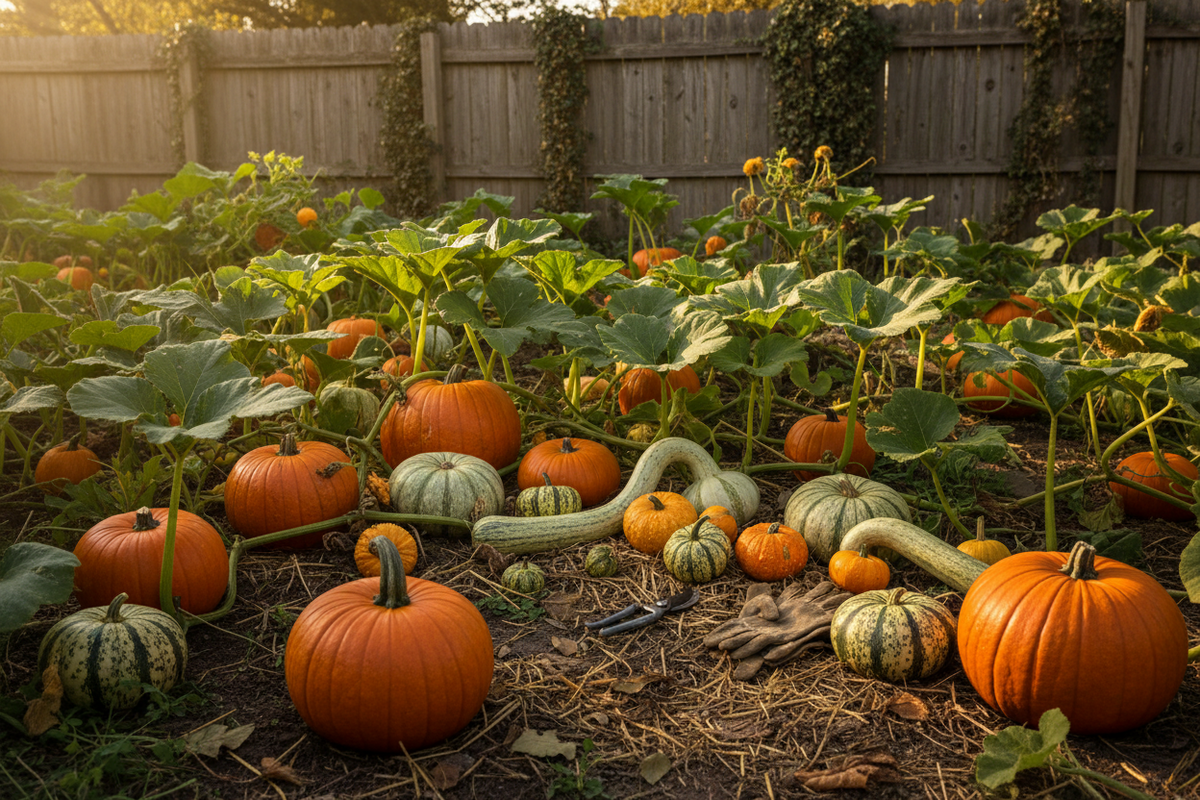
Pumpkins and gourds have been cultivated by humans for thousands of years, gourds were likely amongst the first plants domesticated by humans, used as utensils as early as 2,400 B.C. Today, they remain one of the most rewarding crops a home gardener can grow, offering ornamental beauty, nutritional value, and that unmistakable feeling of abundance at harvest time. Yet many growers lose their crops to preventable mistakes: wrong soil, poor timing, or diseases left unchecked. This guide covers everything from choosing varieties to protecting your patch, so your pumpkins and gourds go from seed to long-term storage without drama.

Key Takeaways
-
Choose the right variety first: Pumpkins are incredibly versatile; they can be used for fall decor, Halloween decorations, or cooking and eating. Match the variety to your goal before you plant.
-
Soil temperature is non-negotiable: According to gourds were likely amongst the first, the ideal growing temperature range is 18-35°C. Planting into cold soil wastes the season.
-
Cure your harvest before storing: Curing is the most critical step for long-term pumpkin preservation, skipping it can halve your storage time. Do not skip this step.
-
Scout for disease weekly: unsprayed pumpkins yielded less than half as much as plants with an effective fungicide programm. Therefore, start scouting at the bush stage and act at the very first sign of powdery mildew.
-
Handle fruit like eggs: Once the rind is bruised or punctured, decay organisms will invade the fruit and quickly break it down. Always carry pumpkins from the base, never by the stem.
Quick-Start Prioritisation Framework
| Strategy | Best For | Effort Level | Time to Results |
|---|---|---|---|
| Choose a resistant variety | All gardeners | Low | Before planting |
| Direct-sow in warm soil | Established beds with warm climate | Low | 75-120 days |
| Start indoors in pots | Short-season climates | Medium | 2-4 weeks head start |
| Drip irrigation + mulching | All growers wanting disease prevention | Medium | Immediate benefit |
| Weekly disease scouting | Experienced growers, large patches | Medium | Prevents mid-season losses |
| Curing + root cellar storage | Anyone wanting pumpkins to last months | Low | 10-14 days post-harvest |
Start here if you're:
-
A first-time grower: Direct-sow a compact variety like Hokkaido; it requires the least space and matures reliably.
-
A small-space gardener: Choose miniature varieties; smaller varieties need only 15-40 square feet, making them suitable for raised beds.
-
Growing for long-term storage: Select Cucurbita maxima or Cucurbita moschata types; these varieties have harder shells and can last 6+ months in proper storage.
Understanding Pumpkins, Gourds, and the Difference Between Them
Before you plant anything, it helps to understand what you are actually growing. These plants are related, but serve very different purposes.
Three Families, Three Purposes
Pumpkins, gourds, and winter squash are all members of the Cucurbitaceae family. Winter squash, like butternut, kabocha, and Delicata, are grown primarily for eating, with sweet, dense flesh that stores well into the colder months. Pumpkins can fall into both culinary and decorative categories; varieties like Sugar Pie are ideal for baking, while others are grown for size, carving, or ornamental value. Gourds are grown for their hard durable shells and ornamental forms, ideal for décor, crafts, and drying for long-term use.
A 100g serving of raw pumpkin provides around 26 calories and is an excellent source of nutrition. According to nutritional research on pumpkin, nutritional research on pumpkin provides over 200% of the recommended daily intake of vitamin A, a nutrient vital for maintaining good vision and a strong immune system. That means every pumpkin you grow is genuinely good for the table, not just the windowsill.
Popular Varieties Worth Growing
Some pumpkins such as 'Jack-Be-Little' stay small and sweet, while other varieties like the 'Atlantic Giant' can grow to be over 200 pounds. Many pumpkins like the ever-popular 'Jack-o-Lantern' are the favourite orange colour, but this gourd also comes in shades of yellow, green, red, white, and even blue.
A few standout varieties include:
-
Sugar Pie, a compact, all-purpose variety prized for baking and pies
-
Jarrahdale, a distinctive bluish-grey, ribbed pumpkin that is great for decorating and dense enough for use in pies, soups, and stews
-
Hokkaido, a popular small variety with a manageable two-metre vine spread
-
Galeux d'Eysines, a warty, unusual pumpkin whose skin texture comes from sugars that crystallise just under the surface
-
Speckled Swan gourd, a beautiful gourd with a neck that curves like a swan and a lovely mottled pattern on its skin
Pro Tip: If you plan to save seeds, keep compatible varieties well apart in the garden. Summer squash, gourds, and some types of pumpkins can cross-pollinate each other, but the result only impacts the seed, not the current season's fruit. So unless you plan on saving seed, you can plant these vegetables next to each other without any ill effects.
How to Grow Pumpkins and Gourds Successfully
Getting pumpkins and gourds right comes down to soil, spacing, water, and timing. In my experience, most failures happen at the soil preparation stage, gardeners underestimate just how hungry these plants are.

Soil Preparation and Sowing
gourds were likely amongst the first well-drained soil with a pH of 5.8-6.8 and minimal compaction. It is crucial to mix aged manure and/or compost into the soil before planting. According to Bonnie Plants' pumpkin growing guide, grow each pumpkin on a 90 cm wide mound of warm, fertile soil that has a pH of 6.0 to 6.8. If your soil pH sits outside this range, act on a soil test result before sowing, correcting pH is far cheaper than a lost season.
gourds were likely amongst the first the soil temperature is at least 21°C. Pumpkins are highly sensitive to cold temperatures below 10°C, and both the plants and fruit can be damaged by even a light frost. Where growing seasons are short, the Royal Horticultural Society recommends sowing indoors first to gain several weeks, then hardening off before transplanting to prepared outdoor beds.
Spacing and Vine Management
Spacing is one of the areas where home gardeners most frequently go wrong. According to Utah State University Extension, giant pumpkin varieties can need up to 100 m², regular varieties need 4.5-9 m², and even smaller varieties need 1,5-4 m². Plan accordingly, there is no benefit to cramming plants together.
Pinch off the tip of the main vine once it grows 60 cm long, this helps the plant grow side branches, which can lead to more flowers and fruit. For those aiming for fewer but larger pumpkins, focus energy on one fruit per plant by removing extra blooms after three or four fruits have formed.
Watering and Feeding
Summer squash, gourds, and some of water from rainfall or irrigation each week during the growing season. Always soak the soil. Drip irrigation is preferred to reduce leaf diseases. It is best to use a drip system or soaker hose to directly water soil at the base of vines so as to avoid wetting foliage. Try to water in the early morning, so that any water that splashes onto leaves can soon dry. Wet foliage is more susceptible to fungus, such as powdery mildew, which can slowly kill all the leaves on a vine.
Pro Tip: While pumpkins respond to an additional side-dressing of nitrogen when the vines begin to run, be careful not to overfertilise. Keep fertiliser off the leaves, as it may burn them. Overfertilising results in excessive vegetative growth, which can lead to delayed yields and a greater risk for fruit rot and foliar disease.
Protecting Your Crop from Diseases and Pests
Disease and pest pressure is the part of pumpkin growing that causes the most frustration. The good news is that most problems are preventable, provided you start with the right habits. I've found that weekly scouting, combined with good site selection, removes the need for heavy chemical intervention in most home gardens.
Powdery Mildew, The Most Common Threat
There are four common and important diseases you can help manage with a good fungicide programme: powdery mildew, Plectosporium blight, black rot, and downy mildew. Powdery mildew tends to be the most common and the most important in many years.
Unlike most fungi that proliferate in moist, damp conditions, powdery mildew can infect plants in dry conditions, as long as there is enough humidity to enable spores to spread. Free water actually inhibits the germination of these spores, meaning your pumpkin plants are at risk regardless of whether you live in a dry or a moist climate.
According to the University of Connecticut Integrated Pest Management programme, pumpkin disease management begins with cultural and preventative controls such as proper site selection, field preparation, and the use of resistant varieties. Some of the most effective control measures include planting in well-drained soils on open sites with good air circulation, away from early cucurbit crops such as summer squash that may spread diseases, and using powdery mildew-resistant varieties.
Fungicides should be applied for management of powdery mildew at about the 'bush stage', the point where the pumpkin plant has grown into an upright plant, shortly before vining starts. It is at this stage that high humidity inside the plant canopy favours powdery mildew development.
For organic growers, The Old Farmer's Almanac recommends a simple spray of milk and water diluted at a rate of about 40% milk to 60% water, applied to both sides of the leaf. Spray liberally so that the leaves are dripping, preventatively before you see the signs of powdery mildew, and repeat every 10 days.
Squash Bugs and Other Insect Pests
Squash bug (Anasa tristis) is the most serious pest of squash and pumpkins. Adults and nymphs damage plants by sucking plant juices from the leaves, and inject a toxin that causes the plants to wilt, blacken, and die back.
The most effective organic approach, according to Autumn Prairie Pumpkins' natural pest control guide, is variety selection: varieties in the Cucurbita moschata species, including Seminole Pumpkin and Waltham Butternut, have a denser stem structure that makes it significantly harder for squash vine borer larvae to establish. They are vine borer resistant by nature. Pepo varieties, most jack-o-lanterns, acorn squash, and delicata, are far more vulnerable.
For companion planting, the NCAT's organic pest guide confirms that mulching with newspaper and hay combined with tightly secured row covers, provided very effective control of both weeds and squash bugs, the row covers apparently excluded squash bugs, preventing them from entering to lay eggs.
Additional protective companion plants include:
-
French marigolds, particularly strongly-scented varieties, long used to discourage squash bugs
-
Nasturtiums, act as trap crops, drawing aphids away from pumpkin foliage
-
Dill and fennel, attract parasitic wasps, which are natural predators of vine borer eggs and larvae
Pro Tip: According to Planet Natural's squash bug control guide, one of the most effective organic sprays is neem oil. Make 2-3 applications at 7-10 day intervals. Apply to the undersides of leaves during the nymph stage, before insects mature into harder-to-kill adults.

Harvesting Pumpkins and Gourds at the Right Time
Timing the harvest correctly makes the difference between pumpkins that last through winter and pumpkins that rot within weeks.
Knowing When to Pick
Pumpkins are mature when they are fully coloured, when the vine begins to die back, and when the rind is hard and impervious to scratching from a fingernail. If the stem has died off and hardened, the pumpkin should be ripe. It will sound hollow when slapped, and if you push your thumbnail into the skin it should dent but not puncture it.
Most varieties are ready to harvest between 80 and 115 days, depending on variety. Always count back from this figure at planting time to ensure you harvest before the first hard autumn frost.
Harvesting Without Causing Damage
To harvest, cut stems with a sharp knife, leaving at least an inch of stem on fruits, more stem is better. Lift pumpkins by slipping your hand under the bottom of the fruit. Never lift a pumpkin by its stem; if the stem breaks, the pumpkin will not store well.
For gourds, Summer squash, gourds, and some and dries. Individual gourds can be cut from the vine, leaving the vine to produce more fruit.
Curing for Long Storage
The University of Massachusetts Amherst's harvest and storage guide recommends curing squash by storing it for 5-10 days at a high temperature of 27-29°C and 80-85% relative humidity immediately after harvest. This can take place in the field if night temperatures stay above 27-29°C, or in a well-ventilated barn, greenhouse, or high tunnel.
Curing is a simple process that gives pumpkins time to heal any scratches, dings, or cuts received during harvest. When pumpkins are fully healed, the shell and stem act as a barrier to moisture, oxygen, and decay. After curing, gourds were likely amongst the first for 2-3 months when stored at 10-13°C and 50-70% relative humidity.
According to Purdue University's Vegetable Crops Hotline, once the rind is bruised or punctured, decay organisms quickly invade and break down the fruit, so consistent, careful handling throughout the harvest and storage process is essential.

Common Mistakes That Cost Gardeners Their Harvest
In my experience, even attentive growers fall into a handful of recurring traps. Knowing these pitfalls in advance gives you a significant advantage.
Planting Too Early or Too Late
Pumpkins need a sunny location with well-drained soil; they will start to die after just 48 hours in waterlogged soils. Beyond drainage, timing matters: plant too early into cold soil and seeds rot; plant too late and frost claims the harvest. Pumpkin plants take anywhere from 90 to 120 days to reach harvest depending on the variety, and they need warm temperatures between 18 and 35°C to grow. Work backwards from your expected first frost date.
Overwatering or Overhead Watering
Two things pumpkins dislike waterlogging and dark locations. If leaves or roots get wet for a long time, the plant rots quickly or becomes susceptible to mildew. Always water at the base, not over the foliage.
Skipping Crop Rotation
There are an array of leaf diseases that can also cause blemishes or rots on the fruit. These are usually more common if you grow squash or pumpkins in the same spot more than one year, and are also more common in wetter summers. Rotate your cucurbits to a new bed each season wherever possible.
Holland Kertészet's online seed and plant shop is a practical starting point for sourcing quality pumpkin and gourd seeds suited to European climates, choosing well-adapted varieties from the outset removes a significant layer of risk from the growing process.
Frequently Asked Questions
What is the difference between a pumpkin and a gourd?
Pumpkins can fall into both culinary and decorative categories, with varieties bred for baking, carving, or ornamental value. Gourds, on the other hand, are generally not edible but are grown for their hard, durable shells and ornamental forms. Both belong to the Cucurbitaceae family, but gourds are typically grown for crafts, décor, and display rather than the table.
When is the best time to plant pumpkins?
gourds were likely amongst the first the soil temperature is at least 21°C. Pumpkins are highly sensitive to cold temperatures below 10°C, and both the plants and fruit can be damaged by even a light frost. In cooler climates such as much of northern Europe, starting seeds indoors 2-4 weeks before the last frost date and hardening off before transplanting is the most reliable approach.
How do I know when my pumpkins are ready to harvest?
Pumpkins are mature when they are fully coloured, when the vine begins to die back, and when the rind is hard and impervious to scratching from a fingernail. A hollow sound when tapped is another reliable indicator. Always count the days from sowing using the variety's stated maturity date as a secondary guide.
How long do pumpkins last after harvest?
According to Epic Gardening's harvesting and storage guide, when properly harvested and cured most pumpkins can last up to 3 months in a cool, dry, and well-ventilated storage area. Harder-skinned Cucurbita maxima and moschata types can last 6 months or longer. Curing is essential, skip it and storage life is roughly halved.
What is the most effective way to prevent powdery mildew?
The first decision a grower should make regarding powdery mildew is to choose, if at all possible, a variety with partial resistance. Beyond variety selection, Gardener's Path recommends spacing plants generously to allow air circulation, watering at the base rather than overhead, and inspecting the undersides of older leaves weekly from the bush stage onwards. Begin treatment, whether organic or chemical, at the very first sign of white spotting.
Sources
-
Pumpkin and Gourd Growing Guide, Holmes Seed Company. Planting, spacing, disease, and harvest guidance. gourds were likely amongst the first
-
Pumpkin Varieties: 91 Different Types of Pumpkin, Epic Gardening. Variety descriptions and growing characteristics. https://www.epicgardening.com/types-of-pumpkins/
-
How to Grow Pumpkins, The Old Farmer's Almanac. Planting, care, and harvesting guide. https://www.almanac.com/plant/pumpkins
-
How to Grow Pumpkins in Your Garden, Utah State University Extension. Soil, spacing, and harvest guidance. https://extension.usu.edu/yardandgarden/research/pumpkins-in-the-garden
-
Pumpkins, Winter Squashes and Gourds: How to Grow It, South Dakota State University Extension. Varieties, planting, and disease. Summer squash, gourds, and some
-
Pumpkin Disease Management Steps, Purdue University Vegetable Crops Hotline. Powdery mildew management. https://vegcropshotline.org/article/pumpkin-disease-management-steps/
-
Pumpkin Fungicide Programme, University of Connecticut IPM. Disease management and fungicide timing. https://ipm.cahnr.uconn.edu/pumpkin-fungicide-program/
-
Powdery Mildew on Pumpkins, Gardener's Path. Prevention and treatment. https://gardenerspath.com/how-to/disease-and-pests/pumpkin-powdery-mildew/
-
Pumpkin and Winter Squash Harvest, Curing, and Storage, UMass Amherst. Post-harvest handling. The University of Massachusetts Amherst's harvest and storage guide
-
Maximising Pumpkin Quality: From Harvest to Storage, Purdue University Vegetable Crops Hotline. https://vegcropshotline.org/article/maximizing-pumpkin-quality-from-harvest-to-storage/
-
Squash Bug and Squash Vine Borer: Organic Controls, NCAT. Organic pest management. https://www.ncat.org/publication/squash-bug-and-squash-vine-borer-organic-controls/
-
Natural Pest Control for Pumpkins, Autumn Prairie Pumpkins. Variety resistance and pest management. https://autumnprairiepumpkins.com/blogs/growing-guides/natural-pest-control-for-pumpkins-what-actually-works
-
How to Get Rid of Squash Bugs, Planet Natural. Organic spray guidance. https://www.planetnatural.com/pest-problem-solver/garden-pests/squash-bug-control/
-
10 Health Benefits of Pumpkin, INTEGRIS Health. Nutritional analysis. nutritional research on pumpkin
-
Harvesting Pumpkins: Timing, Curing, and Storing, Epic Gardening. Post-harvest steps. https://www.epicgardening.com/harvesting-pumpkins/
-
How to Grow Pumpkins, Royal Horticultural Society. UK-focused sowing and care guide. https://www.rhs.org.uk/vegetables/pumpkins/grow-your-own
-
Growing Pumpkins, Bonnie Plants, Bonnie Plants. Soil, water, and harvesting guidance. https://bonnieplants.com/blogs/how-to-grow/growing-pumpkins
-
Holland Kertészet, Seed and plant supplier for home gardeners. https://www.hollandkerteszet.hu/


