

A practical, friendly guide to what chickens need, what they love and what every gardener should avoid — written with Hungarian gardens and seasons in mind.

Introduction: The Garden Through a Chicken’s Eyes
There is something wonderfully cheerful about hearing hens quietly chatting to one another as you step into the garden in the morning. One is already investigating the flower border, another is taking a luxurious dust bath, and a third is waiting beside the gate as though she has an important question about breakfast. Chickens have a way of turning an ordinary garden into a place full of character.
But how do chickens actually experience our gardens? What makes them feel content, and what can cause them stress? A chicken does not judge a garden by its roses or neatly cut lawn. She notices shelter, safe places to forage, the company of other hens, somewhere to scratch, and whether danger might be approaching from above.
Keeping chickens can be rewarding, but it is a daily commitment rather than a decorative addition to the garden. They need a secure home, suitable food, clean water, veterinary attention when necessary, and protection from predators and extreme weather. In Hungary, hot summers and sometimes freezing winters make good planning especially important. Let us look at the garden from a hen’s point of view.
1. Chickens Are Social: A Happy Hen Needs Friends
Chickens are flock animals. They recognise familiar companions, communicate through a surprising variety of calls, and establish social relationships. A single chicken kept alone may become distressed or lonely. Plan for a compatible small flock rather than one solitary bird, and ensure the coop and run are large enough for everyone to move away from disagreements.
The famous pecking order is a real feature of chicken society, but constant chasing, feather pulling or blocking access to food is not something to ignore. Provide more than one feeder and water point when necessary, several comfortable places to rest, and visual barriers that allow a lower-ranking hen to step out of sight.
Introduce new birds gradually and use appropriate quarantine and health precautions. Even a friendly flock can react strongly to unfamiliar arrivals. Watching hens interact is one of the joys of keeping them: you will soon recognise the bold explorer, the cautious observer and the one who always seems to know when treats are coming.
2. Safety First: A Secure Coop and Predator-Proof Run
For a chicken, safety is the foundation of everything. Foxes, martens, dogs and birds of prey can threaten backyard flocks in Hungary. A sturdy, well-maintained coop should close securely every night, with strong latches and predator-resistant mesh on openings. Ordinary lightweight chicken wire is useful for separating birds, but it is not reliable protection against determined predators.
The outdoor run needs protection against digging and climbing predators, and ideally overhead protection where aerial attacks are possible. Inspect fences regularly for gaps and weak points. Avoid sharp wire ends and places where feet or heads could become trapped.
Inside the coop, provide dry bedding, suitable perches and accessible nest boxes. Ventilation is essential, even in winter: damp, stale air can contribute to respiratory problems. Good ventilation should not create a cold draft directly across roosting birds. Keep the coop easy to clean, because a design that is awkward to maintain rarely stays healthy for long.
Check local rules, neighbour considerations and current poultry health restrictions before starting a flock. During avian influenza restrictions, outdoor access or biosecurity requirements may change.
3. Space to Scratch, Explore and Behave Naturally
A hen’s day is filled with small investigations. She scratches backward through loose material, pecks at interesting objects, searches for seeds and invertebrates, and pauses to inspect anything new. These behaviours are not optional extras; they are central to chicken welfare.
Provide as much safe, usable outdoor space as your circumstances allow. Space needs vary with breed, flock size and how long birds spend confined. A bare, muddy pen quickly becomes less interesting and less hygienic than a run with different textures, sheltered corners and places to forage.
Scatter a small portion of their normal feed into clean litter to encourage searching. Add logs, low stable platforms and safe branches as environmental enrichment. Rotate access to parts of the garden if possible, giving vegetation time to recover.
Remember that chickens do not understand the difference between an expensive seedling and a weed. Freshly sown lettuce, young cabbage and newly mulched beds may be irresistible. A separate chicken area and temporary plant protection will save considerable frustration.

4. Dust Baths: The Chicken Version of a Spa Day
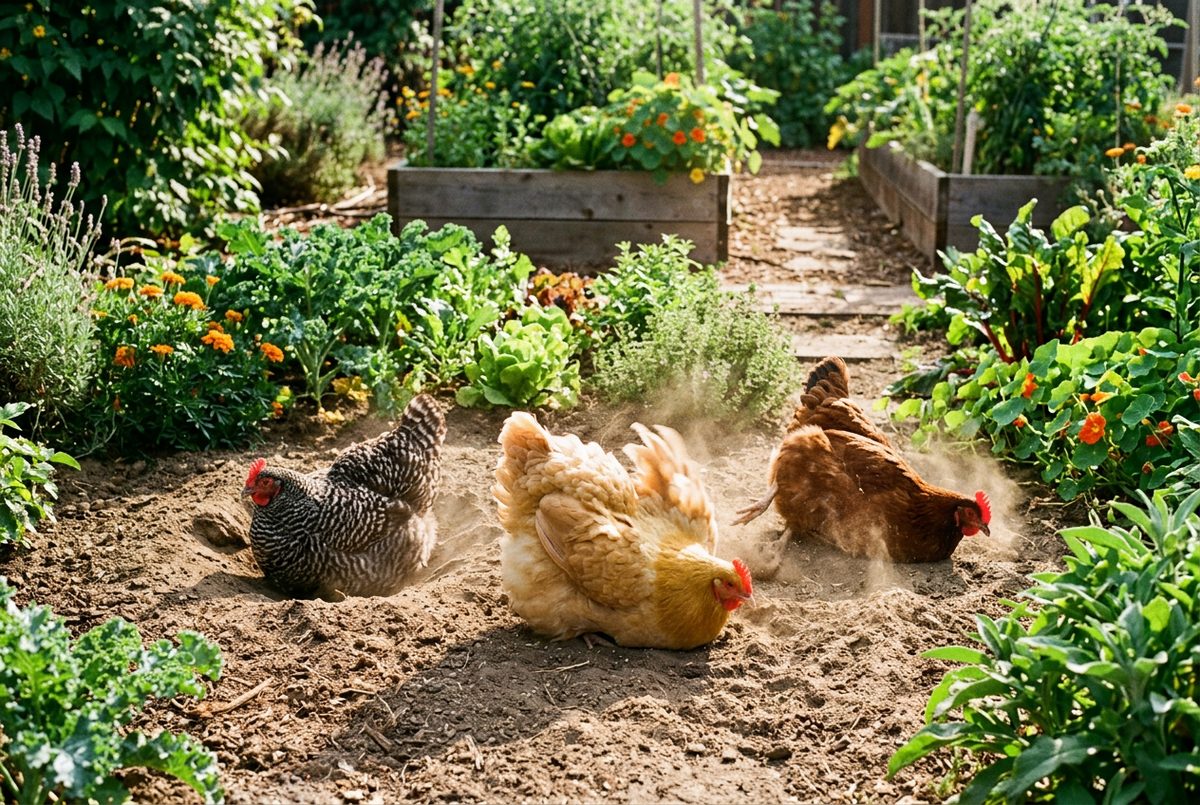
If you have never seen a hen dust bathing, the first time can be alarming. She may lie on her side, spread a wing, wriggle into the soil and appear almost motionless. Then she suddenly rises and shakes a cloud of dust into the air. In most cases, this is entirely normal.
Dust bathing helps chickens maintain their feathers and is an important natural behaviour. Provide a dry, sheltered area with loose, clean soil or suitable sand-like material. It should be large enough for several birds without constant competition.
Do not add insecticides, essential oils or irritating powders to the dust bath. Products sometimes promoted as natural parasite treatments can harm respiratory health or fail to control an infestation. If you suspect mites or lice, identify the problem and ask a veterinarian about appropriate treatment.
A dry dust bath is particularly valuable during rainy autumns and wet winter spells, when ordinary garden soil becomes muddy.
5. Shade, Sunshine and the Hungarian Summer
Chickens enjoy sunshine, but they can struggle in prolonged heat. Hungarian summers increasingly bring hot days when shade and fresh water are absolutely essential. A chicken run that is comfortable in April may be dangerously exposed in July.
Provide reliable shade throughout the hottest hours, using trees, a ventilated roof or shade cloth securely installed out of reach. Position water in shaded locations and refresh it frequently. Several water stations are helpful in larger runs. Avoid overcrowding and ensure good airflow.
Signs of heat stress can include open-mouth panting, holding wings away from the body, weakness and unusual lethargy. Severe heat stress is an emergency. Move affected birds to a cooler, ventilated location and seek veterinary advice promptly.
In winter, focus on keeping birds dry, sheltered from wind and able to drink unfrozen water. Resist sealing the coop completely: moisture and poor air quality can be more harmful than ordinary cold to well-feathered, healthy adult chickens.

6. What Should Chickens Eat?
A complete, age-appropriate poultry feed should form the foundation of the diet. Laying hens need balanced nutrition, including sufficient calcium, to support egg production and health. Fresh water must be available at all times. Appropriate insoluble grit may be needed, especially for birds without access to suitable small stones.
Garden greens and occasional treats can provide enrichment, but they should not displace the balanced ration. Too many scraps can lead to nutritional imbalance or obesity. Never offer mouldy, rotten or spoiled food. Avoid heavily salted or sugary leftovers, and do not assume every kitchen waste item is suitable.
There is also a legal and biosecurity issue: in the EU, feeding catering waste or household kitchen scraps to farmed poultry is generally prohibited, even for small backyard flocks. Use approved poultry feed and suitable purpose-grown greens rather than plate leftovers.
Keep feed in rodent-proof containers, clean up spills and avoid attracting wild birds to feeding areas. This helps reduce disease and pest risks.
7. Plants for a Chicken-Friendly Garden
A good chicken garden combines shelter, edible vegetation and protected planting. Hardy grasses and suitable shrubs can create shade and visual cover. A patch of untreated grass or purpose-grown leafy greens can be an interesting place to peck and forage. Plants must be correctly identified before birds are allowed to eat them.
Sunflowers can provide summer structure and shade, but protect young plants until established. Some culinary herbs, such as rosemary and thyme, can be grown around the run as attractive planting, although they are not substitutes for hygiene or parasite treatment.
Keep toxic or questionable plants away from areas where birds may eat them. Oleander, yew and foxglove are examples of plants that should not be offered as forage. Avoid access to unknown berries, seeds and ornamental bulbs. Also keep chickens away from freshly treated plants and areas where pesticides or herbicides have been applied.
The easiest design is often a planted outer border protected by mesh, with safe shade and enrichment inside the run. That way you can enjoy your flowers without expecting the hens to leave every petal untouched.

8. Chickens and the Vegetable Garden: Helpful but Enthusiastic
Chickens can consume insects, disturb weed seedlings and scratch through organic material. Yet their enthusiasm is not always helpful. They may dig up seeds, damage roots, eat young vegetables and strip tender leaves in a matter of minutes.
The secret is timing and boundaries. Let chickens into selected areas only when crops are finished and the soil is suitable, or use a movable secure run where practical. Protect beds during sowing, germination and early growth. Keep birds away from crops that might become contaminated with droppings shortly before harvest.
Chicken manure contains useful nutrients, but fresh manure can damage plants and carry pathogens. Compost it properly before use and follow food-safety guidance for edible crops. Do not spread fresh droppings directly onto lettuce or vegetables that will be eaten raw.
Think of chickens as enthusiastic helpers who require supervision, not as a replacement for thoughtful garden management.
9. Fresh Eggs: A Lovely Bonus, Not a Guarantee
Collecting eggs from your own hens is a special pleasure. Egg colour, size and frequency vary by breed, age, nutrition, daylight and health. Hens usually lay fewer eggs as daylight shortens, and some stop laying temporarily during moulting.
Provide clean, comfortable nest boxes in a quiet part of the coop. Collect eggs regularly and follow appropriate food-handling and storage practices. Wash your hands after handling hens, eggs or coop equipment.
A hen does not need a rooster to lay eggs. A rooster is required only if you want fertilised eggs, and keeping one can introduce noise, breeding and flock-management issues. Check local rules and neighbour considerations before deciding.
Most importantly, remember that hens remain valuable animals even when they lay fewer eggs. Responsible chicken keeping includes caring for older birds.
10. Cleanliness, Parasites and Daily Health Checks
Healthy chickens benefit from regular, calm observation. Each day, notice whether birds are eating, drinking, moving normally and interacting with the flock. A bird that isolates herself, sits fluffed up, breathes unusually, stops eating or develops diarrhoea may need prompt veterinary attention.
Clean drinkers and feeders, remove wet litter, check nesting areas and inspect the coop for signs of red mites or other parasites. Good housekeeping is especially important during warm weather, when pests and odours can develop quickly.
Do not use random household chemicals or unapproved parasite products around poultry. Choose treatments appropriate for food-producing birds, and follow any egg or meat withdrawal requirements.
Prevent contact with wild-bird droppings where possible, use dedicated footwear for the chicken area and isolate sick birds with veterinary guidance. Biosecurity is not just for large farms; it matters in a backyard flock too.

11. Autumn and Winter: Preparing Your Flock for Colder Weather
October is a wonderful time to inspect the chicken area before winter. Repair loose roofing, clear blocked drainage and make sure rain cannot soak bedding. Check perches, hinges, locks and mesh. A dry run with sheltered areas is far more comfortable than one that becomes deep mud after every shower.
Many hens moult in autumn, replacing old feathers with new ones. Egg laying may slow, and birds may look rather untidy for a while. Support them with appropriate nutrition and avoid unnecessary handling of sensitive new feathers.
When frost arrives, ensure drinking water remains available. Keep the coop ventilated but free from direct drafts at roost height. Do not use unsafe heating devices or heat lamps that create fire risks. Healthy adult birds of suitable breeds often tolerate cold better than dampness, but vulnerable or ill birds may need additional care.
Watch for official disease-control measures. Temporary restrictions on outdoor access can occur, and the welfare plan should still provide safe enrichment indoors.
12. What to Avoid: Common Mistakes
Avoid buying chickens before building their accommodation. A secure coop and run should be ready before the birds arrive. Avoid keeping one chicken alone, overcrowding the flock or relying on a flimsy fence to stop predators.
Do not leave birds without shade or water during hot weather. Do not allow unrestricted access to toxic plants, chemicals, ponds with unsafe edges or newly treated soil. Avoid feeding household kitchen scraps and do not use fresh manure on edible leaves.
Another mistake is expecting chickens to remain neat and quiet. They scratch, dig, chatter, shed feathers and create manure. A garden can be beautiful with chickens, but it will not look exactly as it did before they arrived.
Finally, avoid delaying veterinary help when a bird seems ill. Chickens can hide symptoms until disease is advanced. Early attention matters.

13. Designing a Beautiful Garden That Works for Both You and Your Hens
Begin with zones. Keep the vegetable beds and delicate flower borders protected, provide a generous secure chicken run, and include a practical route for cleaning and collecting eggs. Position the coop where it is easy to reach in rain or snow, but where drainage is good and summer heat is manageable.
Plant attractive shrubs outside the enclosure to soften the appearance of the fencing. Use durable paths that are easy to clean. A small bench nearby can turn daily chicken watching into one of the most enjoyable parts of your gardening routine.
Give the hens variety: a sheltered dust bath, stable low perches, scratching material, shady areas and safe visual cover. Change small enrichment features occasionally, without constantly disrupting familiar resting places.
If you have limited space, keep a smaller flock rather than squeezing too many birds into a beautiful but inadequate enclosure. Welfare must come before appearance.
14. Frequently Asked Questions
Do chickens need a rooster to lay eggs? No. Hens lay eggs without a rooster; the eggs simply will not be fertilised.
Can chickens live in a garden all year in Hungary? Many suitable breeds can, provided they have dry, secure housing, proper ventilation, weather protection, appropriate nutrition and unfrozen drinking water.
Will chickens eat all my flowers? They may damage tender plants through scratching and pecking. Protect valuable beds and offer a separate enriched run.
Are chickens good for pest control? They eat some insects and other invertebrates, but they are not a complete pest-control solution and can also damage beneficial wildlife and plants.
Can I give them kitchen leftovers? EU animal-by-product rules generally prohibit feeding household kitchen waste to farmed poultry. Use suitable poultry feed and approved feed materials instead.
How many chickens should I keep? Chickens need compatible companions, but the right flock size depends on available space, management and local requirements. Plan accommodation first and avoid overcrowding.
Do chickens need dust baths? Yes. Access to a dry, suitable dust-bathing area supports natural feather-care behaviour.
Final Thoughts: A Garden with a Little More Life
There is a special pleasure in watching hens wander through a sunny garden, stopping to scratch beneath a shrub or settle into a dust bath. They remind us that a garden is not only something to admire. It is also a living space shared with animals that have their own needs, habits and personalities.
A happy chicken garden begins with security, companionship, good nutrition, clean water and the freedom to behave naturally. Add shade for summer, dryness for winter and a sensible boundary around your favourite seedlings, and you have the foundations of a rewarding relationship.
So if you are dreaming of collecting fresh eggs and hearing cheerful clucking among your flowers, plan carefully and give your hens the care they deserve. They may never help you keep the flower beds tidy, but they will certainly make the garden more interesting.
Happy gardening from Holland Kertészet — where a beautiful garden is one that works for plants, people and the animals in our care.
Animal health and regulatory note: This guide is general information. Ask a poultry veterinarian for health advice and check current Hungarian and EU poultry-keeping, biosecurity and feed rules before starting or changing your flock.


