

A practical vegetable garden series
A simple guide to runner beans and climbing French beans.
|
GROW WITH US Climbing beans bring colour and a long harvest to a sunny garden. Choose runner beans, climbing French beans or both, give them sturdy supports and sow only after the soil is warm. Keep water steady and pick young pods often for a generous crop. |
Written for home gardeners in Hungary
CHAPTER WELCOME
Your climbing bean season starts here
This book follows the whole journey: seed → seedling → garden → care → harvest → kitchen → next season.
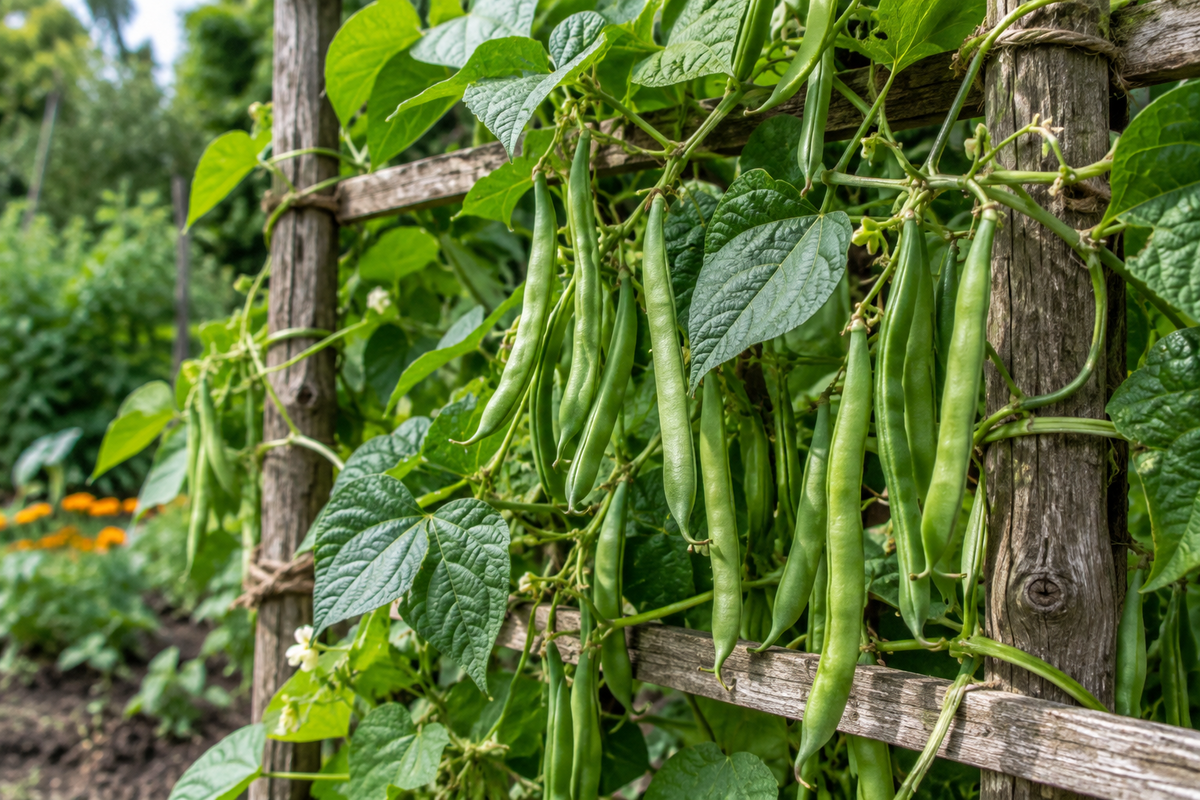
Climbing beans grow upward, turning a small patch into a generous summer harvest. Their flowers climb a sturdy support, then long pods appear among the leaves. Runner beans and climbing French beans are the two familiar choices: both need warmth, water and regular picking, but their flowers, pods and timing differ a little.
In Hungary, start seeds under cover in April or sow outdoors from late May into June, once frost has passed and the soil has warmed. Near Győr, a late cold snap can still check young plants, so be patient with outdoor sowing. Give the vines a strong support before planting, keep the soil evenly moist and pick young pods often from midsummer onward.
Our Hungarian calendar
|
April |
Start seeds indoors in deep pots for an earlier crop. |
|
May |
Harden off seedlings; plant out after frost risk passes. |
|
Late May–June |
Direct sow outdoors once soil is warm. |
|
June–July |
Train shoots up supports and water in dry spells. |
|
July–September |
Pick young pods every few days. |
|
Autumn |
Harvest before hard frost; leave selected pods to dry for seed. |
|
WHAT I WOULD DO I would grow one runner bean and one climbing French bean up a secure wigwam. I would direct sow after the soil warmed, keep the bed watered when flowers appeared and pick the pods every couple of days. |
The rule for this series: dates guide us, but the plant and the weather make the final decision.
CHAPTER 1
Meet the Climbing Beans
Runner beans and climbing French beans share a tall habit and a long season of picking.
“Climbing beans” usually means runner beans (Phaseolus coccineus), climbing French beans (Phaseolus vulgaris), or both. Runner beans often have showy red, pink or white flowers and broad pods. Climbing French beans have smaller flowers and varieties with round or flat pods. Both scramble up supports and make good use of vertical space. Check the packet for the mature height, pod type and harvest stage.
Runner beans or climbing French beans?
|
Runner beans |
Showy flowers and broad pods; harvest young and tender. |
|
Climbing French beans |
Many pod shapes and colours; harvest before seeds swell. |
Two climbers, a similar garden job
· Runner beans: showy flowers and broad, fleshy pods.
· Climbing French beans: many varieties with round or flat pods.
· Both need a sturdy support about 2–2.5 m tall.
· Both crop over a long period when picked regularly.
· Fresh green pods are harvested young and tender.
· Bean family: avoid growing beans in the same bed year after year.
|
GOOD TO KNOW Runner beans and climbing French beans are different species, but both climb and crop for a long season. Their pod shape, flavour and ideal picking size vary by variety. |
CHAPTER 2
Choose Your Climbing Beans
Choose the pod you like, then check the variety height and whether it is a runner bean or climbing French bean.
Ask yourself five questions
1. Would I like showy runner-bean flowers or climbing French beans?
2. Do I prefer broad pods, round pods or flat pods?
3. Can I put up a sturdy support before sowing?
4. Can I water regularly when flowers and pods are forming?
5. Would I rather sow directly or start seeds in pots?
A beginner-friendly first planting
|
Wait for warmth |
Beans dislike frost and cold, wet soil. |
|
Support first |
Set canes or trellis before sowing. |
|
Water regularly |
Pay special attention during flowering and pod growth. |
|
Pick often |
Young pods encourage continued cropping. |
|
A COMMON MISTAKE Sowing into cold, wet soil. Bean seeds may rot before they sprout; wait until the soil is warm and frost risk has passed. |
|
TRY THIS Grow one runner bean and one climbing French bean side by side. Compare their flowers, pod shape and the size you like best for cooking. |
CHAPTER 3
Let’s Sow
Beans need warmth to germinate and are damaged by frost. Sow indoors for an earlier start, or wait until the soil has warmed for direct sowing. Small batches are easy to protect and manage. Put the support in place first, so later digging or pushing canes does not disturb the roots.
When to sow in Hungary
Start seeds indoors in April, one seed per deep pot or module, about 4–5 cm deep. Keep them warm and bright, then harden off gradually. Sow outdoors from late May or early June, when frost risk has passed and the soil feels warm. Sow two seeds at the base of each cane, about 5 cm deep, and thin to the stronger seedling if both grow. Follow the packet for spacing and height.
What you need
· Seeds of runner beans or climbing French beans
· Tall canes, a wigwam or a secure trellis
· A trowel, watering can and plant labels
· Compost for the bed or a large container
· Soft garden ties for guiding young stems
Sowing, step by step
1. Choose a sunny, sheltered place and prepare the soil with mature compost.
2. Build and secure the support before you sow or plant.
3. Sow two seeds about 5 cm deep at the base of each cane.
4. Water gently, label the variety and keep the soil moist.
5. When both seeds grow, keep the stronger seedling and remove the other.
|
DON’T PANIC A few early flowers may fall without setting pods. Keep the root area moist and wait for the next flowers, especially after hot or windy weather. |
|
A COMMON MISTAKE Leaving every pod on the vine until it becomes large and tough. Pick young pods regularly to encourage more flowers and a longer harvest. |
CHAPTER 4
Seedling School
Bean seeds are large and easy to handle. Protect seedlings from frost, slugs and hungry mice, and plant them out while they are still young.
Give seedlings a warm start
If you sowed indoors, keep seedlings in good light and water when the surface begins to dry. Harden them off for about a week before planting outside. Set them at the same depth as they grew in the pot, water in well and guide the first shoots gently toward their cane. Direct-sown seeds need protection from slugs and mice until they are established.
Why have the seeds not appeared?
Cold, wet soil can make bean seeds rot before they sprout. Mice may also dig them up. Wait until the soil is warm, sow at the depth on the packet, and protect the row if mice are a problem. If a seed has failed, resow beside the empty cane once conditions are suitable.
Water while they settle
Keep the root area moist after sowing and transplanting, but do not leave it waterlogged. Young beans establish quickly in warm soil. A dry spell can slow them down, so check the bed often and water deeply when rain has not done the job.
Feeding
Beans usually grow well in soil enriched with compost before sowing. They make their own nitrogen with the help of bacteria on their roots, so avoid rich nitrogen feeds that encourage leaves at the expense of flowers and pods. Container plants may need a liquid feed once flowering starts; follow the product label.
|
WHAT I WOULD DO I would install a sturdy 2–2.5 m support before planting and tie it down well. A leafy bean frame catches wind and must not wobble. |
|
DON’T PANIC The vine may wander away from its cane. Gently guide it back and secure it with a loose tie; do not pull hard on the tender stem. |
CHAPTER 5
Ready for the Real World
Plant out only after frost risk has passed. Beans dislike root disturbance, so handle module-grown plants gently and settle them beside their support.
Before planting: check the plants and the bed
1. Choose sturdy seedlings with healthy leaves and roots.
2. Water the pots before you start.
3. Harden plants off gradually for about a week.
4. Prepare the support and a sunny, sheltered bed.
5. Plant at the same depth, firm gently and water in.
When is it ready in Hungary?
Sow under cover in April for an earlier start. Plant out after the last frost risk has passed, usually from late May into June. Direct sowing is also suitable from late May or early June if the soil is warm. In colder parts of Hungary, wait until nights are mild; beans recover slowly from chilling.
Around Győr, choose a sheltered sunny site and secure tall supports against summer winds. Keep water steady as flowers and pods form. The crop usually begins in midsummer and continues into early autumn, but harvest before the first hard frost. A warm wall may help a late sowing, while pots are easier to move under cover during a cold spell.
|
A COMMON MISTAKE Planting out tender seedlings before frost has passed. Chill can set beans back; wait for mild nights and harden plants off first. |
|
GOOD TO KNOW Runner beans often produce broad pods around 20–25 cm long; climbing French beans are usually picked at about 15–20 cm. The packet gives the best guide for each variety. |
CHAPTER 6
Give Them a Good Home
Sun, shelter, fertile soil and a strong support help climbing beans grow and crop well.
The right place
Choose a sunny, sheltered spot with fertile soil that drains freely. Work in mature compost before sowing if the soil needs it. Install a 2–2.5 m support, such as a wigwam of canes, an A-frame or a strong trellis. Tie or anchor it securely; foliage and pods catch the wind. Rotate beans to a different bed each year where possible.
Spacing
Space canes about 15–30 cm apart in a row or around a wigwam, depending on the variety and support. Leave enough room to reach both sides for picking. Follow the seed packet, especially for vigorous runner beans and varieties with a taller mature height.
Planting day
1. Water seedlings and prepare the bed beside the support.
2. Make a hole just large enough for the root ball.
3. Set the plant at the same depth it grew in its pot.
4. Firm gently, water around the roots and tie loosely if needed.
5. Guide shoots to the canes as they grow.
Growing in pots
Use a large, deep container with drainage holes and fresh potting mix. A pot around 45 cm deep and 75 cm wide can support several plants, but check the variety and container instructions. Add sturdy canes or a frame before planting. Containers dry quickly, so check moisture daily in warm weather and feed after flowers appear.
|
TRY THIS Slice young runner beans on the diagonal and cook until just tender. Add butter, parsley and a squeeze of lemon for a simple side dish. |
CHAPTER 7
Water, Feed & Keep Them Growing
Consistent water matters most as climbing beans flower and fill their pods.
Watering
Water deeply during dry spells, especially when flowers are opening and pods are swelling. Erratic watering can cause flowers to drop or pods to develop poorly. Direct water onto the soil in the morning, and check container plants often. A mulch of compost can help the bed hold moisture once the soil is warm.
Mulch
When the soil is warm and plants are established, spread a thin layer of mature compost around them to conserve moisture and suppress weeds. Keep it clear of the stems. Mulch will not replace watering during a long hot spell, but it can make the soil less quick to dry.
Feeding
A well-prepared bed usually needs no extra feed. Avoid high-nitrogen fertiliser, which can produce plenty of leaves and few pods. Beans in containers have less soil to draw on; once flowers appear, use a balanced or tomato-type liquid feed according to its label.
Keep plants healthy
Guide young shoots around their canes and tie in any that wander. Pinch out the growing tips when vines reach the top of the support to encourage side shoots and make picking easier. Check for slugs on young plants and blackfly on soft shoot tips. Remove badly affected tips and encourage good airflow.
|
WHAT I WOULD DO I would sow a manageable number of plants, then pick every two or three days. That keeps pods tender and avoids an overwhelming glut. |
CHAPTER 8
Flowers, Leaves & “What Is That?”
Climbing beans twine up their support and make flowers before the pods develop. Flower and pod shapes depend on the type and variety.
Why are flowers falling?
A few flowers can naturally fall, but a lot may drop during very hot, dry or windy weather, or when plants are short of water. Check moisture at root level and water deeply during flowering. Avoid feeding with a high-nitrogen fertiliser. Once conditions settle, new flowers may set pods.
The beginner’s trouble guide
|
Seeds do not sprout |
Cold, wet soil or mice may be the cause. Resow when the soil is warm and protect the row. |
|
Flowers fall off |
Hot, dry or windy weather can stress plants. Water deeply and wait for the next flush. |
|
Lots of leaves, few pods |
Too much nitrogen can favour leaves. Stop high-nitrogen feed and keep watering steady. |
|
Young pods are tough |
They may be over-mature. Pick sooner and check the variety’s recommended size. |
|
Leaves curl or blackfly gather |
Inspect shoot tips, remove badly affected growth and keep plants watered. |
|
DON’T PANIC Some flowers falling is normal, especially in a heat spell. If many drop, check soil moisture and wait for cooler weather and new flowers. |
|
A COMMON MISTAKE Letting container plants dry out during flowering. Pots heat up and dry quickly, so check them daily in warm weather. |
CHAPTER 9
Can I Pick It Yet?
Yes—when the pods are still young, tender and easy to snap. Check every couple of days once flowering begins; the best size varies by type and variety.
What “ready” looks like
Runner bean pods are often picked at about 20–25 cm, while climbing French beans are commonly picked at about 15–20 cm. These are guides, not rules: follow the variety packet and harvest before the seeds swell inside the pod. Young pods should feel crisp and snap cleanly.
Harvest from midsummer to early autumn
|
Runner beans |
Often picked at 20–25 cm, before seeds swell. |
|
Climbing French beans |
Often picked at 15–20 cm, while slim and tender. |
|
Dry beans |
Leave selected pods until they turn papery and dry. |
|
All types |
Pick frequently; use the packet as the final size guide. |
How often should I check?
Pick every two or three days while the plants are cropping. Use one hand to hold the stem and the other to snap or cut the pod, so you do not pull the vine from its support. Regular picking encourages more flowers and pods. Leave a few pods to mature only if you want dried beans or seed.
|
READY TO HARVEST? Pick pods when they are young, crisp and easy to snap, before the seeds swell visibly. Check plants every two or three days once they start cropping. |
|
TRY THIS Snap a pod gently before picking a row. If it breaks cleanly and feels tender, the rest are ready too. |
CHAPTER 10
From the Garden to the Kitchen
Fresh climbing beans are crisp, tender and simple to prepare.
The first rule: cook the pods
Pick young pods, wash them and trim the stem ends. Remove any string if the variety has one, then cut to the length you need. Cook the pods before eating: steam, boil or sauté until tender but still bright. Runner beans are especially good sliced and cooked with butter or olive oil. Dry beans need their own preparation and thorough cooking.
Match the pods to the dish
· Young pods: steam or boil until just tender.
· Sliced runner beans: simmer or sauté with herbs.
· Climbing French beans: add to salads after cooking and cooling.
· Older pods: shell mature beans and cook them thoroughly.
|
FROM THE KITCHEN Buttery climbing beans: trim and slice young pods, cook until just tender, then toss with butter or olive oil, parsley and black pepper. |
Storing fresh climbing beans
Use freshly picked beans soon for the best texture. Keep unwashed pods in a perforated bag in the refrigerator and use within a few days. Wash just before cooking. If pods become too large and stringy, shell any full-sized seeds and cook them thoroughly rather than eating the tough pod.
When you have more than you can use
Freeze extra young pods for cooked dishes. Wash, trim and cut them, blanch briefly in boiling water, cool quickly, drain and pack in portions. Frozen beans will be softer than fresh ones, so use them in soups, stews or side dishes. Smaller sowings and regular picking help avoid a glut.
CHAPTER 11
Next Season Starts Now
A few notes about supports, sowing dates and harvest size make next year’s bean crop easier to plan.
Keep a tiny garden record
· Variety name and whether it is a runner or French bean
· Date seeds were sown and the first shoots appeared
· When the vines reached the top of the support
· How often the bed needed water in summer
· When flowers and the first pods appeared
· Which pod size gave the best flavour
· Which varieties you would grow again
Saving seed and planning another crop
You can save seed by leaving healthy pods on the plant until they are fully mature and dry. Beans of the same type can cross-pollinate, and seed from hybrid varieties may not grow true to type. For a reliable crop, buy fresh seed or save only from a suitable open-pollinated variety. Keep runner and French bean seed clearly labelled.
1. Choose a healthy plant with the flowers and pods you liked.
2. Leave several pods on the vine instead of picking them young.
3. Wait until pods turn dry and papery on the plant.
4. Harvest before pods split; finish drying them indoors if needed.
5. Shell, label and store the dry seeds in a cool place.
|
GOOD TO KNOW Cook fresh bean pods before eating. For dried beans, follow a reliable soaking and thorough-cooking method. |
|
WHAT I WOULD DO I would keep a small bowl by the back door and pick a few pods whenever I passed the frame. Frequent harvesting is the easiest way to keep up. |
COME GROW WITH ME
CLIMBING BEANS CHEAT SHEET
The page to come back to when you have soil on your hands and no time to reread the whole book.
|
SOW |
Indoors in April; outdoors late May–June |
About 5 cm deep beside support |
|
GERMINATE |
Warm soil and even moisture |
Thin to one strong plant per cane |
|
POSITION |
Sunny and sheltered |
Support 2–2.5 m tall |
|
PLANT |
After frost risk has passed |
Harden off indoor seedlings first |
|
HARVEST |
Midsummer to early autumn |
Pick young pods every 2–3 days |
|
Water |
Keep moist during flowers and pod growth. |
|
Feed |
Prepare soil with compost; avoid excess nitrogen. |
|
Train |
Guide shoots up canes and tie loosely. |
|
Protect |
Watch seedlings for slugs and seeds for mice. |
|
Harvest |
Pick pods young to keep plants cropping. |
|
Next season |
Rotate beds and note which varieties did best. |
|
HUNGARY IN ONE LINE Sow climbing beans only in warm soil after frost, give them a secure support and keep picking young pods through summer. |
COME GROW WITH ME • CLIMBING BEANS
Horticultural reference: RHS, How to grow runner beans and French beans. Seasonal guidance is adapted for Hungarian home gardens.


