

From Tiny Seeds to Cream-and-Cherry Summer Flowers
A friendly guide to sowing, growing and enjoying Phlox 'Cherry Caramel' in Hungary.
Come Into the Garden With Me…
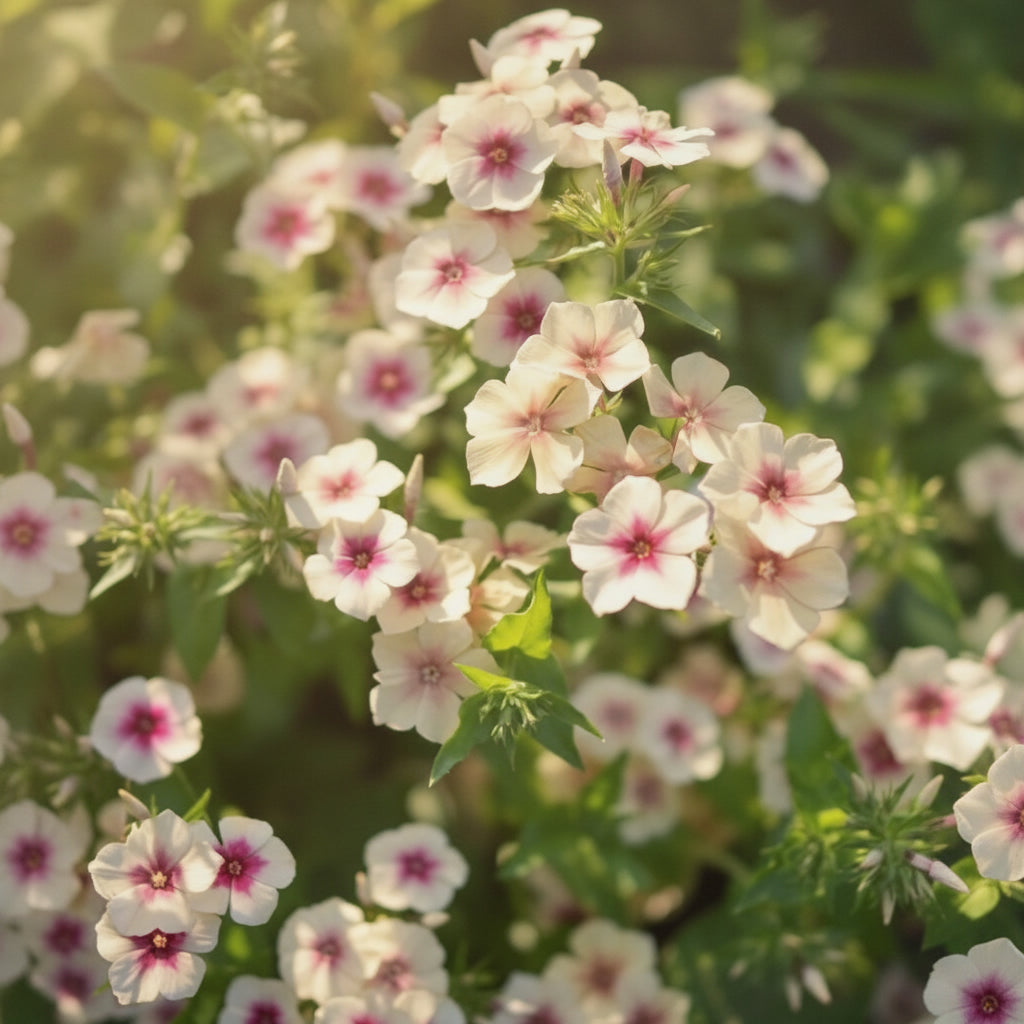
Today, we're growing a flower that looks as though someone painted it with coffee, cream and raspberry: Phlox 'Cherry Caramel'.
At first glance, this annual phlox seems almost too refined to be easy. The flowers open in warm creamy and caramel shades, usually with a deep cherry-pink eye in the centre. As the flowers age, the colours soften and change, so one plant can carry several slightly different tones at the same time.
That changing colour is part of its charm. It works beautifully in cottage-style borders, cutting gardens and containers, and the flowers have a light, pleasant fragrance. The stems are also useful for small bouquets, especially when you want something softer than a bright red or yellow summer flower.
For Hungarian gardens, Cherry Caramel is a very practical annual. We raise it from seed in late winter or early spring, plant it outside after the coldest weather has passed, and then enjoy flowers through summer until autumn cold finally ends the season.
The important thing is to remember that this is Phlox drummondii, the annual summer phlox. It is not the tall perennial border phlox that returns from the same root year after year. Our Cherry Caramel completes its life cycle in one season, which means we can treat it like cosmos, zinnia or annual salvia: sow, grow, flower, collect seed if you wish, then begin again next year.
So we will start with those little seeds, learn how to raise strong seedlings, choose the right sunny place, keep the plants flowering through a Hungarian summer, cut a few stems for the vase and save seed at the end of the season.
Ready? Let's grow Cherry Caramel.
1. Meet Phlox 'Cherry Caramel'
Cherry Caramel is a cultivated form of Phlox drummondii, commonly called annual phlox or Drummond phlox. It belongs to the Polemoniaceae family and is grown for its clusters of five-petalled flowers.
The variety is especially loved for its unusual colour combination. Newly opened flowers can show stronger cherry tones around the centre, while older blooms fade towards cream, vanilla and caramel. The effect is romantic rather than loud.
Plants usually remain compact enough for the front or middle of a border, while still producing stems long enough for small cut-flower arrangements. The variety is generally around 35 to 40 cm tall.
Annual, not perennial
This distinction matters. Perennial garden phlox can live for years. Cherry Caramel is an annual: it germinates, grows, flowers, sets seed and finishes within one growing season. In Hungary, that makes it ideal for filling summer gaps between permanent plants.
Light fragrance
The flowers are gently fragrant rather than powerfully scented. You are most likely to notice the fragrance when you lean close to the flowers or bring a few stems indoors.
|
GOOD TO KNOW Cherry Caramel's flowers change subtly as they age. Do not assume a paler bloom is fading badly - the shifting cream, cherry and caramel colours are part of the variety's character. |
2. The Cherry Caramel We Grow With You
At Holland Kerteszet, our packet is Buzzy Phlox 'Cherry Caramel' - 0.4 g. This is the variety this book follows from sowing to seed saving.
• Botanical name: Phlox drummondii
• Life cycle: annual
• Height: about 35-40 cm
• Colour: cream, vanilla and caramel tones with a cherry-pink eye
• Fragrance: light and pleasant
• Best position: full sun to light partial shade
• Uses: borders, containers and cut flowers
• Sowing: February to mid-April in a seed tray at about 20°C, or April-May in an unheated greenhouse
• Planting out: from early May, once conditions are suitable
|
WHY THIS VARIETY? Cherry Caramel is useful when you want a sophisticated summer colour rather than a bright primary shade. It combines especially well with white, dusty pink, apricot, burgundy and soft green foliage. |
3. Finding the Right Place
Annual phlox flowers best when it receives plenty of light, but it appreciates conditions that are not brutally dry at the roots.
Sun
Choose full sun for the strongest flowering. In very hot Hungarian gardens, light afternoon shade can be useful, especially in containers, but too much shade can make stems softer and reduce flowering.
Soil
Use fertile, well-drained soil that holds some moisture without becoming waterlogged. This is not a dry-rockery plant. It likes regular access to moisture while actively growing.
Air movement
Good air circulation helps keep foliage healthy. Avoid squeezing plants into a permanently damp, windless corner where leaves remain wet for long periods.
|
HUNGARIAN SUMMER NOTE Cherry Caramel likes summer warmth, but newly planted roots still need dependable moisture. During long dry spells, water deeply rather than giving a tiny splash every day. |
4. Sowing Cherry Caramel
The packet gives us two useful routes: start early under protection, or sow later in an unheated greenhouse.
Early indoor sowing
• Sow from February to mid-April.
• Use a fine seed compost in trays or small cells.
• Keep the sowing around 20°C for germination.
• Cover the seed lightly rather than leaving it completely exposed.
• Keep the compost evenly moist, never waterlogged.
• Move seedlings into strong light as soon as they emerge.
Unheated greenhouse sowing
From early April into May, you can also sow in an unheated greenhouse or protected cold frame. Growth may be slower than in a warm room, but the seedlings often become naturally sturdy as spring temperatures rise.
Dark-germinating tendency
Phlox drummondii seed is generally treated as a seed that germinates better when lightly covered. A thin layer of compost or vermiculite is enough; there is no need to bury it deeply.
|
A COMMON MISTAKE Sowing too deeply. Small phlox seeds need contact with moist compost, but a heavy layer of soil can make emergence slower and less even. |
5. Raising Strong Seedlings
Light matters immediately
Once seedlings appear, give them as much bright light as possible. Warmth without enough light creates long, weak seedlings that bend and tangle.
Pricking out
When seedlings are large enough to handle and have developed true leaves, move them into individual cells or small pots. Hold seedlings by a leaf rather than squeezing the stem.
Pinching for more branches
When plants are established and growing actively, you can pinch out the central growing tip. This encourages side shoots and often produces a bushier plant with more flowering stems.
Do not overfeed babies
Seedlings need steady growth, not lush growth. Strong light, moderate warmth and careful watering are more important than heavy feeding in the early stages.
|
TRY THIS Pinch half your plants and leave half unpinched. By midsummer you will be able to see exactly how pinching changes the shape and number of flowering stems in your own conditions. |
6. Moving Outdoors in Hungary
Cherry Caramel is not a plant I would rush outside simply because April has produced three warm afternoons.
Harden off
• Put young plants outdoors for a few hours on mild days.
• Begin in shelter from strong sun and wind.
• Increase outdoor time gradually over about a week.
• Bring plants back under protection if nights turn cold.
• Plant permanently only when conditions are settled.
Planting time
The packet allows planting out from early May. In much of Hungary, early to mid-May is a sensible period, but always watch the actual forecast. A late cold night can damage tender annual seedlings.
Spacing
Allow roughly 20 to 25 cm between plants. This gives each plant room to branch while keeping the border full enough for a generous display.
|
A USEFUL RULE A slightly later planting of a strong, hardened plant usually overtakes an early planting that has been checked by cold weather. |
7. Caring for Cherry Caramel Through Summer
Watering
Water when the upper soil begins to dry, especially during establishment and prolonged heat. Water the soil rather than repeatedly soaking the flowers and foliage.
Feeding
In ordinary garden soil, only modest feeding is needed. In containers, a diluted flowering-plant feed every couple of weeks during active bloom can help maintain performance.
Deadheading
Remove faded flower clusters if you want the plant to keep directing energy into new flowers. If you want seed, leave a few of the later flowers untouched.
Cutting flowers
Cut stems when several flowers in a cluster are open and others are still in bud. Use clean snips, remove leaves that would sit below the waterline, and place stems into clean water quickly.
|
FOR THE VASE Cherry Caramel is especially beautiful in small, loose arrangements with white cosmos, apricot zinnias, ammi, grasses or soft pink flowers. You do not need a huge bouquet for the colour to make an impact. |
8. Flowering in a Hungarian Summer
The main flowering period falls through summer, often from June into September depending on sowing time and weather.
During heatwaves
A plant in open ground can usually cope with heat if its roots remain supplied with moisture. Containers dry much faster, so check them frequently during July and August.
After rain
Dense flower clusters can hold moisture. If weather stays wet, remove damaged flowers and make sure air can move through the plants.
Keep picking
If you grow Cherry Caramel for cutting, regular harvesting encourages the plant to keep producing new flowering shoots. This is one of those annuals that rewards being used rather than simply admired from a distance.
|
GOOD TO KNOW A summer annual can have a rhythm: strong flush, brief pause, fresh flush. Keep watering, deadheading and lightly feeding rather than assuming the plant is finished after its first peak. |
9. Problems - and What to Do
Leggy growth
Too little light is the usual reason. Give seedlings and mature plants more sun where possible, and pinch young plants early enough to encourage branching.
Few flowers
Check light, feeding and watering. Excess nitrogen can produce lots of leaves at the expense of flowers, while severe drought can make the plant pause.
Powdery mildew
A whitish coating on leaves is more likely when plants are stressed and air movement is poor. Avoid overcrowding, water the root zone and remove badly affected foliage.
Aphids
Tender growing tips can attract aphids. Small infestations can often be washed away with water, while ladybirds, lacewings and hoverfly larvae provide natural control.
Grey mould
Wet, decaying flowers can encourage botrytis in damp conditions. Remove spent flower clusters and improve airflow.
|
A COMMON MISTAKE Trying to solve every problem with fertiliser. If a plant looks unhappy, first check light, water, drainage, temperature and pests before adding more food. |
10. Growing Cherry Caramel in Pots
Cherry Caramel is compact enough to work beautifully in containers, especially where you can enjoy its unusual colouring at close range.
Choose a useful pot size
A medium or large container is easier to keep evenly moist than a tiny decorative pot. Make sure drainage holes are open.
Container companions
Try Cherry Caramel with white alyssum, trailing lobelia, soft grasses, dusty miller or compact cosmos. Keep the colour palette restrained so the caramel tones remain visible.
Water and feed
Container-grown plants rely entirely on you. Water deeply when needed and feed lightly but regularly once flowering is established.
|
DESIGN IDEA Use Cherry Caramel in a pot close to a seating area. The unusual colour is easier to appreciate from nearby, and you are more likely to notice its gentle fragrance. |
11. Saving Seed
Because Cherry Caramel is grown as an annual, saving a little seed can be a satisfying way to carry the story into another year.
How to collect
• Stop deadheading a few healthy flowers late in the season.
• Allow seed capsules to mature and dry on the plant where weather permits.
• Collect before capsules split and scatter the seed.
• Dry the seed thoroughly indoors.
• Store cool, dark and dry in a labelled paper packet.
Will the seedlings look identical?
Saved seed may show some variation, especially if other annual phlox varieties are flowering nearby and cross-pollination occurs. That uncertainty can be part of the fun, but buy fresh seed if you want the most reliable Cherry Caramel look.
|
SEED-SAVING NOTE Write the year on the packet. Tiny envelopes without labels have an extraordinary ability to become complete mysteries by February. |
12. A Simple Cherry Caramel Calendar for Hungary
FEBRUARY Begin indoor sowing if you have good light and warmth around 20°C.
MARCH Main indoor sowing period. Give seedlings bright light as soon as they emerge.
APRIL Continue sowing; greenhouse sowing becomes practical. Pot on strong seedlings.
MAY Harden off and plant outside when conditions are settled and frost risk is low.
JUNE The first strong flowers can begin. Water steadily and start cutting stems.
JULY Peak flowering. Deadhead, cut for the vase and water during dry spells.
AUGUST Keep flowers coming with deadheading and careful watering through heat.
SEPTEMBER Enjoy late flowers and leave selected heads if you want to save seed.
OCTOBER Collect mature seed before autumn weather turns persistently wet.
NOVEMBER-JANUARY Clear finished plants, store seed dry and plan next year’s combinations.
|
THE RHYTHM OF THE PLANT Cherry Caramel begins slowly as a seedling, gathers speed in late spring, flowers generously through summer, and then gives you the choice: deadhead for more flowers or leave a few heads for next year's seed. |
13. Your Cherry Caramel Cheat Sheet
• Sow February to mid-April at about 20°C, or April-May under unheated protection.
• Cover seed lightly.
• Give seedlings excellent light.
• Pinch established young plants for more branching if desired.
• Harden off before planting outside.
• Plant from early May when weather is suitable.
• Choose full sun to light partial shade.
• Use fertile, well-drained soil.
• Water consistently during establishment and heat.
• Deadhead for continued flowering.
• Cut stems regularly for the vase.
• Save a few late seed heads if you want to grow again next year.
|
IF YOU REMEMBER ONLY FIVE THINGS Bright light. Gentle warmth for germination. Do not rush planting out. Keep roots evenly moist. Cut or deadhead regularly for more flowers. |
14. One Last Walk Around the Garden
We began with a packet of tiny seeds and a colour name that sounds more like a dessert than a flower.
Then came seedlings, little green plants, branching stems and finally those extraordinary cream-and-cherry flowers that slowly soften into caramel shades. By midsummer, the plant that looked so small in March can be giving you handfuls of stems for the vase and a border full of subtle colour.
Now you know how to sow Cherry Caramel, how to keep the seedlings compact, when to move them outdoors in Hungary, how to care for them through hot weather, how to cut the flowers and how to save seed at the end of the season.
Your own garden will teach you the rest: whether the plant prefers your morning sun or afternoon sun, which neighbouring colours make the caramel tones glow, how often your soil really needs water, and whether you prefer the flowers in the border or in a little vase on the kitchen table.
Until then, enjoy your flowers. And whenever you're ready to grow something new… Come into the garden with me.
We're growing Phlox 'Cherry Caramel'.


