

From 25 Tiny Seeds to Years of Blue-Purple Flowers
A friendly guide to sowing, growing and enjoying Salvia nemorosa 'New Dimension Blue' in Hungary.
Come Into the Garden With Me…
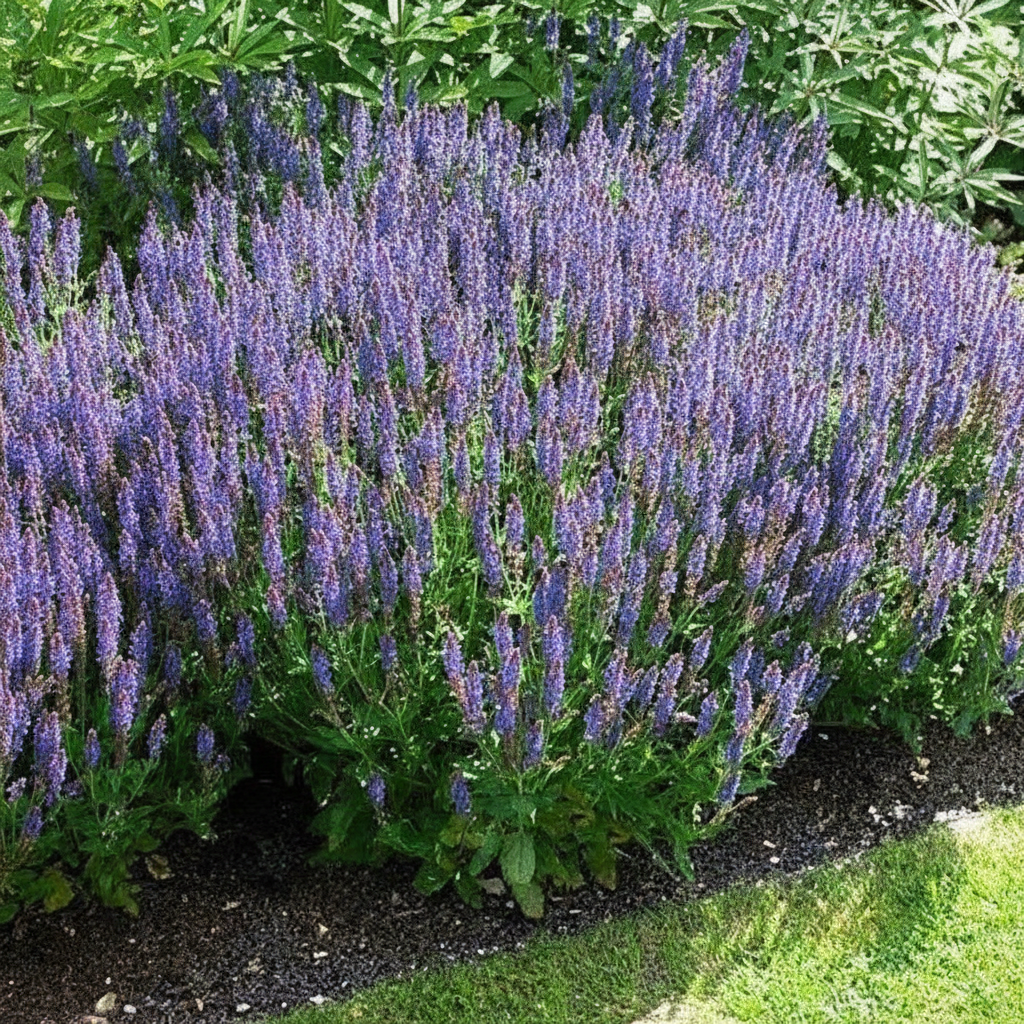
Today, we're growing meadow sage - specifically the compact, deep blue-purple perennial Salvia nemorosa 'New Dimension Blue'.
This is one of those plants that earns its place slowly and then keeps proving why you planted it. The first spring begins with only a few tiny seeds. By summer we have upright flower spikes. Then winter arrives, the top growth rests, and the following spring the plant returns to do it all again.
That word perennial changes the whole way we think about this little packet. We are not sowing for one summer. We are starting a plant that can become part of the permanent structure of the garden.
'New Dimension Blue' stays compact - around 30 cm in the Holland Kerteszet listing - but carries strong, upright spikes in an intense blue-purple shade. It works beautifully at the front of a perennial border, in repeated groups along a path, between roses, beside ornamental grasses, and in containers.
For Hungarian gardens it has another advantage: once established, meadow sage enjoys sunshine and copes much better with summer heat and short dry periods than many soft bedding plants. What it dislikes far more is winter soil that remains wet around the crown.
The Buzzy packet in our range contains approximately 25 seeds. Sow them under glass from March to mid-April, grow the little plants on, and plant them outside at the beginning of May once conditions are suitable.
So this book follows a longer story than an annual flower: sowing, seedlings, the first summer, cutting back after bloom, winter, and then that very satisfying moment when new shoots appear again next spring.
Ready? Let's grow a perennial that may still be flowering in your garden years from now.
1. Meet Meadow Sage
The botanical name is Salvia nemorosa. You may also see it called woodland sage, Balkan clary or perennial sage. It belongs to the mint family, Lamiaceae, a family full of aromatic plants with square stems and flowers designed beautifully for visiting insects.
Unlike culinary sage, this plant is grown mainly for its ornamental flowers. The leaves form a compact green clump, and from that clump rise narrow flower spikes covered with small two-lipped blooms.
'New Dimension Blue' was bred to stay compact and well branched. The result is a neat plant with a surprising amount of flower for its size.
The colour is often described as blue, but in the garden it sits somewhere between deep violet, indigo and purple-blue. The stems and flower calyces deepen the effect, so the whole spike looks richer than the individual flowers alone.
A plant made for pollinators
Meadow sage is highly attractive to bees and other pollinating insects. Watch a flowering clump on a warm June morning and you will often see bumblebees moving systematically from spike to spike, collecting nectar and pollen.
|
GOOD TO KNOW The Royal Horticultural Society lists 'New Dimension Blue' as a plant for pollinators. That means this compact ornamental is not only decorative; it also contributes useful nectar and pollen to the garden. |
2. The Meadow Sage We Grow With You
At Holland Kerteszet, our current seed packet is Buzzy Meadow Sage 'New Dimension Blue'. The shop instructions describe it as a perennial, around 30 cm tall, suitable for borders and excellent in pots.
The packet timing
• Sow under glass from March until the middle of April.
• Plant the young plants outside from the beginning of May, once they are strong enough and the weather is settled.
• Because it is a perennial, do not judge the plant only by its first season. A young seed-grown salvia can flower in its first year, but the clump becomes more convincing as it matures.
Why New Dimension Blue?
• It stays low and compact, making it much easier to place than tall perennial salvias.
• Its flower spikes are unusually dark and saturated for a seed-grown meadow sage.
• It is naturally suited to front-of-border planting and containers.
• It combines a long flowering display with very modest care once established.
|
GROW WITH US Our packet is Buzzy 'New Dimension Blue' - about 25 seeds. The most important dates are simple: sow March to mid-April under protection, then plant out in early May when conditions are suitable. |
3. Finding the Perfect Place
Start with sunshine. Meadow sage flowers most generously in full sun. In Hungary, that makes it extremely useful for bright borders where shade-loving plants would struggle through July and August.
How much sun?
Aim for at least six hours of direct sun during the growing season. Light partial shade can be tolerated, but the plant is usually more compact and floriferous in stronger light.
The soil matters most in winter
Salvia nemorosa is adaptable about pH and will grow in ordinary loam, sandy soil and even chalky ground, provided water can drain away.
In summer, established plants cope with periods of dryness. In winter, however, roots and crowns sitting in cold saturated soil can rot.
If your Hungarian garden has heavy clay, raise the planting position slightly, improve drainage and avoid the lowest part of the bed where rainwater collects.
Where it looks especially good
• Along the front of a sunny perennial border.
• Repeated beside a path or terrace edge.
• Between roses, where the vertical spikes contrast with rounded rose flowers.
• With grasses, catmint, yarrow, echinacea and lavender.
• In pots where its compact habit remains tidy.
|
A COMMON MISTAKE Treating meadow sage like a moisture-loving woodland perennial because of the word 'meadow'. Give it ordinary moisture while establishing, but do not choose a place that stays wet for days after rain. |
4. Let's Sow
When to sow in Hungary
The instructions recommend sowing under glass from March to mid-April. This suits Hungary well: we can start the seedlings while outdoor nights are still unreliable, then move strong young plants into the garden around early May.
Step by step
• Fill a small tray or several pots with fine seed compost and gently firm the surface.
• Water the compost before sowing so the tiny seeds are not washed away afterwards.
• Space the seeds as evenly as you can. You do not need to sow all 25 in one clump.
• Cover only very lightly with fine compost or vermiculite. Meadow sage seed does not want to be buried deeply.
• Keep the compost evenly moist but never saturated.
• A temperature around 18-20°C gives reliable conditions for germination.
• Once seedlings appear, move them into bright light and slightly cooler conditions so they remain compact.
|
THE SMALL-SEED RULE Small seed usually needs a small covering. If you cannot remember the exact depth, think 'barely covered' rather than 'buried'. Deep sowing is a much more common problem than sowing too shallowly. |
5. The First Seedlings
The first seedlings are tiny and do not look anything like the sturdy flowering clump they will eventually become. This is the stage where steady care matters most.
Light, light and more light
After germination, weak light creates stretched seedlings. Place them somewhere bright and turn trays regularly if the light comes strongly from one direction.
Water gently
Keep the compost just moist. Constantly wet compost reduces oxygen around the young roots and encourages problems. Water from below when practical, or use a fine rose rather than a heavy stream.
Pricking out
When the seedlings have developed true leaves and are large enough to handle, move them into individual small pots. Hold a seedling by a leaf rather than squeezing the stem, and plant it at the same level it was growing before.
|
DON’T PANIC Young salvia seedlings can look very small for a while. Much of the early work is happening below the soil as roots develop. Strong roots are exactly what we want from a future perennial. |
6. Moving Into the Garden
By early May, your plants should be stronger, the days are longer and the garden is warming. But do not move protected seedlings straight into full sun and wind without preparation.
Harden them off
• Put the young plants outdoors for a few hours on mild days.
• Start in a sheltered place rather than blazing midday sun.
• Increase the outdoor time gradually over about a week.
• Bring them back under protection if a cold night is forecast.
Planting distance
For a compact cultivar around 30 cm tall, spacing of roughly 20-25 cm gives each plant room to branch while still allowing neighbouring plants to knit into a convincing group.
Plant at the same depth as in the pot, firm gently and water thoroughly. For the first few weeks, do not allow the root ball to dry out completely.
|
HUNGARIAN SPRING NOTE Early May is normally a useful planting period, but our weather does not read seed packets. If a sharp late frost is forecast, delay planting or protect the young plants temporarily. |
7. Caring for Meadow Sage
Watering
• New plants need regular moisture while roots establish.
• Established meadow sage is considerably more drought tolerant.
• During a prolonged Hungarian heatwave, water deeply rather than giving a small surface splash every day.
• Container plants need checking much more often than plants in open ground.
Feeding
In ordinary garden soil, meadow sage needs little feeding. Too much nitrogen encourages soft leafy growth at the expense of strong flowering. A modest spring mulch of mature compost is usually enough.
The secret to a second flush
When the first main flower spikes fade, cut them back rather than leaving the whole plant to go to seed immediately. Fresh growth often appears and can produce another wave of flowers later in summer.
|
THE BEST LITTLE JOB After the first big flowering flush, give the plant a haircut. Remove the faded spikes and a little tired top growth. This is one of the simplest ways to keep meadow sage looking fresh and encourage repeat bloom. |
8. Meadow Sage Through the Hungarian Seasons
Spring
Established plants begin pushing new shoots from the crown. Remove the dead stems left from winter if you did not cut them earlier, and clear away wet debris from around the crown.
Early summer
The first strong flower spikes appear, usually from June. This is when New Dimension Blue earns its name: the plant suddenly becomes a concentrated patch of violet-blue colour.
High summer
Cut back the first faded display. Water during extended drought, especially after cutting, and watch for new flowering shoots. In very hot weather the plant may pause slightly, then recover as conditions improve.
Autumn
Flowering slows and the plant prepares for dormancy. You can leave some old stems standing for winter structure and insects, or tidy lightly while leaving the crown intact.
Winter
New Dimension Blue is a hardy perennial. The top growth may look dead or disappear, but the crown remains alive below. Winter drainage is more important than wrapping the plant against normal Hungarian cold.
|
PERENNIAL THINKING Do not pull it out when the top dies back. Mark the spot if necessary. One of the nicest moments in spring is seeing fresh salvia shoots emerge from a plant that looked completely finished in January. |
9. Growing New Dimension Blue in Pots
This variety is especially well suited to containers because it remains compact and upright.
• Choose a pot with several open drainage holes.
• Use a free-draining container compost rather than heavy garden soil.
• Place the pot in full sun.
• Water thoroughly, then allow the upper compost to begin drying before watering again.
• Feed lightly during the growing season rather than heavily.
• Remove faded spikes to encourage fresh flowering.
What about winter?
A perennial in a pot is more exposed to cold than the same plant in open ground because the root ball can freeze from all sides. In a very exposed location, move the pot against a sheltered wall, raise it off permanently wet paving and avoid leaving the compost waterlogged.
|
BALCONY NOTE A small perennial pot can dry out astonishingly fast during a Hungarian July heatwave. Drought tolerant does not mean pot tolerant without water. Check the compost with your finger and water when the root zone is beginning to dry. |
10. Designing With Blue-Purple Spikes
Meadow sage has one of the easiest flower shapes to design with: a vertical line. Those upright spikes contrast beautifully with round flowers, airy umbels and soft grasses.
With roses
Plant repeated groups around roses. The salvia flowers create a blue-purple base while the roses rise above them. The combination feels generous without becoming chaotic.
With warm colours
Purple-blue beside yellow yarrow, orange geums or apricot roses creates a vivid contrast. These combinations are especially effective in strong summer light.
With cool colours
For a calmer border, combine New Dimension Blue with lavender, catmint, white gaura, pale pink echinacea and silver foliage.
Repeat it
One plant is pretty. Five plants repeated through a border begin to create design. Because New Dimension Blue remains compact, you can use it almost like punctuation - the same upright blue mark appearing again and again.
|
DESIGN IDEA Try three groups rather than one long row. Repeating small drifts gives the garden rhythm while still looking natural. |
11. Problems - and How to Avoid Them
The centre becomes thin
Older clumps can eventually become less vigorous in the middle. Lift and divide them in spring, keeping healthy outer sections and replanting them into refreshed soil.
Few flowers
First check sunlight. Too much shade is a common reason for weak flowering. Then check feeding: excessive nitrogen can create leaves instead of flower spikes.
The crown is rotting
This usually points back to drainage, especially after winter. Improve the soil, raise the planting level or move the plant to a drier place.
Powdery or spotted foliage
Crowded plants, prolonged leaf wetness and poor airflow can encourage fungal problems. Give plants sensible spacing, water the soil rather than the leaves and remove badly affected material.
Slugs and snails
Tender new spring growth may be nibbled. Check around the crown in damp weather and protect very young plants until they become established.
|
A COMMON MISTAKE Seeing a plant collapse after a wet winter and assuming it was not hardy enough. With meadow sage, drainage is often the real culprit. Cold plus dry is usually far easier for it than cold plus saturated soil. |
12. Making More Plants
From seed
You already know the method: sow under protection in spring and grow the seedlings on. Seed is the slowest route to a mature clump, but it is also the most satisfying when you want several plants inexpensively.
By division
Once an established clump has grown for a few years, lift it in spring and divide it into smaller rooted pieces. Replant healthy sections immediately and water while they re-establish.
From basal cuttings
Strong new shoots from the base can also be used for propagation. Take non-flowering shoots, remove lower leaves and root them in a light, free-draining medium.
|
WHY DIVIDE? Division is not only about getting free plants. It can also rejuvenate an older clump that has become woody, open or tired in the centre. |
13. A Simple Meadow Sage Calendar for Hungary
FEBRUARY Prepare pots, seed compost and labels. Choose the sunny garden position where your young plants will eventually go.
MARCH Begin sowing New Dimension Blue under glass or indoors in bright conditions.
APRIL Continue sowing until mid-month. Prick out seedlings and give them plenty of light.
MAY Harden off young plants and plant outside from early May when conditions are suitable.
JUNE The first main flowering begins. Water new plants during dry spells and enjoy the pollinators.
JULY Cut back faded flower spikes to encourage fresh growth and a second display.
AUGUST Repeat flowering may continue. Water deeply during prolonged heat, especially in pots.
SEPTEMBER Late flowers continue. Reduce feeding and allow the plant to begin preparing for autumn.
OCTOBER Tidy lightly if desired, but do not leave the crown buried under wet debris.
NOVEMBER Check that winter drainage is good, particularly around container-grown plants.
DECEMBER-JANUARY Leave the dormant crown alone. The plant is resting, not gone.
|
THE RHYTHM OF THE PLANT Sow in spring. Flower in summer. Cut back. Flower again. Rest in winter. Return in spring. Once established, meadow sage settles into one of the most satisfying rhythms in the perennial garden. |
14. Your Meadow Sage Cheat Sheet
• Variety: Salvia nemorosa 'New Dimension Blue'
• Life cycle: hardy herbaceous perennial
• Height in the Holland Kerteszet listing: about 30 cm
• Flower colour: deep violet-blue to purple-blue
• Position: full sun for best flowering
• Soil: ordinary but well-drained
• Sow: March to mid-April under glass
• Plant out: early May when weather is suitable
• Spacing: roughly 20-25 cm
• Water regularly while establishing
• Established plants tolerate short dry periods
• Cut back faded spikes after the first flush
• Excellent for borders, pots and pollinator planting
• Protect the crown from prolonged winter wet rather than ordinary cold
|
IF YOU REMEMBER ONLY FIVE THINGS Sun. Drainage. Sow under cover in spring. Cut back after flowering. Remember that the plant comes back next year. |
15. Frequently Asked Questions
Is meadow sage edible like kitchen sage?
This variety is grown as an ornamental perennial, not as the culinary sage used in cooking. Treat it as a garden flower rather than a kitchen herb.
Will it flower in the first year from seed?
New Dimension is a first-year-flowering seed strain under good conditions, so an early spring sowing can produce flowers in its first season. Even so, the plant usually becomes fuller and more impressive in subsequent years.
Should I cut it down after flowering?
Yes, after the main flower spikes fade, cutting back is useful. It tidies the clump, encourages fresh basal growth and often stimulates another flush of flowers later in summer.
Will it survive Hungarian winter?
Yes, Salvia nemorosa is a hardy perennial and New Dimension Blue is widely listed for cold climates. In Hungary, the larger practical risk is poorly drained winter soil rather than normal cold.
Can I grow it on a balcony?
Yes. Its compact size makes it particularly suitable for containers. Give it sunshine, excellent drainage and regular watering during hot weather.
|
BEGINNER'S ANSWER If you can give New Dimension Blue a sunny place and well-drained soil, most of the difficult work is already done. Its care is mainly good planting, sensible watering while young, and one useful haircut after flowering. |
16. And Then One Morning…
There are new shoots.
That may sound less dramatic than the first flower of an annual, but with a perennial it is one of the best moments in the garden.
Last autumn the flower spikes faded. Winter flattened the old stems. For months the place looked almost empty. Then, in spring, small green shoots begin pushing from the crown and you realise the plant has returned.
A few weeks later the clump is green again. Then come the first upright stems, the tight flower buds and finally those dark blue-purple spikes, standing exactly where you hoped they would.
The bees return too. The border suddenly has structure. The little plant you once sowed from one of twenty-five seeds now looks as though it has always belonged there.
One last walk around the garden
We began with a tiny packet of seed. We sowed under protection, watched the seedlings develop, hardened them off, chose a sunny place and learned why drainage matters so much.
Now you know how to help New Dimension Blue through a Hungarian summer, how to cut it back for more flowers, how to grow it in a pot, how to recognise the most common problems and, most importantly, what to expect when winter arrives.
The first year teaches you how to grow meadow sage. The second year teaches you why perennial gardeners become so attached to plants that return.
Until then, enjoy the flowers. And whenever you're ready to grow something new…
Come into the garden with me.


