

From Tiny Seeds to a Cloud of Dancing White Flowers
A friendly guide to sowing, growing and enjoying Gaura 'Sparkle White' in Hungary.
Come Into the Garden With Me…
Today, we're growing gaura - one of those plants that can make an entire border feel lighter without ever becoming loud.
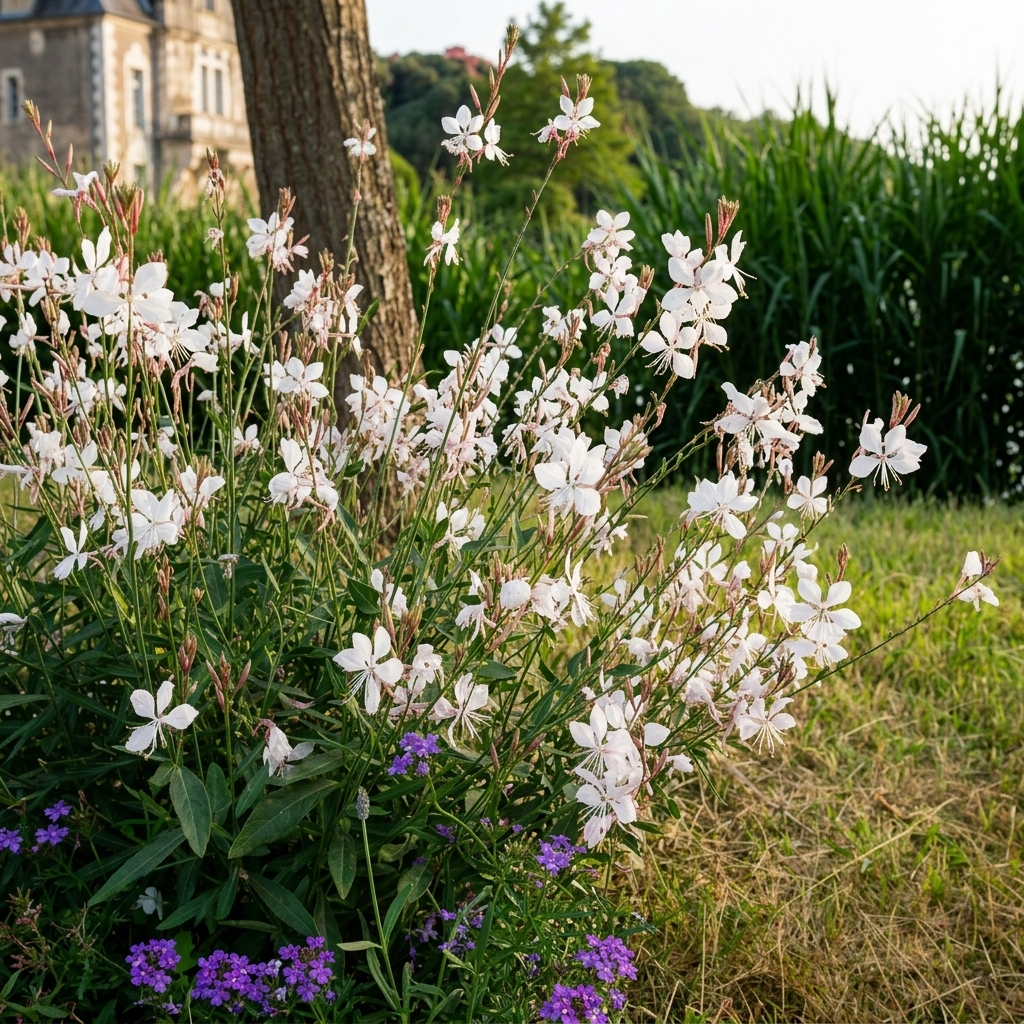
Gaura 'Sparkle White' sends up fine stems covered with pink-tinged buds that open into starry white flowers. On a breezy summer afternoon they seem to hover above the leaves, almost like tiny butterflies.
For Hungarian gardens, there is a lot to like. Once established, gaura copes well with sunshine, warmth and periods of dry weather. It flowers for months, works beautifully with grasses and other perennials, and it can return year after year if we give it the drainage and winter protection it needs.
We sow under glass in February or March, plant out in April or May, and because we begin early, we can reasonably expect flowers in the first year. The packet lists a height of about 80 cm.
So this is our journey: seed, seedling, first flower, a long Hungarian summer, the first frost, and then the question every perennial gardener asks - will it come back next spring?
By the end of this little book, you'll know how to give it the best possible chance.
Ready? Let's make room for something airy, graceful and very easy to fall in love with.
1. Meet Gaura
You will usually see this plant sold as Gaura lindheimeri. Botanists now place it in the genus Oenothera, so you may also see Oenothera lindheimeri. Don't let the name change confuse you - in gardens, most of us still simply call it gaura.
It is a clump-forming herbaceous perennial. The top growth dies back in cold weather, while the crown and roots can remain alive below the soil and send up fresh growth again in spring.
What makes Sparkle White special?
'Sparkle White' is an early, compact seed-grown selection. The buds often carry a pink blush before opening into clean white flowers. Professional growing information describes it as naturally compact, long-flowering and drought tolerant once established.
That makes it useful in borders, cottage gardens, wildlife planting and larger containers. It is not a heavy, formal plant. Its whole charm is movement.
|
GOOD TO KNOW |
2. Finding the Right Place
Start with sunshine. Full sun gives the strongest growth and the best flowering. Light shade is tolerated, but a dark corner is not where I would put 'Sparkle White'.
Then think about drainage. This matters enormously in Hungary because the plant can handle summer drought better than a cold, wet crown in winter. If your soil holds water for days, improve it or plant slightly raised.
|
A COMMON MISTAKE |
3. The Gaura We Grow With You
Our Holland Kerteszet packet is Gaura 'Sparkle White'. The instructions recommend sowing under glass in February or March and planting into the final position in April or May.
The packet lists a height of around 80 cm and identifies the plant as perennial. Other references describe 'Sparkle White' as a compact form, so final size can vary with soil, feeding, moisture and exposure.
Why it suits a Hungarian summer
Once established, gaura tolerates dry periods far better than many traditional bedding plants. That does not mean we abandon it during a severe drought, but it means the plant usually copes calmly with the bright, warm conditions of June, July and August.
Border or pot?
Both can work. In a border, let the stems mingle with neighbouring plants. In a pot, give the roots enough space and remember that a container on a Budapest balcony can dry out dramatically faster than a plant in the ground near Lake Balaton.
What should we plant around it?
For a soft combination, try lavender, pale roses and grasses. For stronger contrast, add purple vervain, coneflower or dark foliage. White gaura is very good at calming a colourful border without making it boring.
|
GROW WITH US |
4. Let's Sow
Because we want flowers in the first year, we start early. February or March under glass is ideal.
Use clean seed compost in small modules or a tray. Moisten it first, sow the seeds, and cover lightly. Professional culture information for 'Sparkle White' recommends covered seed and germination temperatures around 18-20 C.
Keep the compost evenly moist but never saturated. Under controlled conditions germination can begin in less than a week, but home sowing is rarely perfectly uniform, so give slower seeds some patience.
As soon as seedlings appear, give them strong light. Warmth plus weak light creates stretched, floppy seedlings. We want compact little plants with good roots.
|
DON'T PANIC |
5. From Seedling to Garden
When the seedlings have several true leaves and begin filling their modules with roots, pot them on if needed. Keep them bright and don't push them with heavy feeding.
Before planting outside, harden them off. Hungarian spring is famous for making us confident and then surprising us with a cold night. Introduce the plants gradually to wind, stronger sunlight and cooler temperatures.
April or May is the planting window on our packet, but use the weather forecast as well as the calendar. If a hard frost is expected, wait or protect them.
|
WHAT I WOULD DO |
6. Growing Through a Hungarian Summer
Watering
Water young plants regularly while they establish. Later, allow the upper soil to dry a little between deeper waterings. In the ground, established gaura is impressively drought tolerant. In pots, check much more often.
Feeding
Don't overfeed. Very rich soil can encourage soft, floppy growth. In ordinary garden soil, a little compost or a modest spring feed is usually enough. Container plants may appreciate occasional flowering feed.
Do I need to pinch it?
No routine pinching is needed for 'Sparkle White'. It was bred to be naturally compact. If the plant becomes untidy after a heavy flowering flush, a light trim can encourage fresher growth, but we are not trying to turn it into a tight green ball.
Wind and support
Those dancing stems are meant to move, but an extremely exposed site can make the whole clump lean. Let neighbouring perennials give a little support, or choose a sunny position that is not constantly battered by wind.
Mulch or no mulch?
A light mulch can help conserve moisture, but keep heavy, wet organic material away from the crown going into winter. With gaura, summer moisture conservation and winter drainage need to work together.
|
A COMMON MISTAKE |
7. When Something Doesn't Look Right
The plant is floppy
First check light and feeding. Shade, excess nitrogen and constant moisture can all make stems softer. Wind can also push the clump over. Often the answer is not a stake, but a sunnier or leaner growing position.
The leaves are yellow
Touch the soil. Is it staying wet? Has a pot dried completely? Are only the oldest leaves yellowing? One yellow leaf is not an emergency. Look at the entire plant before deciding what to do.
The flowers slowed down
Heat, drought or transplant stress can temporarily reduce flowering. Remove obviously spent stems, water deeply if the soil really is dry, and let the plant recover. 'Sparkle White' is naturally long flowering and often resumes quickly.
It disappeared over winter
This is where growing gaura in Hungary becomes more interesting. RHS rates 'Sparkle White' around H4, roughly -10 to -5 C. Some Hungarian winters can fall below that, particularly in exposed inland gardens, so winter survival is possible but not guaranteed everywhere.
Good drainage gives you the best chance. Avoid planting in a winter puddle. In colder areas, a light dry mulch can help, while pots should be moved to a sheltered position because container roots freeze more severely than roots in open ground.
|
GOOD TO KNOW |
|
TRY THIS |
8. And Then the Flowers Begin
A few pink-tinged buds appear. Then the first white flower opens. Then another. Before long, the stems are carrying dozens of small flowers and the whole plant seems to shimmer when the breeze moves through it.
This is why gaura works so well in mixed planting. It does not block the view. You can see other plants through it.
For pollinators
The open flowers and long blooming period make gaura useful in wildlife-friendly gardens. Instead of one enormous two-week display, it can offer nectar over much of summer.
For the vase
You can cut gaura, especially for loose garden arrangements. Choose stems with several flowers open and more buds waiting. It is best used as movement and air between larger flowers, not as the main heavy stem.
9. When Autumn Arrives
Keep enjoying the plant until frost. Flowering may continue remarkably late. When cold finally stops the show, the stems die back and the crown enters winter dormancy.
In a colder garden, I prefer not to cut everything hard to the ground immediately. Leave some stem through winter, keep the crown dry, and tidy the old growth when new shoots begin in spring.
The winter lesson is simple: cold matters, but wet cold matters even more.
10. Your Gaura Cheat Sheet
1. Sow 'Sparkle White' under glass in February or March.
2. Cover the seed lightly and keep it around 18-20 C while germinating.
3. Give seedlings strong light as soon as they emerge.
4. Pot on when the roots begin filling their modules.
5. Harden plants off before permanent outdoor planting.
6. Plant out in April or May when the weather is suitable.
7. Choose full sun and excellent drainage.
8. Water regularly while young plants establish.
9. Once established, water deeply but less often.
10. Don't overfeed - lean growth is often stronger growth.
11. No routine pinching is needed for 'Sparkle White'.
12. Expect flowers in the first year from an early sowing.
13. Use it with grasses, lavender, verbena, echinacea or cosmos.
14. Check pots often during hot Hungarian weather.
15. Trim lightly if the plant becomes untidy after a flowering flush.
16. Expect flowering from early summer until autumn frost.
17. Keep the crown dry and well drained through winter.
18. In colder Hungarian gardens, winter survival is not guaranteed.
19. Cut old stems back when new growth starts in spring.
20. Then enjoy another season of dancing white flowers.
If You Remember Only Five Things…
1. Give gaura sunshine.
2. Drainage is the key to winter survival.
3. Start early if you want flowers in the first year.
4. Established plants tolerate drought; seedlings do not.
5. Don't make it too tidy - movement is the whole point.
One Last Walk Around the Garden
Do you remember where we started?
Fifteen small seeds in a packet.
We sowed them while winter was still hanging around outside. We gave them warmth, watched for the first seedlings, moved them into larger pots and then started checking the Hungarian spring forecast far more often than any normal person should.
Eventually they went outside.
At first they were simply small green plants. Nothing dramatic.
Then the stems began to rise.
Pink buds appeared. White flowers opened. And before long the plant was doing what gaura does best - turning empty space into movement.
That is what I want you to remember about 'Sparkle White'. We do not grow it because it produces the biggest flower in the garden. We grow it because it makes everything around it look lighter.
It can soften a rose bed, weave through grasses, float above lavender, brighten a sunny terrace, and keep flowering while the Hungarian summer becomes hot and dry.
If we give it drainage and a little winter luck, it may come back and do the whole thing again next year.
And if one plant does not survive? We learn. Maybe the soil stayed too wet. Maybe the pot froze too hard. Maybe the garden simply had one of those winters.
Next time, you'll know more.
That is really what this series is about. We don't need to know everything before we sow the seed. We learn the plant, then we learn our own garden.
So give 'Sparkle White' some sun. Give it room to move. Don't drown it and don't overfeed it.
And when the flowers refuse to stand perfectly still, don't worry.
They're not supposed to.
They're supposed to dance.
When you're ready to grow something new…


