

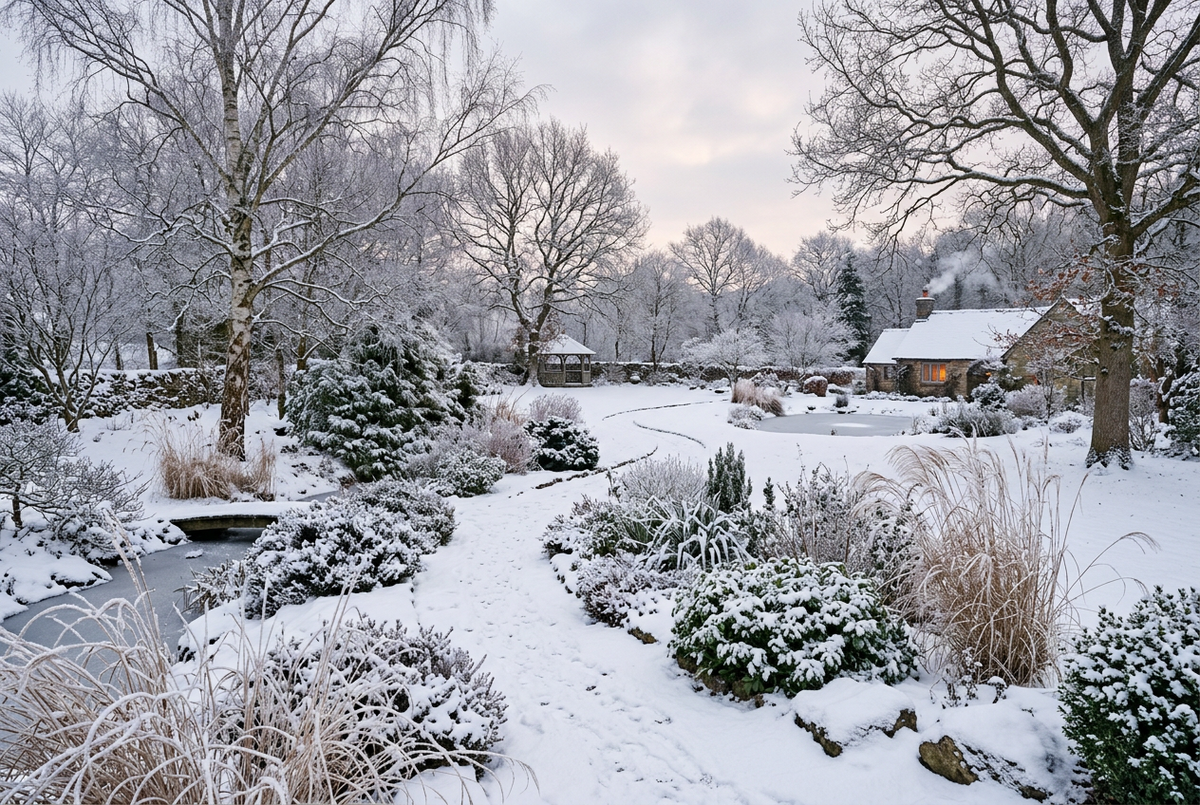
Why dried flowers, golden grasses, fallen leaves and forgotten corners may be the most beautiful things in your winter garden.
There is a moment every autumn when we gardeners face a familiar temptation.
The summer flowers have finished blooming. The once magnificent sunflowers are bending their heads, the echinaceas have turned brown, and the ornamental grasses that looked so fresh and green in July have become clouds of gold and bronze.
The leaves are everywhere.
The flower beds are no longer neat and tidy.
And somewhere in the garden shed, the pruning shears are calling our name.
Come on, let's clean everything up before winter!
But what if we did something different this year?
What if, instead of cutting everything down, collecting every leaf and making our gardens look as though nobody had ever planted anything there, we simply left some of it alone?
What if we allowed the garden to grow old gracefully?
Because there is something extraordinarily beautiful about a garden in November that hasn't been tidied to perfection.
There are the dark seed heads of coneflowers standing proudly above the fallen leaves. The delicate skeletons of last summer's flowers. The soft golden movement of ornamental grasses in the wind. The quiet rustling of leaves beneath a hedge.
And when the first frost arrives, something almost magical happens.
What looked like an ordinary dried flower yesterday suddenly becomes a tiny sculpture covered in sparkling crystals.
The garden has not lost its beauty.
It has simply changed its clothes.
So, put the pruning shears down for a little while, make yourself a warm cup of coffee, and come into the garden with me.
Today, we're going to discover why a garden that has been left a little untidy can be one of the most beautiful, interesting and wildlife-friendly gardens of all.
1. Why Do We Feel the Need to Clean Everything Up?
For generations, gardeners have been taught that a good garden is a tidy garden.
Straight edges. Bare soil. Carefully trimmed plants. Not a fallen leaf in sight.
And, of course, there is nothing wrong with wanting a beautiful, well-maintained garden.
But somewhere along the way, we began confusing tidiness with health.
We started treating every dried flower as waste, every fallen leaf as rubbish, and every old plant stem as something that needed to be removed immediately.
Yet nature works quite differently.
Walk through a woodland in November.
Nobody has swept the forest floor.
Nobody has cut down every dried plant.
Nobody has collected the fallen leaves into enormous plastic bags.
And still, the woodland is beautiful.
The ground is covered in rich colours. Moss grows on fallen branches. Fungi appear among the leaves, and birds search for food beneath the trees.
Everything has a purpose.
A natural garden doesn't have to look neglected. It can be carefully designed while still allowing natural processes to take place.
The secret is learning the difference between a garden that has been abandoned and a garden that has been allowed to rest.
One is forgotten.
The other is understood.
GOOD TO KNOW
A wildlife-friendly garden does not have to be completely wild. You can maintain tidy paths, attractive borders and beautiful seating areas while leaving selected flower stems, seed heads and sheltered corners undisturbed.
In fact, this contrast often makes a garden look even more beautiful.

2. The Unexpected Beauty of Dried Flowers
Let's begin with something I think deserves far more appreciation.
Dried flowers.
During summer, we admire flowers for their colour, fragrance and freshness.
But when the petals fall, we often stop looking.
And that is a shame.
Because many plants have an entirely different kind of beauty after flowering.
Take the coneflower, for example.
Coneflowers — Little Sculptures in the Winter Garden
Echinacea is magnificent in summer, with its colourful petals surrounding a prominent central cone.
But when the petals disappear, that central cone remains.
It gradually becomes dark brown, almost black, standing on a strong stem.
In winter sunlight, the seed heads create beautiful silhouettes.
When frost settles on them, they look like tiny crowns decorated with diamonds.
And they offer something else.
Birds such as goldfinches may visit mature seed heads to feed on the seeds.
So by leaving your coneflowers standing, you are creating both a winter decoration and a possible natural food source.
Rudbeckia — Golden Summer Memories
Rudbeckia, often called black-eyed Susan, is another excellent example.
Its cheerful yellow flowers disappear in autumn, but the dark central cones can remain standing well into winter.
They look particularly attractive when planted in groups.
Imagine twenty or thirty dried rudbeckia stems rising above a soft carpet of fallen leaves.
Now imagine them on a frosty morning.
Beautiful, isn't it?
Sedum — The Winter Umbrella
One of my favourite plants for winter structure is the upright autumn-flowering stonecrop, often sold as Hylotelephium or under its older name, Sedum.
During late summer and autumn, its flower heads are usually pink, rose or reddish.
As the season progresses, they turn brown.
But instead of collapsing immediately, many varieties retain their broad, umbrella-shaped flower heads.
These create wonderful shapes in the winter garden.
They are especially attractive after frost or a light snowfall.
And in Hungary, where November and December weather can vary enormously, they provide interest even when snow is absent.
Alliums — Nature's Fireworks
Ornamental alliums are famous for their round flower heads.
When the flowers fade, the spherical seed heads of many varieties remain.
They resemble delicate fireworks frozen in time.
Some gardeners even cut and dry them for indoor arrangements.
But why not leave a few standing in the garden?
Their architectural shapes can be just as beautiful in November as they were in May or June.
GROW WITH US
When planning next year's flower garden, don't choose plants only for their summer appearance.
Ask yourself another question:
Will this plant still look interesting after it has finished flowering?
Plants with attractive seed heads, strong stems or colourful autumn foliage can extend the beauty of your garden by several months.
3. Ornamental Grasses — The Golden Queens of Winter
If there is one group of plants that can completely transform a winter garden, it is ornamental grasses.
They are sometimes overlooked because they don't always produce large, colourful flowers.
But their beauty lies in movement, texture and light.
In summer, many ornamental grasses form elegant green fountains.
In autumn, they turn gold, copper, bronze or pale straw.
And in winter, their dried stems and feathery seed heads can become the stars of the garden.
Miscanthus — Tall and Magnificent
Miscanthus, commonly called Chinese silver grass, is particularly impressive.
Depending on the variety, it can form large clumps with tall flowering plumes.
As autumn progresses, the foliage changes colour and the plumes become soft and silvery.
A mature clump can look spectacular when the low winter sun shines through it.
In a large Hungarian garden, several Miscanthus plants grouped together can create a wonderful natural screen.
They also produce a gentle rustling sound when the wind passes through.
And that sound is part of the winter garden's charm.
Calamagrostis — Elegant Vertical Lines
Feather reed grass, particularly Calamagrostis × acutiflora 'Karl Foerster', is famous for its upright growth.
Its narrow, vertical stems create structure without taking up enormous amounts of space.
This makes it especially useful in smaller gardens or modern planting designs.
In winter, the dried stems can remain attractive for a considerable time.
They look beautiful alongside dark evergreen shrubs or the rounded seed heads of sedum.
Panicum — A Cloud of Fine Texture
Switchgrass, or Panicum virgatum, offers a lighter, more airy appearance.
Its delicate flower panicles catch the light beautifully.
Some varieties develop wonderful autumn colours before fading into winter shades.
Panicum can be an excellent choice for sunny, well-drained areas.
When should ornamental grasses be cut down?
For many deciduous ornamental grasses, late winter or early spring is a suitable time.
The exact timing depends on the species and the weather.
You generally want to remove the old growth before fresh shoots begin developing, while avoiding damage to the new growth.
Evergreen grasses and sedges often need a different approach.
Many require only gentle combing or removal of damaged leaves rather than cutting the entire plant to the ground.
A COMMON MISTAKE
Cutting every ornamental grass down in November removes much of the structure that makes winter gardens attractive.
However, leaving every grass standing is not always appropriate.
Some varieties collapse in wet snow, while others may suffer from prolonged winter moisture.
Choose suitable species and observe how they perform in your garden.

4. Fallen Leaves — Nature's Most Beautiful Carpet
There is something wonderfully nostalgic about walking through fallen leaves.
The soft crunch beneath your shoes.
The colours ranging from pale yellow to deep copper.
The smell of damp earth after rain.
For me, fallen leaves are one of the loveliest parts of autumn.
And they are also one of the most useful materials our gardens produce.
A Natural Blanket for the Soil
In a woodland, fallen leaves form a protective layer over the soil.
They help moderate temperature changes, reduce the impact of heavy rain and provide habitat for countless small organisms.
As they decompose, they contribute organic matter to the soil.
Earthworms, fungi and microorganisms gradually transform this material.
The result is a healthier environment for many plants.
Where Should We Leave Leaves?
Beneath established shrubs, among suitable perennial plantings and under hedges are often excellent places.
A moderate layer of leaves can help protect the soil during winter.
But there are places where leaves should be removed.
Clear them from slippery paths, steps and drains.
Avoid allowing thick, wet layers to smother lawns.
And keep excessive leaf material away from the crowns of plants that are sensitive to winter dampness.
What About Walnut Leaves?
In Hungary, many gardens have beautiful walnut trees.
You may have heard that walnut leaves should never be used in compost because of juglone, a natural compound associated with walnut trees.
The situation is more complicated.
Walnut leaves can generally be composted, particularly when mixed with other organic materials and allowed to decompose thoroughly.
However, fresh walnut material and other parts of walnut trees may affect sensitive plants, and gardeners should be cautious about using undecomposed material directly around susceptible species.
For ordinary garden composting, properly matured compost is preferable.
A Beautiful Idea
Instead of removing every leaf from beneath your trees, create a natural woodland-style border.
Plant spring bulbs among suitable shade-tolerant perennials.
Allow some leaves to remain.
In spring, snowdrops, crocuses and other early flowers can emerge through the leaf litter.
It creates a wonderfully natural appearance.
5. The Forgotten Corners Where Wildlife Finds Shelter
Every garden has one.
That little corner behind the shed.
The area beneath the hedge.
The pile of old branches that we keep meaning to remove.
Perhaps there is even a small patch where the grass has grown longer than intended.
We often think of these places as untidy.
But to wildlife, they can be valuable shelters.
Hedgehogs Need Somewhere Safe
European hedgehogs may spend the colder months in nests made from leaves, grass and other natural materials.
They often choose sheltered places beneath hedges, among roots or in piles of vegetation.
In Hungary, hedgehogs are familiar visitors to many gardens.
Their winter activity depends on temperature and food availability.
During colder periods, they generally enter hibernation, although they may occasionally wake or move between nests.
A quiet, undisturbed corner can provide useful shelter.
But there is one very important rule.
Never disturb a suspected hedgehog nest unnecessarily.
And always inspect piles of leaves, branches or garden waste carefully before moving them.
Ladybirds and Other Insects
Many insects spend winter in protected places.
Some ladybirds gather in groups beneath bark, among leaves or in sheltered cracks.
Other insects survive as eggs, larvae or pupae.
Hollow stems and dried plant material can provide overwintering habitat for certain species.
Removing every stem in autumn may also remove the creatures sheltering inside.
Frogs and Toads
Frogs and toads often use sheltered, frost-protected places during winter.
Depending on the species, they may hide beneath logs, in soil cavities or in other suitable habitats.
Garden ponds and damp areas can also support amphibians.
Avoid disturbing potential winter shelters, especially during cold weather.
GROW WITH US
Choose one quiet corner of your garden and turn it into a wildlife refuge.
Leave some leaves, a few branches and natural ground cover.
Keep it free from unnecessary disturbance.
It doesn't need to be large.
Even a modest sheltered area can provide useful habitat.
6. The Art of Designing a Beautiful Winter Garden
Now we come to something especially interesting.
Leaving plants standing is one thing.
But designing a garden that looks beautiful in winter is another.
The secret lies in thinking about shape, texture, height and contrast.
During summer, flowers provide much of the colour.
In winter, the structure of plants becomes more important.
Design Idea 1: The Golden Grass Garden
Imagine a sunny border filled with ornamental grasses.
Tall Miscanthus at the back.
Upright Calamagrostis in the middle.
Smaller grasses and low-growing perennials towards the front.
Add groups of Echinacea and Rudbeckia.
During summer, the border is full of green foliage and colourful flowers.
In autumn, the grasses turn golden.
In winter, the dried stems and seed heads create a landscape of beautiful silhouettes.
This style works particularly well in larger Hungarian gardens where there is space for generous planting.
Design Idea 2: The Frost Garden
A frost garden is designed around plants that look especially attractive when covered in frost.
Good candidates include:
-
Echinacea with its dark seed heads.
-
Hylotelephium with broad, flat flower clusters.
-
Ornamental alliums with spherical seed heads.
-
Feather reed grass with upright stems.
-
Suitable evergreen shrubs for contrast.
-
Plants with attractive winter bark or branching patterns.
Place these plants where you can see them from a window.
After all, the most beautiful winter garden is one you can enjoy without having to stand outside in freezing temperatures.
Design Idea 3: The Natural Woodland Garden
If your garden has mature deciduous trees, consider creating a woodland-style planting.
Allow suitable leaves to remain beneath the trees.
Add shade-tolerant perennials, spring bulbs and carefully selected ground-cover plants.
Snowdrops, certain crocuses, woodland anemones and other spring-flowering species can create beautiful seasonal displays where their growing conditions are suitable.
The winter garden may appear quiet, but beneath the leaves, spring is already preparing.
Design Idea 4: The Modern Winter Border
Naturalistic gardening doesn't have to look rustic.
In a modern garden, strong shapes can be especially effective.
Combine upright grasses with rounded sedum seed heads and neatly clipped evergreen forms.
Use gravel paths or clearly defined borders to create contrast.
The combination of tidy structure and natural planting can look sophisticated throughout winter.
Design Idea 5: The Small Winter Garden
You don't need a large property to enjoy winter beauty.
Even a small courtyard or terrace can contain interesting seasonal plants.
Choose compact ornamental grasses, evergreen shrubs and perennials with attractive seed heads.
Containers can also be used for winter interest, although they need to be frost-resistant and properly drained.
A few carefully chosen plants may create more impact than dozens of unrelated ones.

7. Ten Plants Worth Leaving Standing Through Winter
Here are ten plants that can contribute to a beautiful winter garden.
| Plant | Winter interest |
|---|---|
| Echinacea | Dark, sculptural seed heads |
| Rudbeckia | Strong stems and prominent seed cones |
| Hylotelephium | Broad, architectural dried flower heads |
| Miscanthus | Golden foliage and feathery plumes |
| Calamagrostis | Elegant vertical structure |
| Panicum | Fine texture and airy seed panicles |
| Echinops | Distinctive globe-shaped seed heads |
| Eryngium | Architectural stems and spiky seed heads |
| Achillea | Flat-topped dried flower clusters |
| Ornamental Allium | Decorative spherical seed heads |
Not every variety will remain standing equally well.
Heavy snow, strong winds and wet weather can cause some plants to collapse.
But by choosing several different shapes and heights, you can create a garden that remains interesting even when individual plants begin to fade.
8. What Should You Definitely Not Cut Down in November?
This is one of the most useful questions we can ask.
There are many plants that benefit from being left alone during autumn.
Healthy Perennial Stems
Strong stems of coneflowers, rudbeckias, sedums and other suitable perennials can often remain until late winter or spring.
They provide structure and may offer food or shelter to wildlife.
Deciduous Ornamental Grasses
Many can be left standing through winter and cut back before new growth begins.
Healthy Climbing Roses
Avoid unnecessarily hard pruning in November.
Major pruning is generally carried out at a more suitable time for the rose type and local conditions.
Remove dangerous, damaged or diseased material when needed.
Hydrangeas
Be especially careful with hydrangeas.
Some species flower on old wood, meaning that next year's flower buds may already be present.
For example, many bigleaf hydrangeas, Hydrangea macrophylla, can lose their flowers if pruned too severely at the wrong time.
Leaving faded flower heads until spring may also provide some protection to the buds below.
Other hydrangeas, such as Hydrangea paniculata and Hydrangea arborescens, flower on new growth and are pruned differently.
Always identify your hydrangea before cutting.
Hollow Plant Stems
Some insects use hollow or pithy stems for nesting or overwintering.
Where possible, leave suitable stems standing or retain cut stems in a sheltered place until their inhabitants have had an opportunity to emerge.
Evergreen Perennials
Plants that retain healthy foliage through winter often need little or no autumn cutting.
Remove damaged or diseased leaves when appropriate, but avoid unnecessary severe pruning.
9. When Tidying Up Really Is Necessary
Leaving a garden more natural does not mean ignoring genuine problems.
Some materials should be removed or managed carefully.
Diseased Plant Material
If plants have suffered from serious diseases, removing infected material may help reduce future problems.
For example, tomato plants affected by certain diseases should be managed appropriately rather than automatically left in place.
The correct approach depends on the disease and the composting method available.
Invasive or Aggressively Spreading Plants
Plants that spread aggressively through seeds or underground structures may need control before they become difficult to manage.
Not every seed head should be allowed to scatter its seeds.
Dangerous Branches
Dead or damaged branches that could fall onto paths, buildings or seating areas should be assessed and dealt with safely.
Slippery Paths
Wet leaves on stone steps or paved paths can be dangerous.
These areas should be kept clear.
Plants Sensitive to Winter Wet
Some Mediterranean herbs and other drought-tolerant plants dislike having wet leaves piled around their crowns.
In Hungarian gardens with heavy clay soils, winter drainage can be particularly important.
The goal is not to leave absolutely everything untouched.
The goal is to understand what needs attention and what can safely remain.
10. A Winter Garden That Feeds the Birds
One of the loveliest rewards of leaving seed heads standing is the possibility of attracting birds.
Many gardeners put out bird feeders during winter.
But the garden itself can also provide food.
Seed-producing flowers may attract finches and other seed-eating birds.
Shrubs with suitable berries can provide additional seasonal resources.
And leaf litter supports small invertebrates that some birds search for during milder weather.
Plants That Can Offer Winter Food
Sunflowers, coneflowers and certain thistles may provide seeds when left standing.
Native shrubs and suitable berry-producing plants can also support wildlife.
However, not every ornamental variety produces abundant or accessible seeds.
And not every berry is suitable for every bird species.
For a wildlife-friendly garden, plant diversity is usually more valuable than relying on one species.
The Joy of Watching
Imagine sitting by the window on a cold December morning.
The garden is quiet.
Then a little bird lands on a dried seed head.
It balances delicately on the stem, searching for something to eat.
A moment later, another arrives.
Suddenly, the winter garden is full of movement.
And all because you decided not to cut everything down in November.

11. Why Winter Sunlight Changes Everything
There is something very special about winter light.
The sun stays lower in the sky, creating longer shadows and a softer angle of illumination.
This can make dried grasses and seed heads look extraordinary.
A Miscanthus plume that seems ordinary at midday may glow beautifully in the late afternoon.
The fine hairs of ornamental grasses catch the sunlight.
Seed heads become silhouettes.
Bare branches create intricate patterns against the sky.
How to Use Winter Light in Your Garden
Observe where the low sun reaches your garden during November and December.
Place ornamental grasses where they can be backlit.
Use dark evergreen plants behind pale seed heads to create contrast.
Position winter-interest plants where they are visible from frequently used windows.
And don't forget that the garden can be beautiful in rain, mist and frost as well as sunshine.
A garden designed for winter should not depend entirely on snow.
This is especially important in Hungary, where some winters bring substantial snowfall while others are relatively mild.
12. Creating a Beautiful Garden With Less Work
One of the greatest advantages of a more natural autumn garden is that it can reduce unnecessary work.
Think about the traditional November routine.
Cut everything down.
Collect every leaf.
Dig every bed.
Remove every dried stem.
Transport enormous quantities of garden waste away.
And then spend the winter looking at bare soil.
But what if we changed that routine?
What if we kept the paths clear, removed diseased material, protected sensitive plants and left suitable perennial stems standing?
We could save time.
We could reduce garden waste.
We could protect soil structure.
And we could enjoy a more interesting winter landscape.
Of course, a naturalistic garden still requires management.
Some plants need dividing.
Aggressive species need controlling.
Grasses eventually need cutting back.
And new planting combinations may need adjusting.
But the work becomes more thoughtful rather than simply more frequent.
A LITTLE GARDENING SECRET
Sometimes the most difficult gardening skill is learning when not to interfere.
We are so accustomed to doing something that leaving nature alone can feel like neglect.
But restraint can be a form of good gardening.
13. The Perfect Time to Plan Next Year's Garden
November is a wonderful month for planning.
With fewer flowers competing for attention, you can see the basic structure of your garden more clearly.
Which areas look empty?
Where would a tall ornamental grass create interest?
Could you add a group of coneflowers beside the terrace?
Would a natural woodland border work beneath the trees?
Could you create a small wildlife corner behind the shed?
Think in Seasons, Not Just Flowers
When choosing plants, consider how they look throughout the year.
A good planting combination might include:
Spring: Tulips, daffodils, crocuses and emerging perennial foliage.
Summer: Echinacea, rudbeckia, yarrow, ornamental grasses and other flowering perennials.
Autumn: Sedum flowers, golden grasses, colourful foliage and ripening seed heads.
Winter: Dried stems, architectural seed heads, evergreen structure and frost-covered grasses.
This approach creates a garden that changes naturally throughout the year.
Instead of having one spectacular month followed by months of emptiness, the garden becomes a continuing story.
A Hungarian Garden Example
Imagine a sunny border in western Hungary.
At the back, plant a group of upright Calamagrostis.
In the middle, combine Echinacea purpurea, Rudbeckia and Hylotelephium.
Towards the front, add lower-growing perennials and suitable spring bulbs.
In April, tulips provide colour.
In summer, the coneflowers and rudbeckias take over.
In autumn, the sedums and grasses become the stars.
And in winter, the dried seed heads remain standing against the pale sky.
One border.
Four seasons.
Four completely different appearances.
That's the beauty of thoughtful planting.
14. A Little Experiment — Leave One Flower Bed Alone
If you are not quite ready to leave your entire garden untidy, why not start with one flower bed?
Choose a bed containing healthy perennials.
Remove obvious weeds and diseased material, but leave suitable dried stems and seed heads standing.
Allow a moderate layer of fallen leaves to remain where appropriate.
Then observe the bed throughout winter.
Take a photograph in November.
Another in December.
Another after the first frost.
Watch for visiting birds.
Notice how the shapes change.
Observe which plants remain standing and which collapse.
And when spring arrives, compare the bed with another area that was completely cleared in autumn.
You may discover that your untidy bed has been one of the most interesting parts of the garden all winter.
And perhaps next year, you'll leave two beds alone.
15. Frequently Asked Questions
Is it bad to leave dead plants in the garden over winter?
Not necessarily. Healthy perennial stems and seed heads can provide winter interest and wildlife habitat. However, diseased material, invasive plants and vegetation that creates safety problems may need to be removed.
Should I cut back all my perennials in November?
No. Many hardy perennials can be left standing until late winter or spring. The correct approach depends on the plant, its condition and local weather.
Can fallen leaves damage my plants?
Yes, if they form a thick, wet layer over sensitive crowns or smother lawns. Used appropriately, however, fallen leaves can protect soil and provide valuable habitat.
Are dried flowers useful for birds?
Some are. Seed heads from plants such as Echinacea and sunflowers may provide food for seed-eating birds. The value depends on the plant and whether viable seeds remain.
When should I cut back ornamental grasses?
Many deciduous ornamental grasses are cut back in late winter or early spring, before new growth begins. Evergreen grasses usually need different treatment.
Will an untidy garden attract pests?
Leaf litter and plant debris can provide shelter for both beneficial organisms and potential pests. Good garden management involves monitoring problems, maintaining plant health and preserving a balanced habitat rather than removing all vegetation.
Can I have a wildlife-friendly garden in a small space?
Absolutely. Even a small garden can include a few seed-bearing perennials, a sheltered corner, suitable shrubs and plants that provide food or habitat.
What is the best plant for winter structure?
There is no single best choice, but Echinacea, Hylotelephium, Miscanthus and Calamagrostis are excellent starting points for suitable sites.

16. The Beauty of Letting Nature Have the Last Word
There is something deeply comforting about a garden that is allowed to follow the seasons.
In spring, everything begins.
In summer, the garden celebrates.
In autumn, it matures.
And in winter, it becomes quiet and reflective.
We don't expect a tree to remain covered in fresh green leaves all year.
We don't expect a rose to flower endlessly.
So why do we sometimes expect our gardens to look perfectly fresh and tidy in every season?
A dried flower is not necessarily a failed flower.
A fallen leaf is not automatically rubbish.
An old stem is not always something to remove.
These are simply different stages in the life of a garden.
And each stage has its own beauty.
I think there is a wonderful lesson here.
A garden doesn't have to be perfect to be beautiful.
It doesn't have to be completely controlled to be healthy.
And it doesn't have to be full of colourful flowers to be interesting.
Sometimes the most beautiful garden is the one that has been given a little freedom.
Come Into the Garden With Me — A Final Thought
The next time you walk into your garden on a cold November morning, resist the temptation to see only what has finished.
Look instead at what remains.
The dark seed heads of the coneflowers.
The golden grasses moving gently in the wind.
The delicate shapes of dried flowers.
The leaves resting beneath the trees.
The quiet corner where a hedgehog may be sleeping.
The tiny creatures sheltering inside old stems.
And the first frost turning ordinary plants into extraordinary little works of art.
Your garden is not untidy simply because it looks different from the way it did in summer.
It is growing older with the seasons.
It is providing shelter.
It is protecting the soil.
It is preparing for another year.
And perhaps, just perhaps, it is more beautiful than you realised.
So this November, give yourself permission to do a little less.
Leave a few flowers standing.
Let some leaves remain.
Allow the grasses to turn gold.
And enjoy the quiet beauty of a garden that has been left alone.
Because sometimes, the most beautiful thing we can do for our garden is simply to let it be.
Happy gardening, and come into the garden with me again soon.
With warm wishes from Holland Kertészet.


